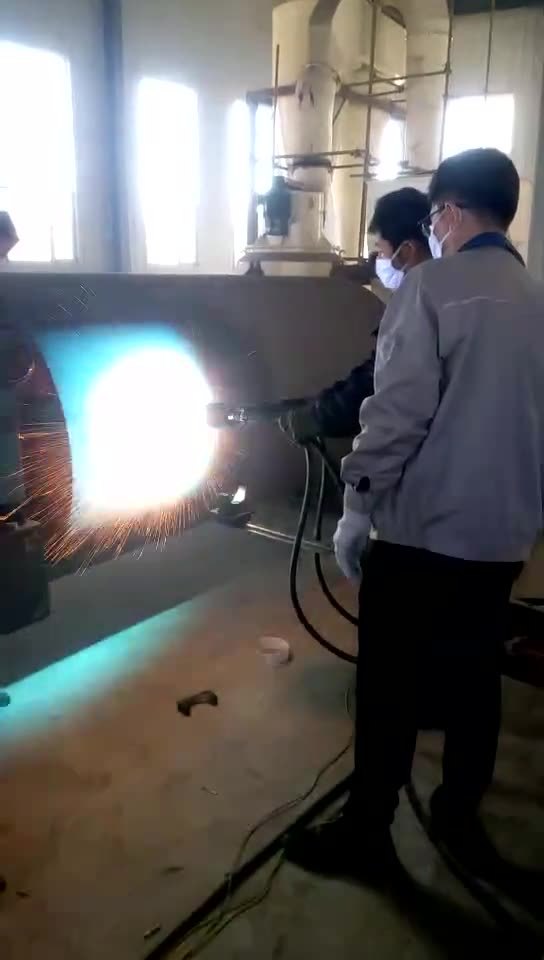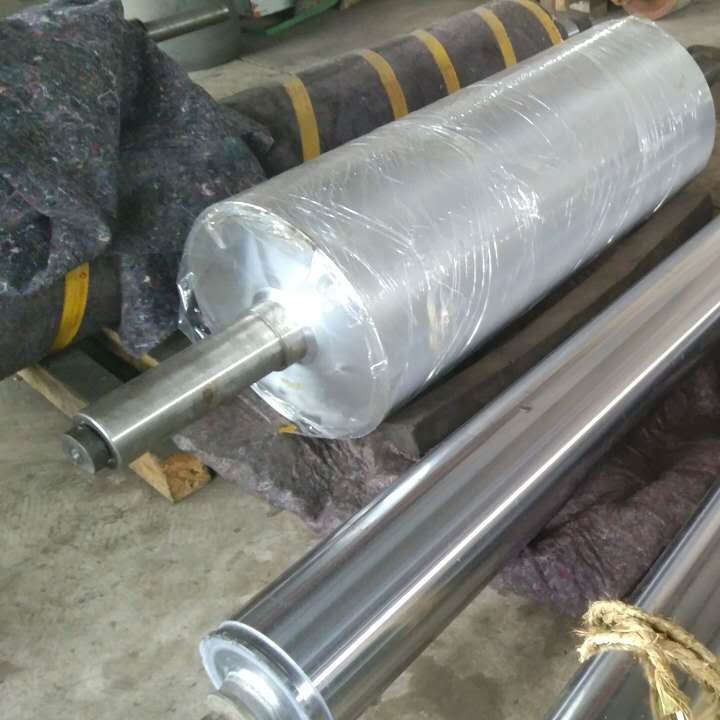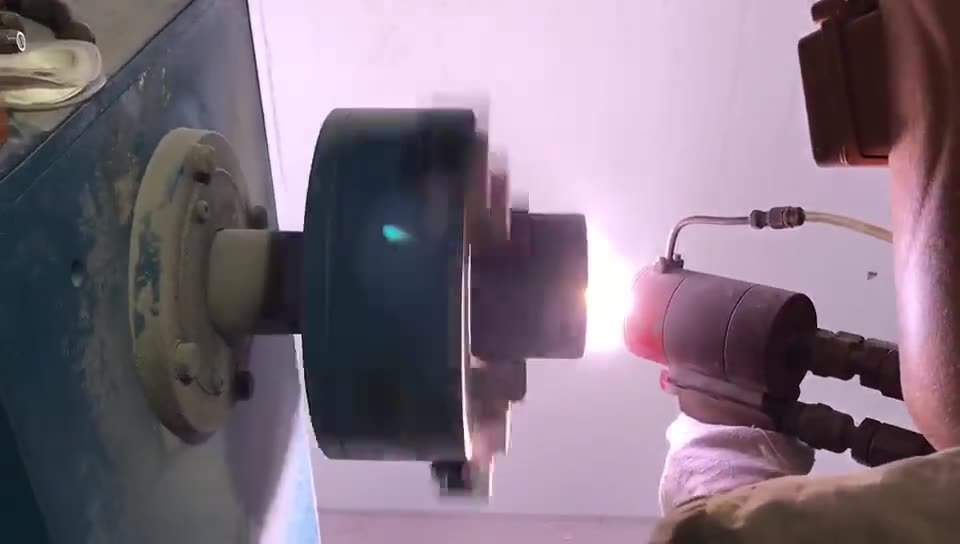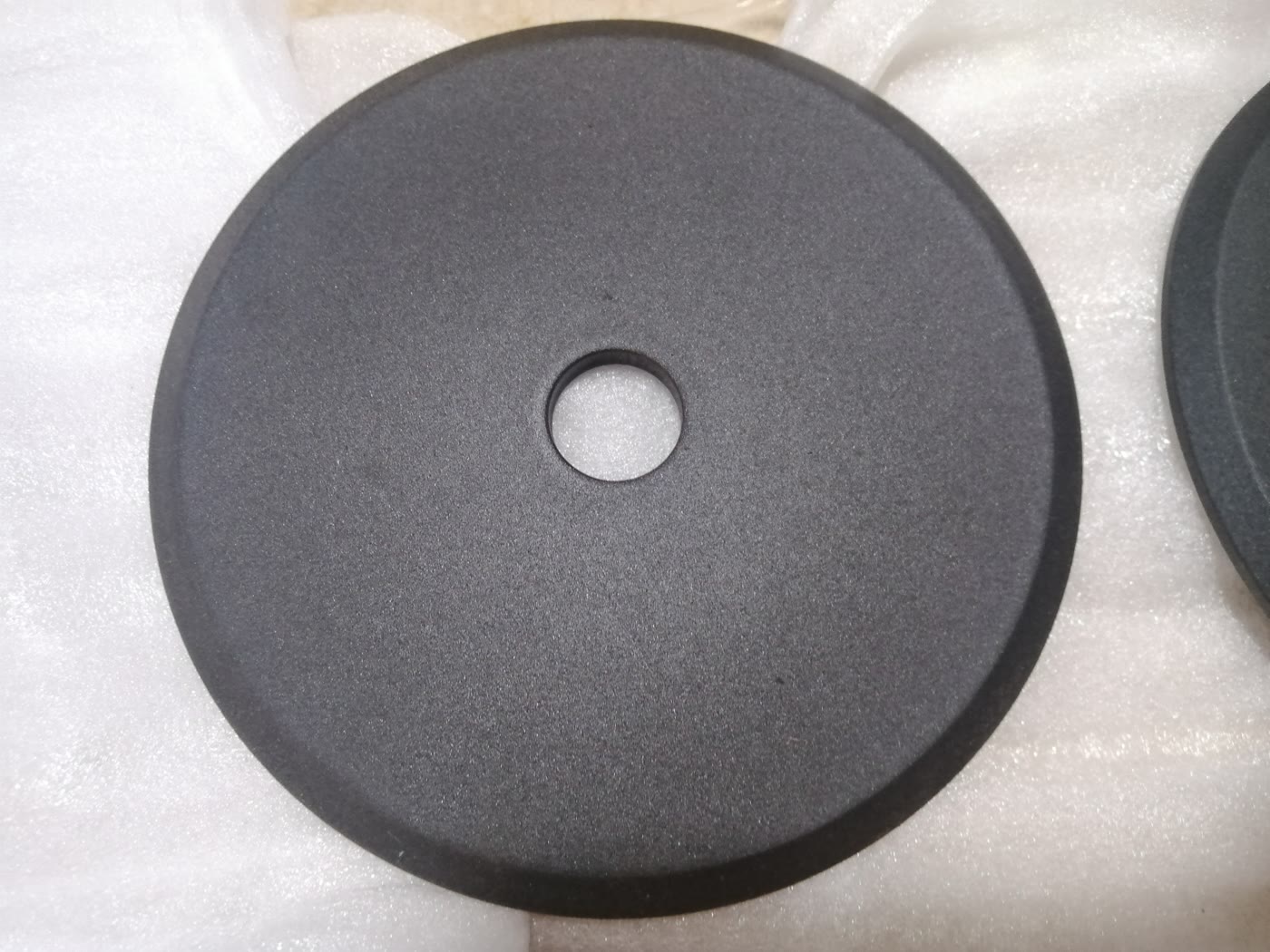
What cold spray actually is
Cold spray does not melt anything. Metal powder is accelerated to roughly 300-600 m/s in a de Laval nozzle using compressed nitrogen or air, and it bonds to the substrate through severe plastic deformation on impact. The particle never leaves the solid state, and the part itself typically stays below 150 C during the whole process.
That single fact explains everything the process is good at, and everything it cannot do. Because there is no melting, there is no oxidation of the powder in flight, no phase change, no shrinkage on solidification, and no heat-affected zone in the substrate. A copper layer deposited this way reaches over 90 percent IACS conductivity after a light anneal, which no flame or plasma process can match. On the other hand, because bonding depends on the particle deforming, brittle materials cannot be deposited on their own - a pure ceramic powder will bounce off rather than bond.
Where cold spray beats thermal spray
- Conductivity and thermal transfer. Copper and aluminium layers with oxygen content under 0.2 wt percent. Used for busbar repair, electrode contact faces, heat sink build-up and EMI shielding.
- Parts that cannot be heated. Heat-treated aluminium, thin-wall castings, brazed assemblies, parts with elastomer seals or bonded inserts. At a substrate temperature below 150 C there is no distortion and no need to re-heat-treat afterwards.
- Thick layers in one pass sequence. There is no practical thickness ceiling from residual stress the way there is with plasma ceramics. Layers of 0.5-10 mm are routine, which makes cold spray a genuine alternative to welding for dimensional restoration.
- No hydrogen, no combustion, no open flame. The working gas is nitrogen. That matters for workshops that cannot store hydrogen for HVOF or that need to spray inside a cleanroom or an electronics area.
Where it does not work
We would rather say this up front than waste a customer's trial budget:
- Hardfacing and pure ceramic wear layers. If you need 1000+ HV of tungsten carbide or an alumina barrier, this is the wrong process. Use HVOF or plasma.
- Very hard or brittle substrates. Bonding needs the substrate to deform as well. Hardened tool steel above 55 HRC and ceramics give poor adhesion without an intermediate soft layer.
- Large gas consumption. High-pressure cold spray with helium is expensive per kilogram of deposit. For most industrial repair work the low-pressure route with nitrogen is the practical choice.
- Complex internal geometry. The spray is line-of-sight, and the nozzle needs a straight run at the surface. Deep bores and undercuts need a rotating lance or cannot be coated at all.
Low-pressure versus high-pressure cold spray
| Parameter | Low-pressure (LPCS) | High-pressure (HPCS) |
|---|---|---|
| Gas pressure | 0.5-1.0 MPa (5-10 bar) | 3.0-5.0 MPa (30-50 bar) |
| Gas temperature | Ambient to 300 C | Up to 800-1100 C |
| Particle velocity | 300-600 m/s | 600-1200 m/s |
| Typical powders | Cu, Al, Zn, Al-Zn, Ni, Cu-Al blends | Cu, Al, Ti, Ta, Ni superalloys |
| Deposit thickness | 0.2-3 mm | 0.5-10 mm and above |
| Porosity (copper) | 1-2 % | Below 0.5 % |
| Working gas | Nitrogen or compressed air | Nitrogen or helium |
| Best fit | On-site repair, small and medium parts | Production coating, aerospace, thick rebuild |
What we supply
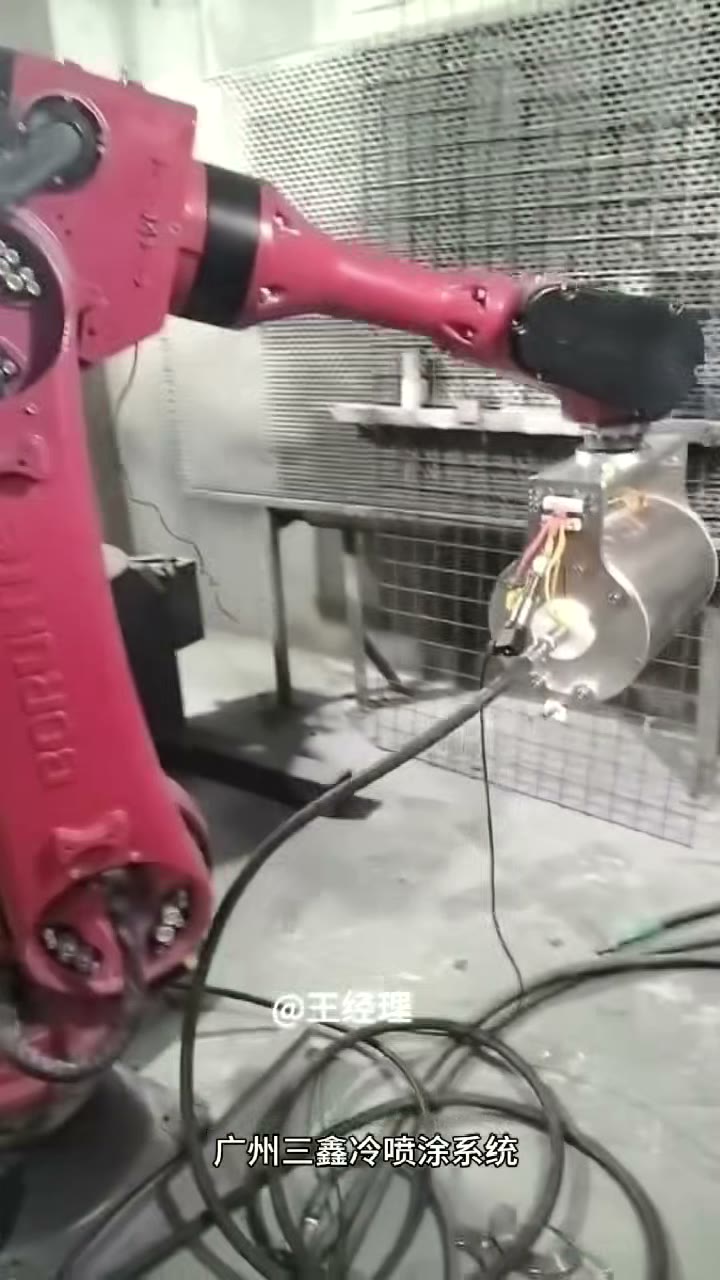
Our SX-LP60 low-pressure cold spray system is built for job shops and maintenance departments: a portable gun, a powder feeder sized for short runs, and a control cabinet that holds pressure and gas flow stable enough for repeatable deposits without a dedicated operator team. Systems can be supplied with a robot or a turntable for production work, and we also run contract coating in our own workshop if you only need parts processed.
Before any quotation we normally ask for a sample part. Cold spray results depend heavily on substrate material, surface preparation and powder batch, and a 20-minute trial tells both sides more than any datasheet.
What we need to quote
Part drawing or clear photos, substrate material and heat treatment condition, the area to be coated with dimensions, required layer thickness and finish, and what the part has to do afterwards - carry current, resist wear, seal, or simply be built back to size. If the part is already coated or plated, tell us, because stripping changes the surface preparation step.
Frequently asked questions
Can cold spray replace welding for building up a worn shaft?
For non-structural dimensional restoration, often yes. Cold spray adds material without the heat-affected zone and distortion that welding causes, and it can be machined afterwards. It cannot replace welding where the repair carries structural load or where the substrate has cracked - in those cases welding or replacement is the correct route.
Why can't you cold spray a ceramic wear coating?
Bonding in cold spray relies on the particle deforming plastically on impact. Ceramics are brittle and simply rebound. Ceramic layers are produced by plasma or HVOF, where the powder is melted. Cold spray is used for metals and metal matrix blends, not for pure oxide ceramics.
What is the maximum thickness you can build up?
With low-pressure cold spray we routinely work in the 0.2-3 mm range and can go thicker with intermediate machining. There is no theoretical stress limit like plasma ceramics have, but very thick deposits take time and powder, so above roughly 5 mm we compare the cost against welding or a new part.
Is cold spray suitable for food or electronics areas?
Yes, and that is one of its advantages. The process uses nitrogen, produces no open flame and no fume from melting, and keeps the part cool. For electronics and cleanroom work the main requirement is capturing overspray, which we handle with a local extraction hood.