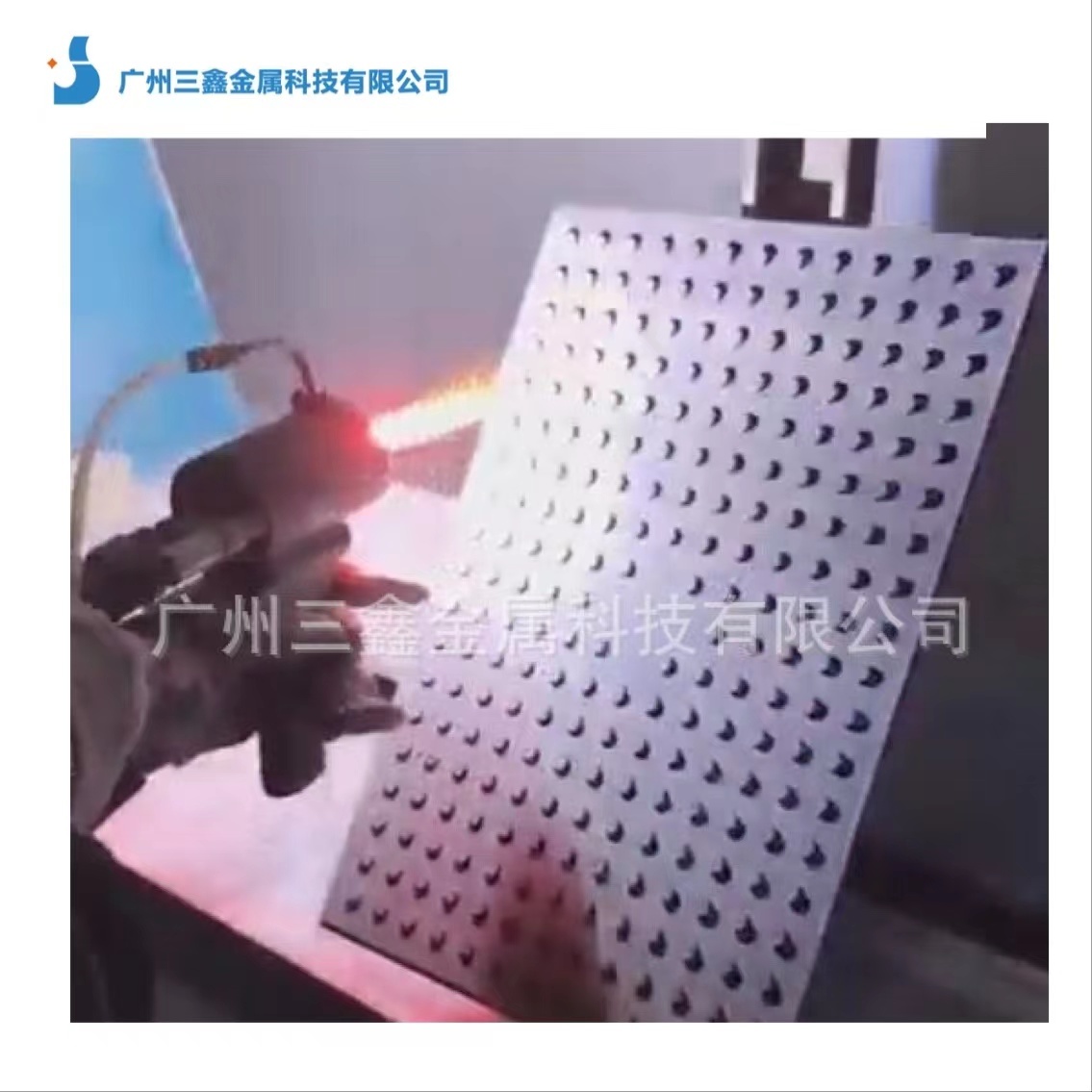
Why yttria is specified where nothing else survives
Yttrium oxide melts at about 2425 C and stays chemically stable across a wide range of atmospheres. In a thermal spray context that translates into a coating that resists molten metal, fluorine and chlorine plasma, and the ion bombardment inside an etch chamber - environments that destroy alumina and even zirconia in a few months.
It is not a bulk structural ceramic. It is used where a thin, extremely stable surface layer extends the life of a part that would otherwise be replaced on a fixed schedule.
Where it is used
- Semiconductor process chambers. Y2O3 coatings on chamber walls, showerheads, focus rings and electrostatic chucks resist fluorine plasma erosion far better than anodised aluminium, and they produce far fewer particles. This is the largest single application for sprayed yttria.
- Crucibles and nozzles for melting reactive metals and superalloys, where the coating prevents contamination of the melt.
- High-temperature fixtures in vacuum furnaces and sintering operations.
- As a stabiliser in YSZ thermal barrier powders, where 7-8 percent yttria holds the tetragonal phase.
What the powder spec controls
| Parameter | Why it matters |
|---|---|
| Purity (typically 99.9 %+) | Trace metals contaminate the process chamber or the melt; semiconductor users often specify individual elements |
| Sphericity and flowability | Consistent feed at low rates, uniform deposit, fewer particles shed in service |
| Particle size cut | Sets deposit roughness and porosity; fine cuts give smoother chamber surfaces |
| Phase and crystallinity | Affects erosion resistance and coating stress |
For semiconductor work the powder is usually spheroidised from high-purity feedstock, and the customer's specification will name the trace element limits. We supply against that specification rather than a generic grade - if you have a contamination limit list, send it and we quote to it.
Coating properties and limits
Plasma-sprayed Y2O3 is applied at 0.10-0.30 mm, typically with porosity in the 3-8 percent range. It is harder and more erosion-resistant than alumina in fluorine plasma, but it is not a wear coating for mechanical contact - it is brittle and will chip under impact.
The limit is thermal shock and thickness. Like most ceramics, a heavy yttria layer on a steel substrate will crack under rapid cycling; the practical ceiling is set by the substrate and the thermal gradient, not by the material alone. Where the part sees both plasma erosion and mechanical load, the design usually has to separate the two functions.
Spraying notes
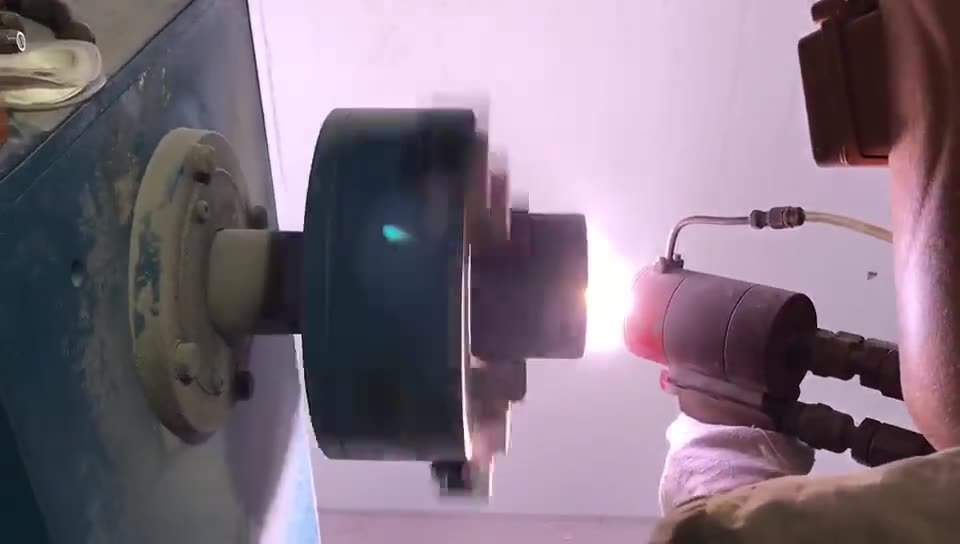
Air plasma is standard; some semiconductor customers require vacuum plasma for density and contamination control. The powder is hygroscopic in fine cuts, so storage and feed-system drying matter more than with oxide powders like alumina. We supply in sealed containers with a stated shelf life and recommend desiccant drying of the feeder hopper on fine cuts.
What we need to quote
Application and environment (plasma etch, molten metal, vacuum furnace), substrate, required thickness and surface finish, any contamination or trace element specification, and the spray system. For semiconductor applications please send the customer specification - purity and particle limits are usually defined there.
Lot traceability and packaging
For semiconductor and crucible work, the powder lot matters as much as the grade. We supply each shipment with the lot number, the certificate of analysis covering purity and trace elements, and the particle size distribution measured on that lot - so if a coating behaves differently from the previous batch, the comparison starts from data rather than suspicion.
Fine yttria cuts are hygroscopic and should be stored sealed with a desiccant; we ship in sealed containers with a stated shelf life and recommend drying the feeder hopper before a production run. A damp powder feeds unevenly and produces porosity that shows up as particles in a chamber.
Frequently asked questions
Why use yttria instead of alumina in a plasma etch chamber?
Erosion rate. In fluorine and chlorine plasma, Y2O3 erodes far more slowly than alumina and sheds fewer particles, so chamber parts last longer and defect rates drop. The trade-off is cost and a more demanding powder specification.
Is yttria powder hazardous to handle?
It is a fine oxide powder and should be handled with normal dust precautions - respiratory protection, local extraction when charging a feeder, no dry sweeping. It is not a classified carcinogen, but as with any respirable ceramic powder, exposure should be controlled.
What purity do semiconductor customers specify?
Typically 99.9 percent and above on the base oxide, plus limits on individual metallic impurities. Those limits come from the fab's contamination control specification, not from us - send the document and we quote against it.
Can yttria be used as a thermal barrier coating?
Not on its own. Its role in TBCs is as the stabiliser in YSZ, at 7-8 percent. Pure yttria has a different expansion behaviour and would not survive the cycling a TBC sees. Use it for erosion and contamination resistance, not insulation.