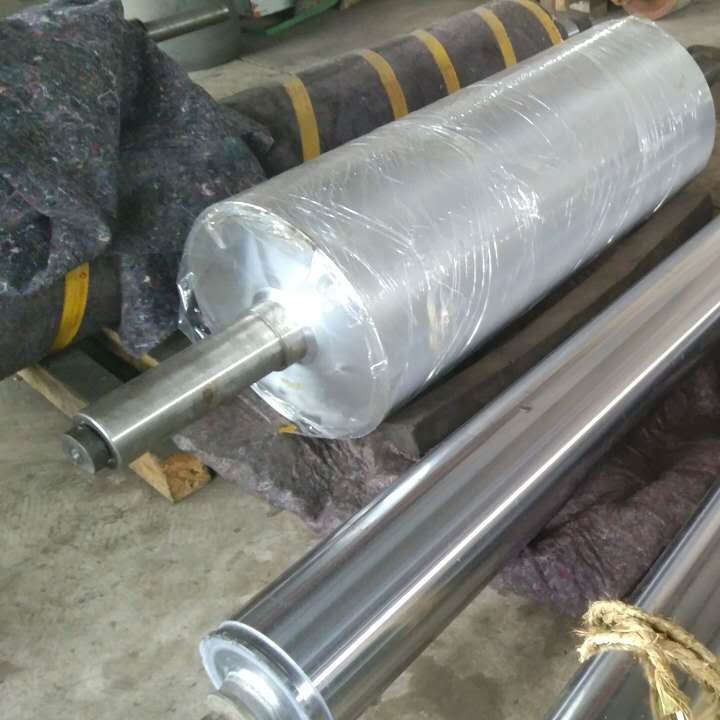
Printing and converting machines run on rolls: anilox rolls meter ink, corrugating rolls shape the board, calender rolls finish the surface and corona rollers treat films. All of them fail by abrasive wear, ink corrosion or loss of surface grip. Thermal-sprayed ceramic coatings solve these failures at a fraction of the cost of new rolls.
Roll Solutions at a Glance
| Roll type | Coating | Thickness | Result |
|---|---|---|---|
| Anilox roll | Plasma Cr₂O₃ (chromium oxide) | 0.4–0.5 mm, laser-engraved 600 lpi | ~10× chrome life, stable ink metering |
| Calender / precision roll | HVOF 316L or WC, polished | 0.3–1.2 mm build | Mirror finish, replaces hard chrome |
| Corrugating roll | Plasma / HVOF WC or Cr₂O₃ | 0.3–0.6 mm | Flute wear stopped at the root |
| Corona roller | Plasma alumina / ceramic | 0.3–0.5 mm | Replaces rubber and epoxy sleeves |
Repair Workflow
- Strip the worn coating and inspect the roll body for cracks and journal wear.
- Grit blast, spray the bond coat and the ceramic or carbide layer.
- Grind and polish to original geometry and finish; re-engrave anilox cells where required.
- Inspect hardness, bond and runout before dispatch.
See also our dedicated pages for corona roller insulating coating and HVOF/plasma coating of printing rollers, plus chrome oxide coating for sleeves and bushings.
Frequently Asked Questions
How many times can a ceramic anilox roll be recoated?
Typically 3-5 times, limited by base-diameter loss. Each cycle strips the old ceramic, re-grinds the roll and reapplies about 0.2-0.3 mm of new coating, restoring full wall thickness to the print pattern.
Can laser engraving be redone after ceramic spraying?
Yes. After recoating we re-engrave the cell pattern by laser at the requested line count, so the roll returns to press with the original ink-carrying capacity.