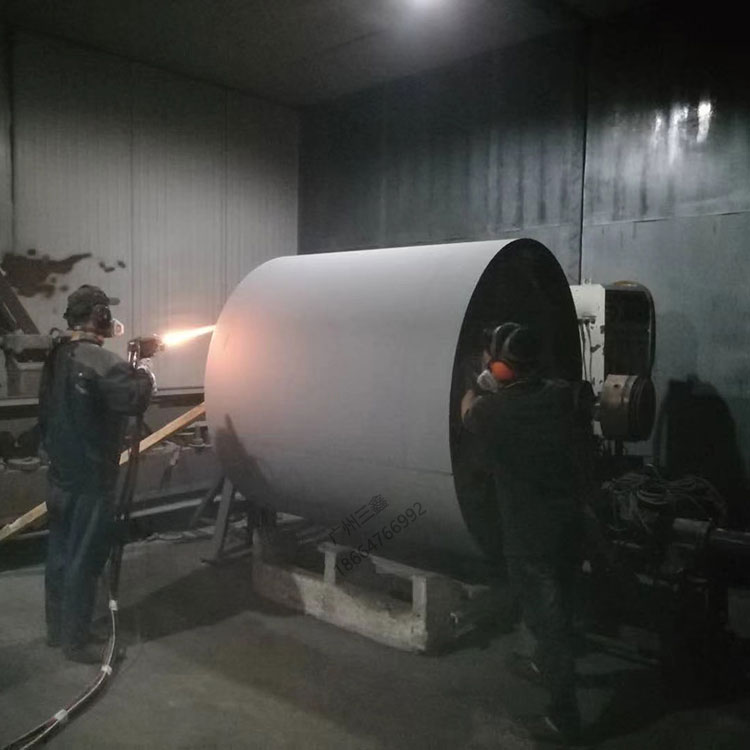
Landing gear endures enormous mechanical stress and wear, especially at touchdown and during retraction cycles. Applying a tungsten carbide (WC) coating by thermal spray raises the surface hardness and corrosion resistance of pistons, axles, torque links and lock fittings while the steel substrate keeps absorbing impact. The result is a longer overhaul interval and safer operation.
Coating Specification
| Parameter | Typical value |
|---|---|
| Coating material | WC-10Co4Cr or WC-12Co powder |
| Process | HVOF (primary), plasma spraying (large areas) |
| Hardness | 1100–1300 HV0.3 |
| Thickness | 0.15–0.30 mm after finishing |
| Bond strength | ≥ 70 MPa |
| Surface finish | Ground and polished to Ra ≤ 0.2 μm |
Why It Works
- High hardness – HRC-class hardness far above hard chrome resists the sliding and impact wear of landing cycles.
- Wear resistance – stable performance under high load and long duty reduces the wear rate of actuator rods and bushes.
- Corrosion resistance – the dense WC-CoCr layer resists hydraulic fluids, de-icing salts and humid hangar environments.
- Dimensional restoration – worn gear components can be rebuilt to print and re-coated in one operation.
The same WC system we apply to pump shafts and hydraulic rods is qualified for aviation gear work; see also our roll and shaft coating service for dimensional restoration.
Frequently Asked Questions
Why spray tungsten carbide on landing gear instead of hard chrome plating?
WC coatings applied by HVOF reach 1100-1300 HV, well above hard chrome, and contain no hexavalent chromium. They also perform better at the high contact stresses and sliding wear a landing gear sees during retraction, extension and touchdown.
How is coating quality verified on flight-critical parts?
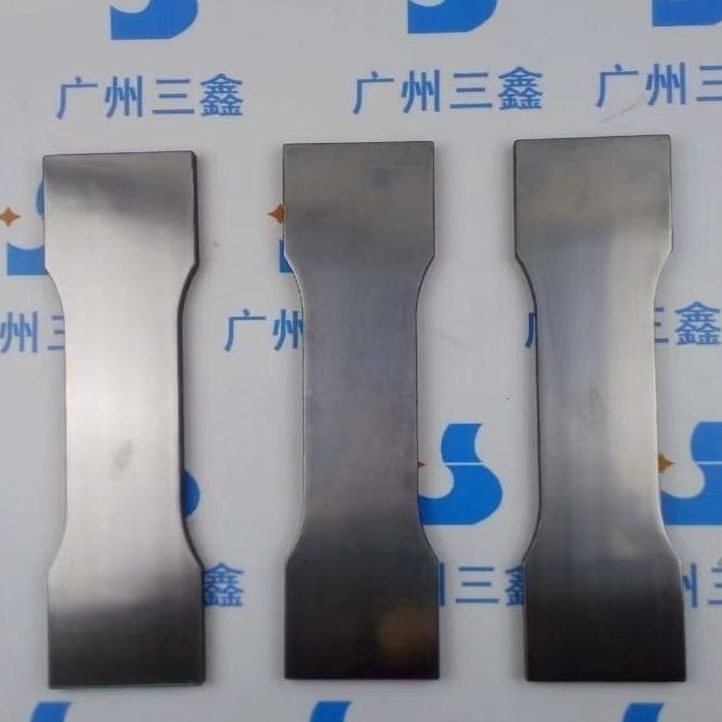
Every batch is accompanied by coupon testing for hardness, bond strength and thickness, and the finished part is inspected for cracks, porosity and dimensional accuracy before final grinding and polishing.