
A torch, not an accessory
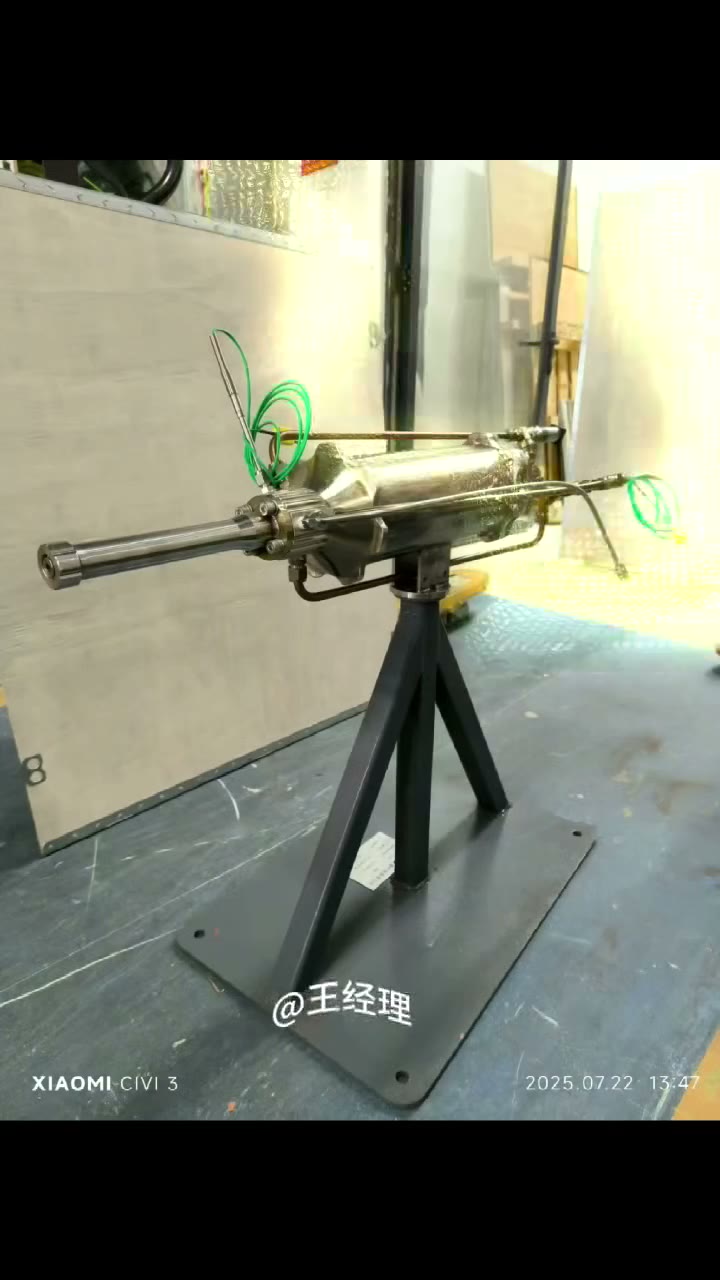
In a plasma installation the power supply sets the envelope, but the torch decides what the plume actually looks like. The SG-100 is the torch used across our 80 kW systems: it takes internal or external powder injection, runs on argon, nitrogen or helium, and accepts subsonic and Mach-level nozzle kits. Those options are what let one gun cover thermal barrier coatings on turbine hardware and thin ceramic layers on graphite fixtures.
Powder injection: the decision that matters most
External injection is the traditional arrangement: the powder is fed into the plume just outside the nozzle. It is simple and it lets the operator see the injection point, but a proportion of the particles graze the outside of the jet, never fully melt, and either bounce off the part or land as a porous inclusion.
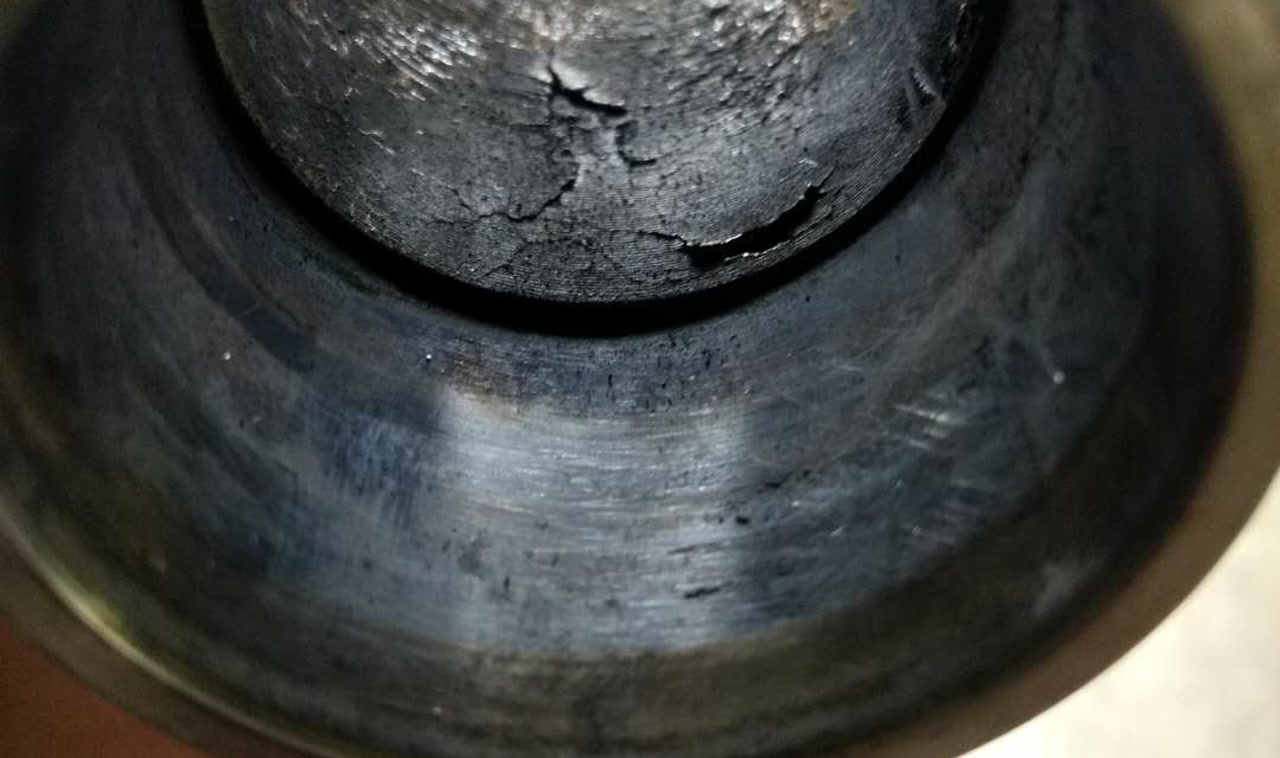
Internal injection puts the powder inside the nozzle, through the arc core. The particle spends longer in the hottest region, so it arrives molten and stays in the centre of the jet. Deposition efficiency rises, overspray falls, and the coating is denser at the same power. The cost is that the injection port is a wear item and the nozzle is more sensitive to a feed surge.
| Mode | Best for | Watch out for |
|---|---|---|
| External | Coarse powders, high feed rates, easy visual check | Unmelted fraction; lower efficiency |
| Internal, single port | Fine ceramics, TBC top coats | Port erosion; needs steady feed |
| Dual internal ports | Bond coat plus top coat, or high-rate ceramic | Two feeders and balanced rates |
Gas and nozzle options
Argon is the default plasma gas: easy to ionise, inert, widely available. Nitrogen raises enthalpy and is cheaper, but it reacts with some materials at temperature. Helium gives the highest enthalpy and the longest plume, which helps on zirconia where the melting point is high; it is also the most expensive gas and the one most often wasted through leaks.
Nozzle kits change the plume shape: a subsonic nozzle produces a broader, softer jet for thin layers and small parts, while a Mach nozzle produces a longer, faster jet for larger stand-off distances and higher particle velocity. Changing nozzles is a ten-minute job, which is why one gun can serve several product lines.
Maintenance that keeps the coating repeatable
- Electrode and nozzle wear together. Track arc voltage at fixed current and gas flow; a 5 to 8% rise means the arc is lengthening and the plume is cooling.
- Ceramic ring (nozzle sleeve) insulates the nozzle and shapes the gas flow; a chipped or contaminated ring causes arc wander long before it fails outright.
- Cooling water flow and return temperature, checked every shift - a torch run dry for seconds is scrap.
- Powder port erosion, which shows as a fan-shaped spray pattern instead of a round one.
Before you order
Tell us the machine the torch will run on (power supply model, current range, gas panel), the coating material, and whether internal or external feed is required. Torch interface and consumable stack differ between machine generations, and matching them at quotation avoids an adapter that changes the plume.
Reading the spray pattern
A healthy SG-100 lays down a symmetrical deposit with soft edges. An eroded powder port produces a fan shape or a comet tail on one side, and the coating on that side is thinner because the particles arrive at a shallow angle. A misaligned nozzle gives a deposit that is dense in the centre and dusty at the rim - the classic sign that the outer particles are not melting.
Spraying a test strip for twenty seconds and looking at the footprint tells you more about torch condition than any gauge. It is also cheap: one strip per shift catches wear before it reaches a customer's part.
Frequently asked questions
What is the difference between internal and external powder feed?
With external feed the powder is injected into the plume after the nozzle exit; with internal feed it is injected inside the nozzle, through the arc core. Internal feed melts the particle more completely and keeps it in the hot centre of the jet, which raises deposition efficiency and reduces the unmelted fraction. On zirconia the difference in porosity is visible in a cross-section.
Can one gun run a bond coat and a ceramic top coat?
Yes, and that is the normal TBC setup. With two powder ports and two feeders the gun sprays the MCrAlY bond layer and then the YSZ top coat without breaking the arc, which avoids a cooling cycle between layers and the oxide that forms on a hot bond coat when it is left in air.
When should the electrode be replaced?
When arc voltage at the same current and gas flow has risen by roughly 5 to 8% against a new electrode, or when the nozzle bore has opened by 10 to 15%. Both are measurable and both change the plume before the coating visibly fails, so they are better triggers than a fixed hour count.