What makes chromium oxide useful
Chromium oxide - Cr2O3 - is the workhorse of sprayed ceramic coatings. It is hard (typically 950-1100 HV, with dense deposits reaching higher), chemically inert across a wide pH range, electrically insulating, and it holds a polish. That combination is rare, and it is why the same material turns up in pump seals, printing rolls, textile machinery and electrical insulation layers.
Melting point is around 2435 C, so it is a plasma material - it will not melt in an HVOF flame. It is also a material that sprays best from a well-granulated, free-flowing powder: Cr2O3 is dense and does not vaporise easily, but poor flow produces feed pulsation and a coating with bands of different porosity.
Properties that matter in service
| Property | Typical value | Practical meaning |
|---|---|---|
| Microhardness | 950-1100 HV0.3 | Second only to carbide among common ceramics; good abrasion resistance |
| Melting point | ~2435 C | Plasma process required; stable in high-temperature service |
| Porosity (as sprayed) | 2-6 % | Sealer recommended for corrosion duty |
| Dielectric strength | Depends on thickness and porosity | Usable as an insulating layer if sealed and thickness-controlled |
| Surface finish achievable | Ra 0.1-0.4 um after lapping | Takes a polish - used on seal faces and printing rolls |
| Max service temperature | ~540 C continuous in oxidising service | Not a thermal barrier; use zirconia above this |
The finish number is why this material dominates mechanical seal faces. A sprayed and lapped Cr2O3 face runs against carbon or silicon carbide without tearing it up, and it resists the abrasive particles that leak past a worn seal.
Where it works, and where it does not
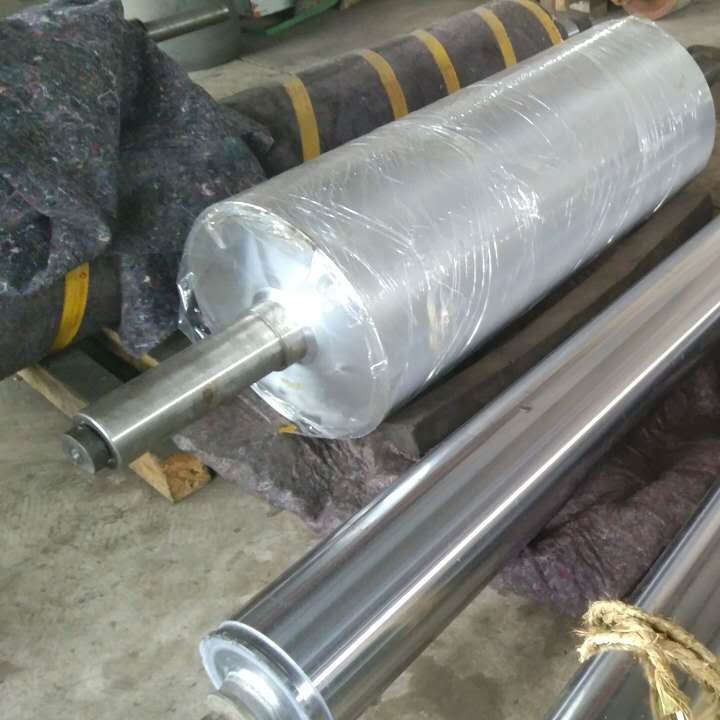
Good fits: mechanical seal faces, pump sleeves and wear rings, printing and anilox rolls, textile thread guides and godets, wire drawing capstans, insulating layers on electrical components, and corrosion-resistant linings for mildly acidic service.
Poor fits: anything needing thermal insulation above about 540 C; thick deposits on parts that see thermal shock, because the expansion mismatch against steel will crack a heavy layer; and applications needing the absolute maximum abrasion resistance, where tungsten carbide wins.
One more boundary worth stating: Cr2O3 is not a substitute for hard chrome where the requirement is a thin, mirror-smooth, dimension-critical layer on a complex internal geometry. It is a sprayed coating with a minimum practical thickness, and it will not hold a 5 um tolerance on an internal bore.
Spraying notes
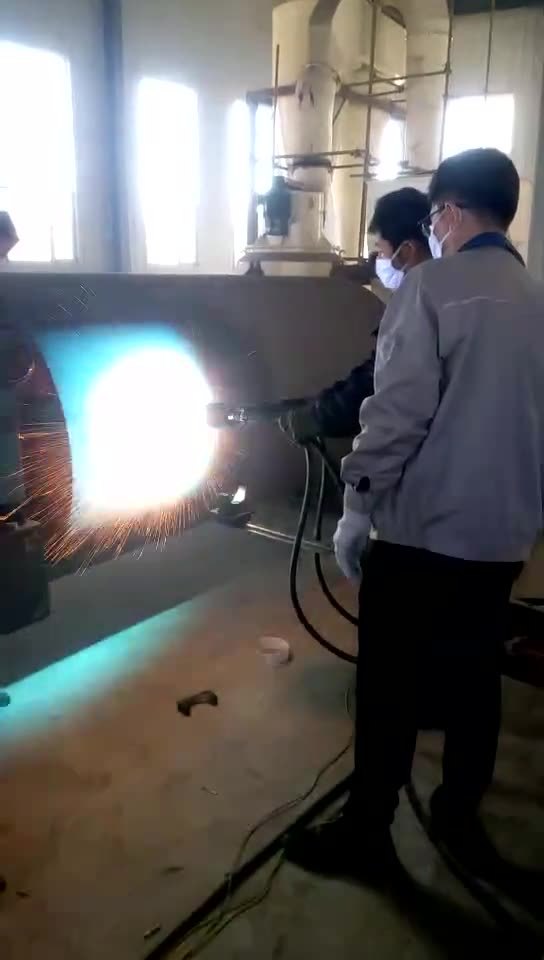
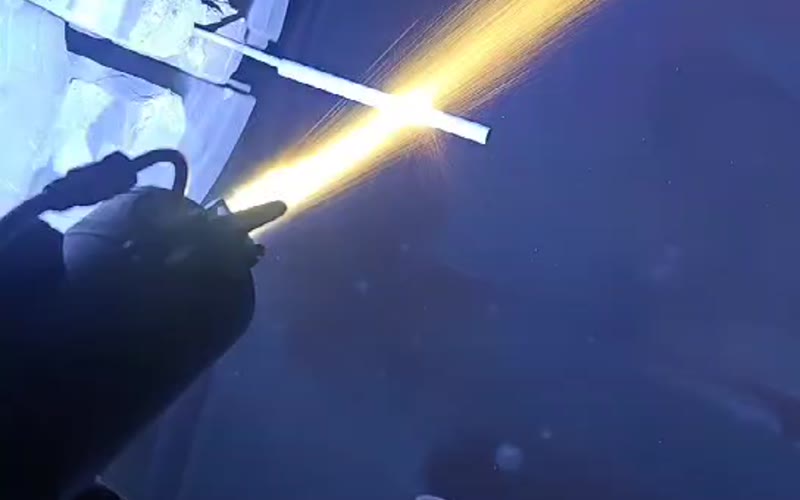
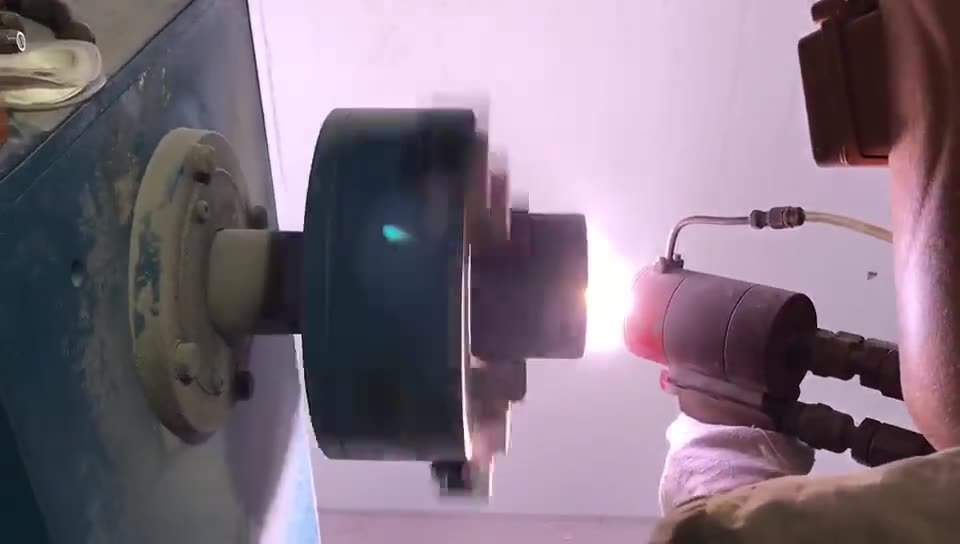
Typical thickness is 0.10-0.40 mm, plasma sprayed with argon-hydrogen or argon-nitrogen, then ground and lapped where a seal face is involved. Porosity in the 2-6 percent range is normal; for corrosion or dielectric duty the coating is sealed with a silicone or epoxy sealer, and for seal faces it is often left unsealed and lapped instead.
Bond coats are not always required on steel, but they improve adhesion on thick deposits and on parts that will see thermal cycling. We normally recommend a thin NiAl or NiCrAlY bond layer above 0.25 mm.
What we need to quote
Application and service environment, substrate, required thickness and surface finish, whether the coating has to be electrically insulating and at what voltage, and the spray system you are running. Particle size cuts are matched to your gun; typical plasma cuts run -45/+15 um.
Sealing and finishing decide the service life
An as-sprayed Cr2O3 coating is porous, and in a wet or chemical environment that porosity is where failure starts - the medium reaches the substrate through the interconnected pores and corrosion lifts the coating from underneath. Sealing with a low-viscosity silicone or epoxy closes the surface, and on seal faces the alternative is to lap the coating instead, which closes the surface by removing the peaks.
Which route applies depends on the duty. A pump sleeve in mild chemical service is sealed and left as-sprayed; a mechanical seal face is lapped to Ra 0.1-0.4 um and left unsealed, because a sealer would not survive the face contact. We ask which one applies before quoting, since it changes both the process and the delivery time.
Frequently asked questions
Is chromium oxide coating electrically insulating?
Yes, when it is dense and sealed. Cr2O3 is a dielectric, but sprayed coatings contain porosity, and an unsealed layer will absorb moisture and lose breakdown strength. For insulation duty we control thickness, seal the coating and test dielectric strength on a coupon before shipping.
Can chromium oxide be sprayed with HVOF?
No. The melting point is around 2435 C, well above what an HVOF flame delivers to the particle. Cr2O3 is a plasma material. Attempting it in HVOF produces a porous, poorly bonded layer.
What surface finish can you achieve on a seal face?
Ra 0.1-0.4 um by lapping is routine. Below that, the limiting factor is usually the flatness of the substrate rather than the coating. We normally lap seal faces to a light band with a flatness check on the finished part.
How thick should a chromium oxide coating be?
0.10-0.40 mm for most wear and seal work. Below 0.10 mm the coating is hard to make uniform; above 0.40 mm residual stress increases and the risk of cracking under thermal cycling rises sharply. If you need more than that, the design is usually asking for a different material.