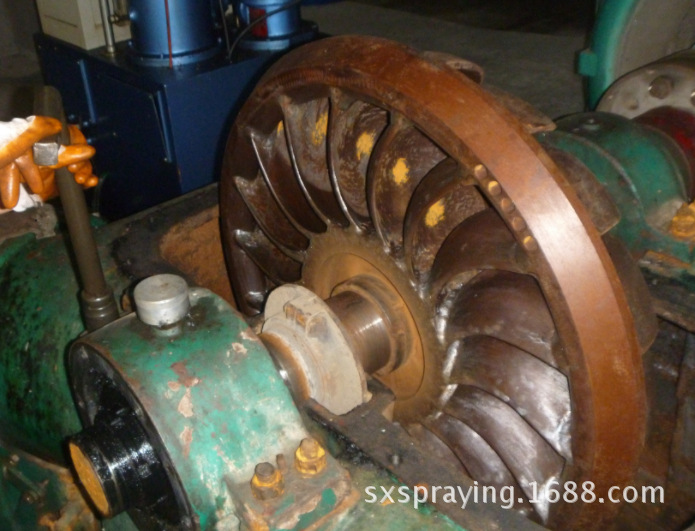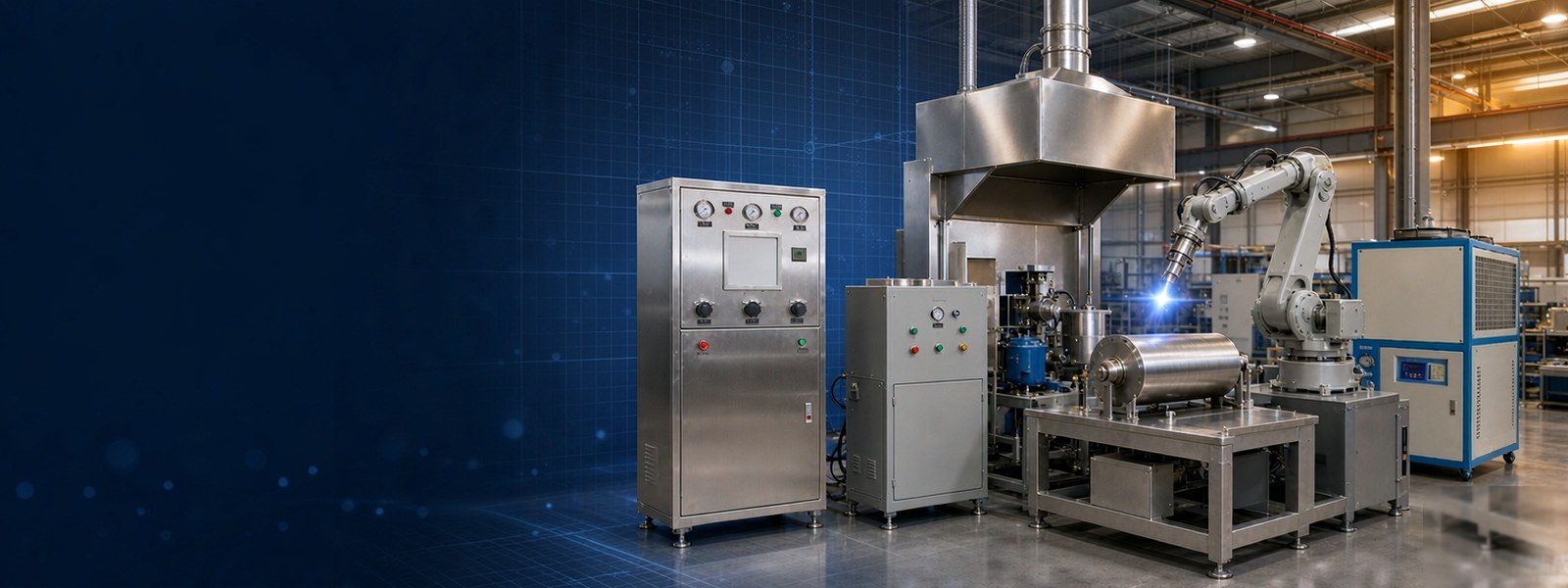
 Plasma spraying is a material surface strengthening and surface modification technology that uses a plasma arc driven by DC as a heat source to heat the ceramic material to a molten or semi-molten state, and spray it at high speed onto the surface of the pretreated workpiece to form a firmly adherent surface layer. Ceramic coatings prepared by plasma spraying have high bonding strength, low porosity and low surface roughness, and are increasingly used in repair and strengthening applications in various industries.
Process options
| Process | Typical thickness | Hardness | Best for |
|---|---|---|---|
| Plasma cladding (PTA) | 0.5-3.0 mm | HRC 55-65 with carbide addition | Severe wear, rebuildable parts, metallurgical bond |
| HVOF carbide | 0.10-0.40 mm | 1,050-1,300 HV0.3 | Sliding wear with impact, tight tolerance |
| Plasma ceramic | 0.15-0.50 mm | 900-1,100 HV0.3 | Acid and alkali resistance, insulation |
| Nano ceramic composite | 0.05-0.20 mm | Depends on system | Thin barrier coatings, sealing surfaces |
Cladding versus spraying - the real difference
Thermal spray produces a mechanical bond. Plasma cladding (PTA) melts a layer of the substrate and the additive together, producing a metallurgical bond with no porosity at the interface. That matters on parts that see heavy impact or thermal cycling, where a sprayed layer might spall. The cost is heat: the part reaches 800-1,000 °C locally, so distortion and post-weld heat treatment must be planned.
Choosing between them
If the part is thin, heat-treated, or dimensionally critical, spraying is the right route. If it is a heavy, low-value part that is being rebuilt repeatedly and sees impact, cladding is more durable and often cheaper over the life of the component.
Frequently asked questions
Can a clad part be machined back to tolerance?
Yes. Cladding is applied oversize and finished by grinding or turning. Hardness above HRC 55 requires carbide tooling or grinding rather than turning.
Which handles strong acids better, ceramic or carbide?
Alumina and chromia are better in most acids; carbides are chosen where wear dominates and the acid is moderate. Where both are severe, a sealed ceramic over a corrosion-resistant bond coat is used.
How do I decide between repair and replacement?
As a rule, if the part costs more to replace than roughly 30% of its value and the substrate is sound, rebuilding is worth quoting.
Further reading: What drives coating cost per part.