What flame spray plastic coating does
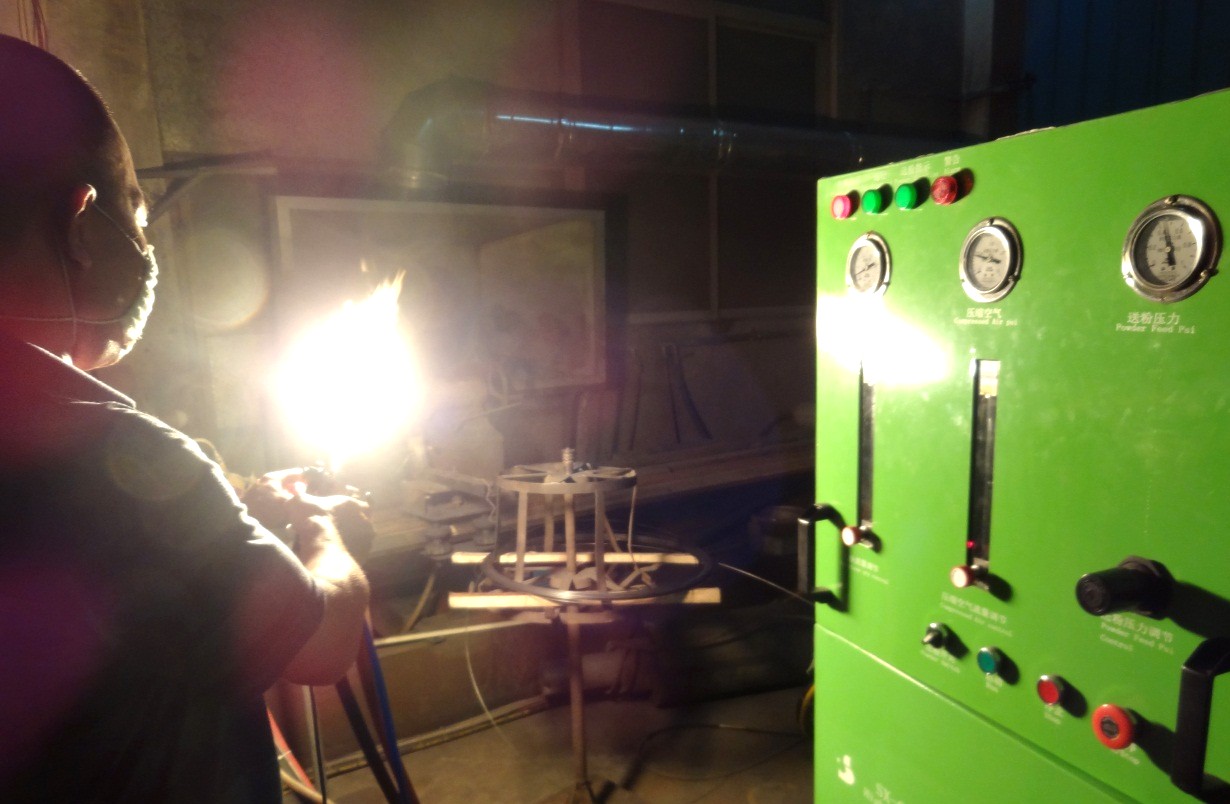
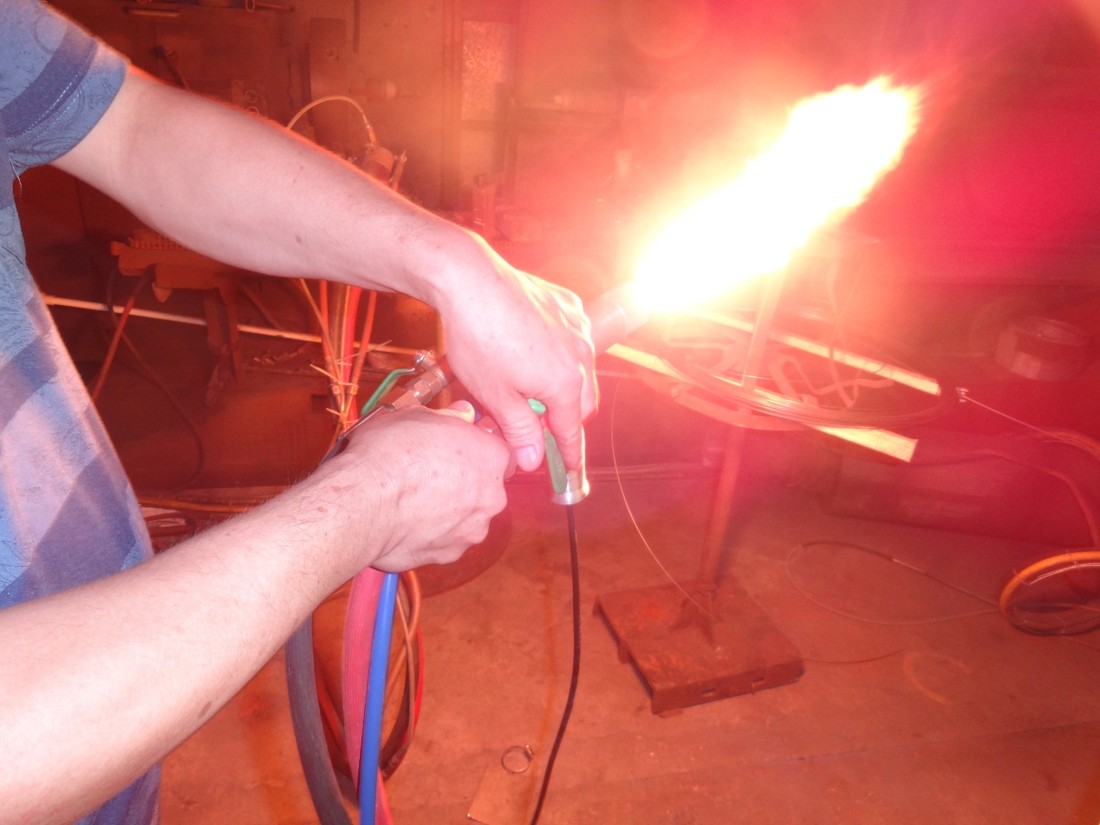
The SX-6018 sprays thermoplastic powder - polyethylene, nylon, EAA, EVA, chlorinated polyether - through an oxy-acetylene flame. The powder melts in the flame on the way to the part, lands on a preheated surface, and fuses into a continuous, pore-free plastic coating. No oven, no autoclave, no solvent, no curing time: the part can go back into service as soon as it cools.
That is the whole point of the process. A tank that cannot be moved into a curing oven, a pipeline joint welded in a trench, a concrete pit wall, a vessel interior in a chemical plant - these are the jobs where flame spray plastic coating is not a cheaper alternative to shop coating but the only method that works on site.
The feeder is the engineering
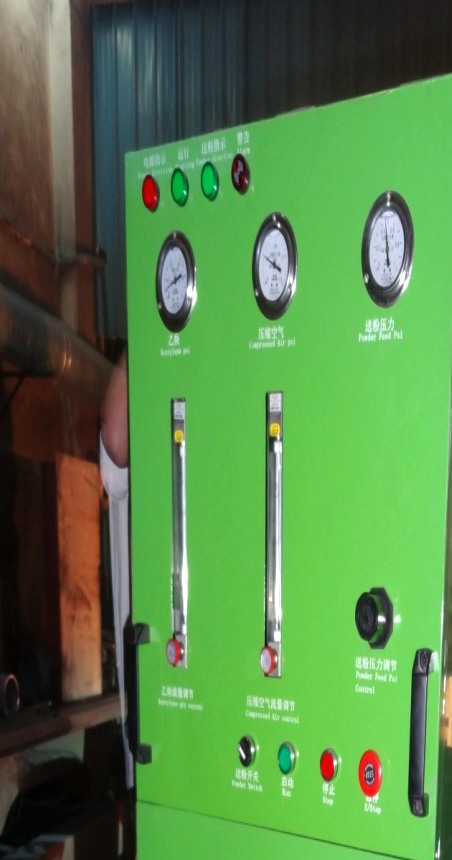
Most flame spray systems fail at the powder feed, not at the gun. The SX-6018 uses a cart-mounted, high-capacity stainless steel feeder built on a cyclonic fluidised bed, with an adjustable Venturi pickup and an additional powder-cleaning injector. The result is a feeder and a long hose that stay free of powder buildup, which is what allows the gun to run continuously in any orientation for extended periods.
Because the feeder is not pressurised, powder can be added while the gun is running. On a tank job where the operator is 30 metres of hose away from the cart, that single detail is the difference between a continuous coating pass and a stop-start coating with cold laps in it. One feeder supplies two guns simultaneously, so two operators can work opposite sides of a vessel from a single console.
Backfire protection
A flame spray gun is a hose full of combustible powder connected to an acetylene flame. The SX-6018 gun uses a dedicated gas-mixing design with a dual-layer shielding gas structure, which prevents flame from travelling back up the powder line. The shielding gas - compressed air, nitrogen or carbon dioxide - also keeps the nozzle cool and shapes the jet.
What is in the set, and what you supply
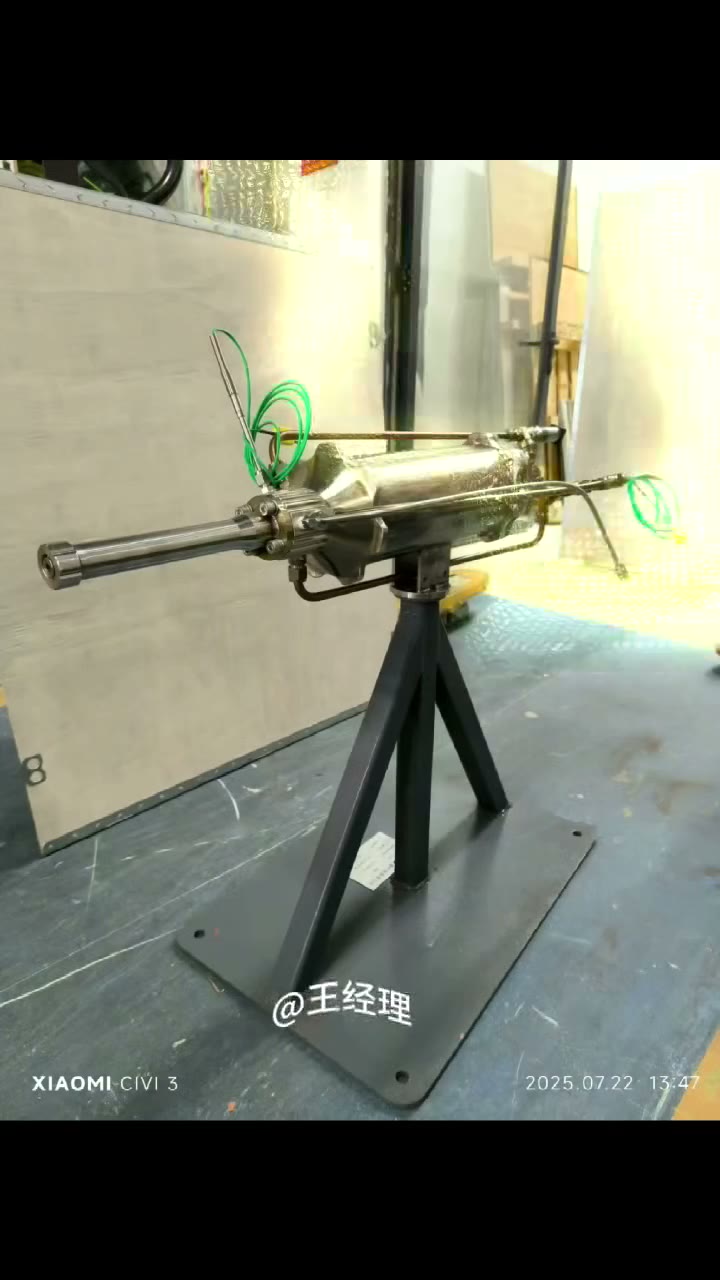
The complete set is the SX-6018 high-power flame spray gun, the powder feeder, powder and gas hoses, and the air and oxygen circuit regulating valves. The customer supplies a 0.9 m3/min air compressor, oxygen and acetylene cylinders or a manifold, an oxygen-acetylene pressure reducing regulator, and the site services to connect them.
Propane or LPG can replace acetylene as the fuel gas. The regulator thread has to be adapted to the LPG cylinder valve and the pressure set to 0.1-0.15 MPa with an acetylene regulator; the flame is cooler (2,800 C with oxygen instead of 3,150 C) but the process still works on the same powders.
Process sequence
Surface pretreatment, preheating, spraying, inspection - in that order, and each step decides whether the next one works. Blasting or phosphating gives the adhesion; a greasy or rusted substrate produces a coating that lifts at the edges within a season. Preheating must take the surface above the melting point of the powder, otherwise the particles hit a cold wall and bounce.
Preheat temperature is not one number. It depends on the powder, the part thickness and the geometry: thin plate (under 3 mm) is preheated to about the melting point minus 10-20 C, thick plate to the melting point plus 10-20 C, and concave surfaces and tank interiors run 10-20 C hotter than flat or convex ones because they lose less heat to radiation.
Spraying parameters
| Parameter | Setting |
|---|---|
| Acetylene working pressure | 0.10 - 0.12 MPa |
| Oxygen working pressure | 0.50 - 0.60 MPa |
| Compressed air (shielding) | 0.40 - 0.60 MPa, dry and clean |
| Spray distance | 150 - 300 mm (200-250 mm typical for 80-140 mesh thermoplastic) |
| Powder feed rate | 60 - 300 g/min |
| Deposition efficiency | 85 - 95% |
| Powder size, thermoplastic | 80 - 140 mesh |
| Powder size, thermosetting | 100 - 140 mesh |
| Output per gun | 12 - 15 m2/h at 1 mm thickness |
| Flame temperature | 3,150 C (acetylene + oxygen), 2,700 C (acetylene + air) |
Preheat temperature by powder
| Powder | Preheat (C) | Service temperature (C) |
|---|---|---|
| High-pressure polyethylene | 120 - 150 | -70 to +60 |
| Low-pressure polyethylene | 150 - 200 | -70 to +75 |
| Nylon 11 / Nylon 12 | 170 - 230 | -50 to +80 |
| Nylon 1010 | 210 - 250 | -50 to +80 |
| Nylon 66 | 250 - 270 | -50 to +80 |
| PE / PO / cross-linked PE | 180 - 250 | -14 to +120 |
| Chlorinated polyether | 170 - 230 | -30 to +120 |
| Epoxy powder | 150 - 200 | up to 80 |
| EAA / EVA copolymer | 80 - 130 | -45 to +70 |
Where it is used
Chemical plants, large storage tanks and vessels, oil and gas pipelines, wastewater structures and concrete surfaces. The process is referenced in the Chinese petroleum industry standard for hot-applied polyethylene external coating of buried steel pipe, and it is used in the field where factory-applied coating has been damaged at a weld or a handling point.
Compared with a shop-applied coating, the economics are simple: no booth, no oven, no transport of the part, and repairable defects - a thin spot is reheated and re-sprayed rather than stripped and redone. Compared with a glass-flake lining, the coating is thicker, applied faster and does not need a controlled cure.
Where it does not fit
This is a plastic coating system. It does not spray carbides, ceramics or metal powders; those belong to plasma, HVAF or arc. It also cannot rescue wet powder: all thermoplastic and thermosetting powders must be stored dry and free of contamination, because moisture in the feed shows up as pinholes that a holiday detector will find immediately.
Thick coatings are built in passes, not in one hit. Above roughly 0.3 mm per pass the coating skins over before the solvent-free melt has consolidated, and the result is a spongy layer that fails a spark test even though it looks sound.
Frequently asked questions
What is the difference between SX-6018 flame spraying and powder coating?
Electrostatic powder coating needs a booth and a curing oven, and the part has to fit inside both. Flame spraying melts the powder in an oxy-acetylene flame and fuses it onto a preheated surface, so it works on site, on tanks, pipelines and structures that cannot be moved.
Can the SX-6018 feed two guns at once?
Yes. The cart-mounted stainless feeder supplies two spray guns simultaneously from one console, which is how two operators coat opposite sides of a vessel without a second machine.
What services must the customer provide?
A 0.9 m3/min air compressor, oxygen and acetylene (or LPG with an adapted regulator), an oxygen-acetylene pressure reducing regulator, and the site connections. The set itself includes the gun, feeder, hoses and the air and oxygen circuit valves.
Which powders can it spray?
Thermoplastic powders such as polyethylene, nylon 11/12/1010/66, EAA, EVA and chlorinated polyether, and thermosetting epoxy. 80-140 mesh for thermoplastics, 100-140 mesh for thermosetting.