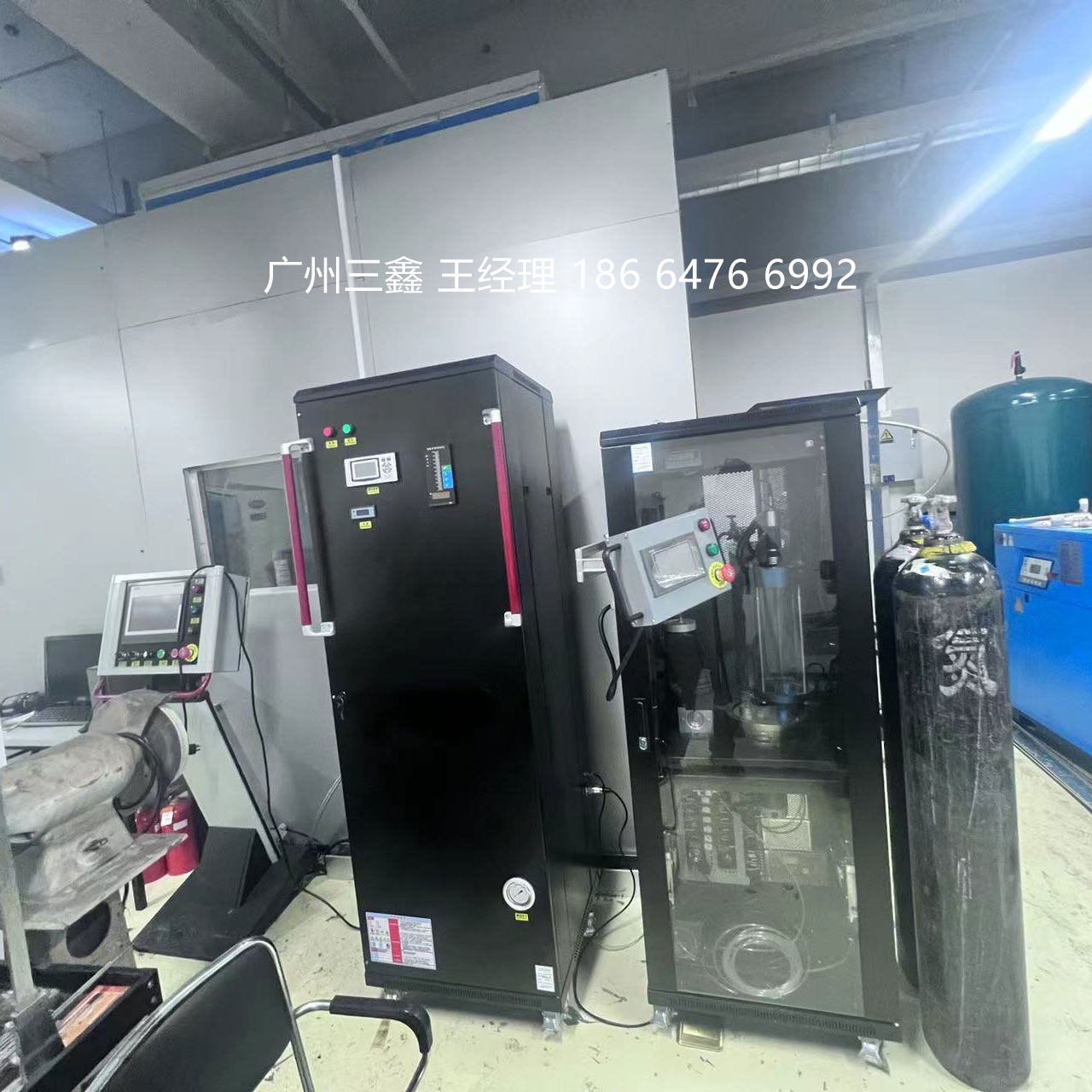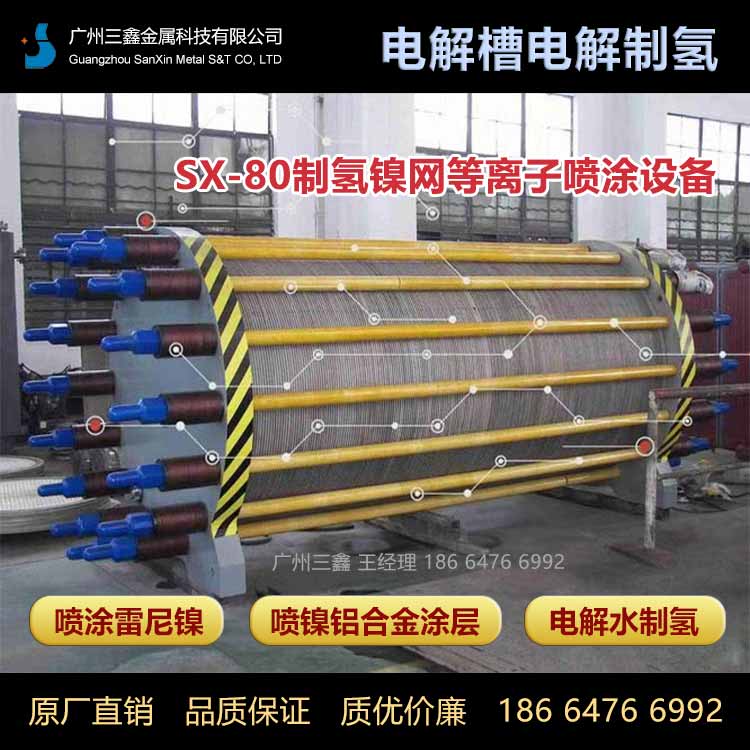
Alkaline water electrolysers depend on their electrode mesh. Applying a Raney-nickel-forming nickel-aluminium layer by plasma spraying turns ordinary nickel mesh into a high-activity, corrosion-resistant electrode — raising hydrogen output per square metre and cutting energy consumption.
Performance Parameters
| Parameter | Value |
|---|---|
| Coating system | Ni-Al (Raney nickel precursor) plasma sprayed |
| Coating thickness | 0.5–2.0 mm |
| Current density | Up to 2000 A/m² |
| Voltage efficiency | ≤ 1.7 V @ 1000 A/m² |
| Service life | Several years depending on duty |
Why Plasma-Sprayed Ni-Al Works
- Catalytic activity – after activation the porous Raney nickel skeleton multiplies the effective electrode area.
- Corrosion resistance – the coating survives hot concentrated KOH for years without flaking.
- Uniform, dense deposition – controlled plasma parameters keep mesh-to-mesh variation small at production speed.
- Beyond electrolysers – the same system serves fuel-cell electrodes, industrial electrolysis anodes/cathodes and wastewater-treatment electrodes.
Full equipment details are on our nickel screen hydrogen spraying service page; the underlying process is covered in plasma spraying ceramic coating process.
Frequently Asked Questions
What does the nickel-aluminium layer do for the electrode?
The sprayed Ni-Al layer is the precursor of Raney nickel: leaching the aluminium out leaves a porous, highly active nickel skeleton. This raises the effective electrode area sharply and lowers overpotential, letting the cell run at up to 2000 A/m2 at low voltage.
Can you coat customer nickel mesh in production quantities?
Yes. We spray mesh on automated fixtures with continuous mesh transport, supplying coated mesh to electrolyser OEMs and hydrogen plant projects; coating thickness and activity are verified per batch.