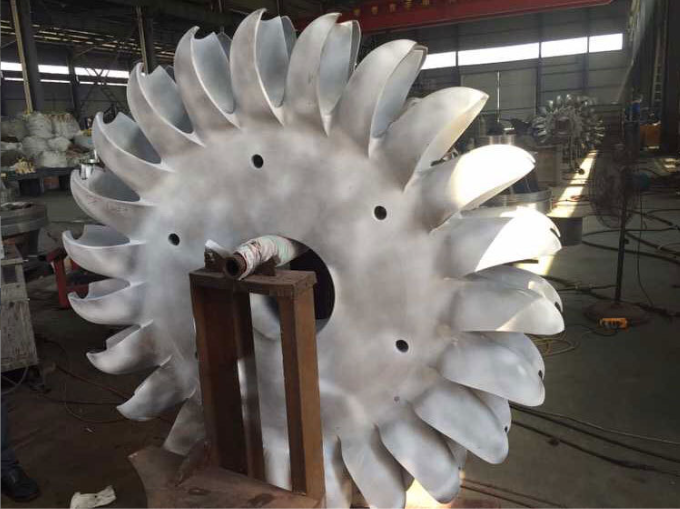
Application of Thermal Spraying Technology for Flow-Passing Components of Hydraulic Turbines
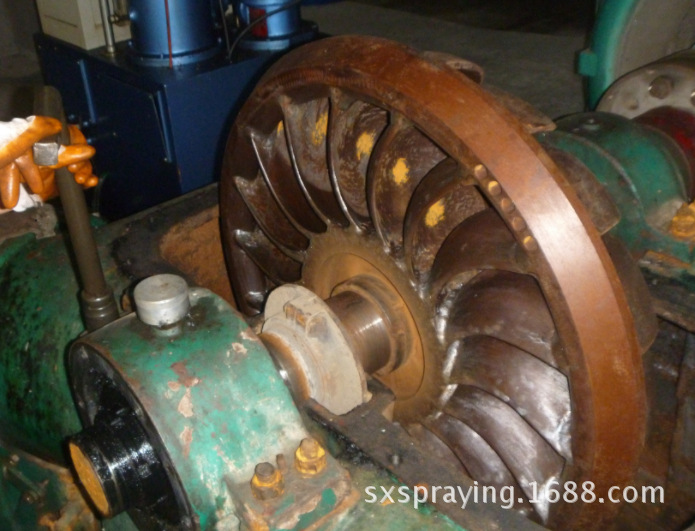
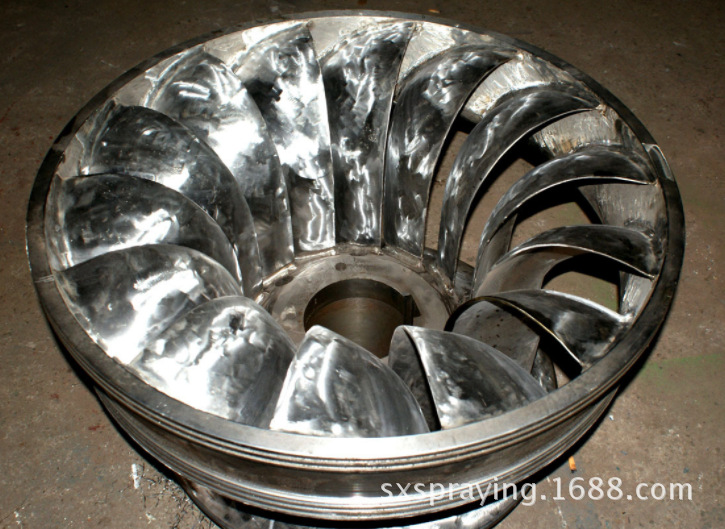
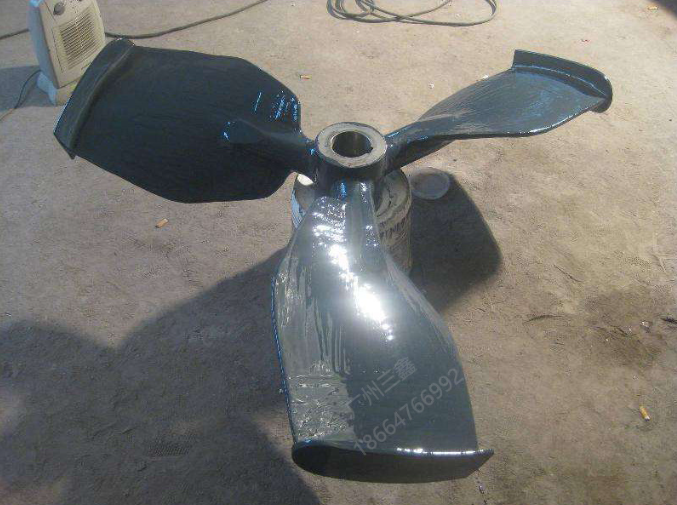
Hydraulic turbine erosion refers to material damage caused by the combined effect of cavitation and sediment abrasion. This long-standing issue plagues hydropower stations operating on sediment-laden rivers. Flow-passing components of hydraulic turbines, such as turbine blades, runner bodies, guide vanes, draft tubes, etc., are frequently eroded by water and sediment. This leads to metal loss on component surfaces, accompanied by vibration and noise during operation. Consequently, the unit suffers low operating efficiency, frequent major overhauls and shortened service life, which seriously threatens the stability and safety of the generating set.
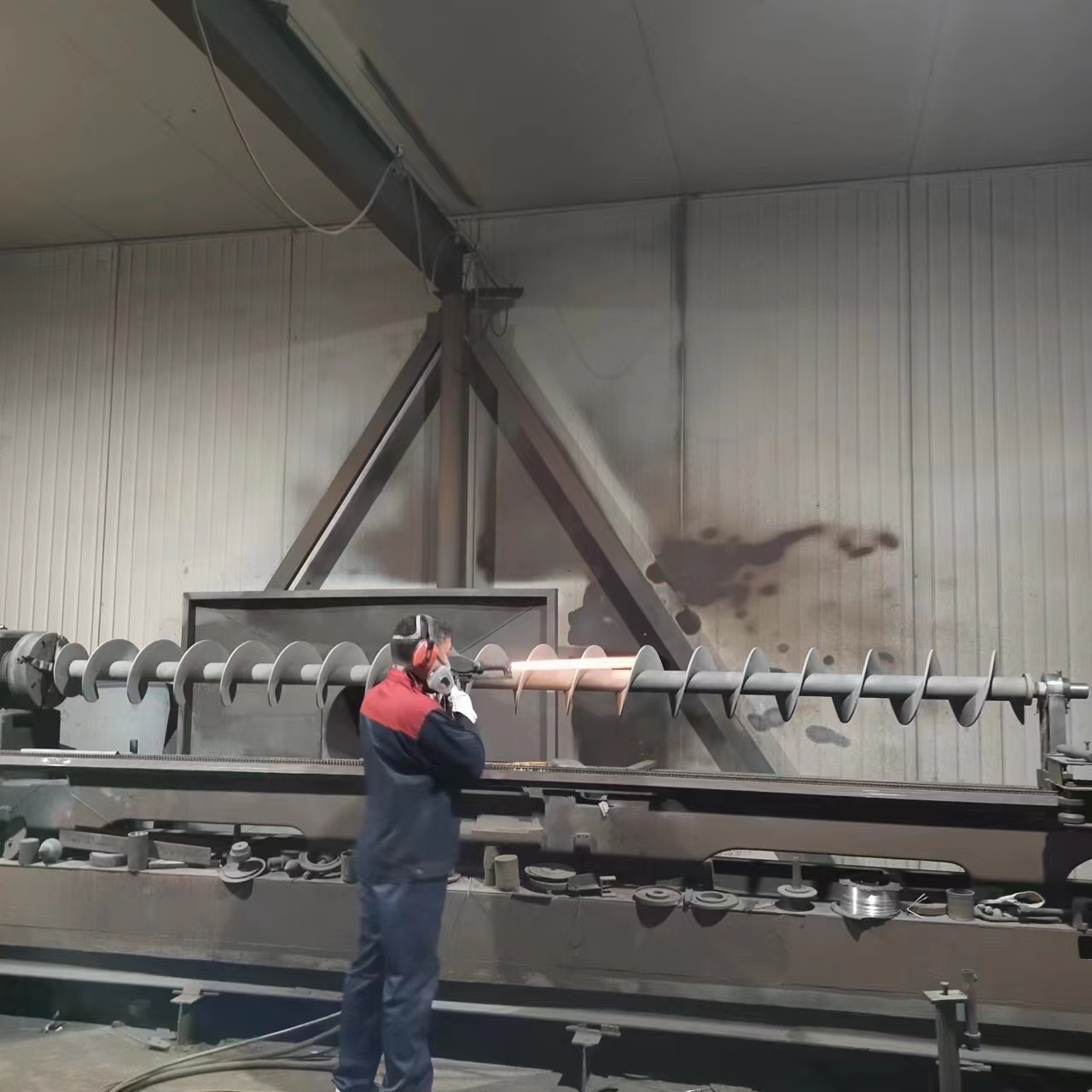
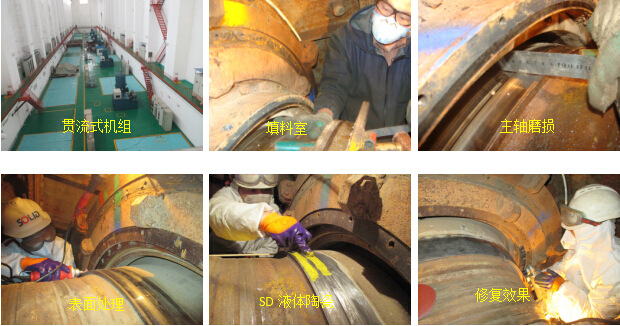
After renovation using thermal spraying technology on flow-passing components of hydraulic turbines in hydropower stations, severe component abrasion can be effectively mitigated and turbine operating conditions improved. Thermal spraying works by feeding powdered spraying materials into a high-velocity combustion flame with jet velocity exceeding 2000 m/s and moderate combustion temperature (≤3000 ℃). The high-speed gas flame heats powder particles into molten or plastic state while preserving the material’s wear resistance to the maximum extent. Meanwhile, the powder particles are accelerated and deposited tightly and uniformly onto the substrate surface, forming a physical bond with the base metal. The coating porosity can reach as low as 1%, and the substrate temperature remains below 150 ℃ without any deformation. The resulting high-quality coating features low porosity, low oxidation, high bonding strength and low residual stress.
Welcome to contact us for inquiries: 18664766992 or 13533223230.
Solution: (Supersonic Tungsten Carbide Spraying Technology)
This is a dedicated material for sediment abrasion resistance on flow surfaces of hydraulic turbines, mainly composed of tungsten carbide. The coating has a bonding strength greater than 70 MPa and surface hardness over 1100 HV. Its surface wear resistance is more than 70 times higher than that of 0Cr13Ni4Mo, and its cavitation resistance is 1.55 times that of 0Cr13Ni4Mo. Thermal spraying technology can effectively solve severe abrasion problems of hydraulic turbine flow-passing components.
Company Main Business
★ R&D, production and sales of plasma spraying equipment, high-velocity oxy-fuel (HVOF) spraying equipment, arc spraying equipment and flame plastic spraying equipment ★ Spraying production lines and equipment for magnetic & thermal conduction of cookware ★ Agency of imported thermal spraying equipment ★ Production and sales of thermal spraying materials ★ Thermal spraying coating processing ★ Non-stick coating spraying ★ Coating processing for corrugating rolls, rolling rolls and corona rolls ★ Turnkey projects and technical services for coating target production lines ★ Boiler spraying construction ★ Spraying for converter hoods and flues ★ Repair of various worn mechanical surfaces ★ On-site construction and repair of printing press cylinders, petroleum, chemical, metallurgical and other mechanical equipment
Guangzhou Sanxin Metal Technology also undertakes large-scale surface spraying projects and mechanical remanufacturing processing, as well as surface repair technologies for aerospace and marine vessels. The company has long been engaged in on-site anti-abrasion and anti-corrosion spraying projects for CFB boilers. It holds Class I qualification for thermal spraying construction and is a senior member of the China Thermal Spraying Association.
We can supply high-quality superhard anti-wear, high-temperature resistant, insulating and long-term special anti-corrosion coatings. The company is equipped with dozens of imported spraying systems including PRAXAIR JP8000 HVOF supersonic spraying equipment and Miller plasma spraying equipment from the United States. We are capable of undertaking various thermal spraying projects in the surface engineering field, such as functional hardface composite coatings for anti-abrasion, anti-corrosion, high-temperature resistance and anti-cavitation, as well as repair of worn parts.