Start with the failure mechanism, not the material
The most common specification mistake is to start by asking which powder is hardest. Hardness is only loosely correlated with service life, because wear is almost never a single mechanism. A pump sleeve sees fine slurry erosion, a calender roll sees sliding contact and cleaning chemicals, a boiler tube sees high-temperature abrasion and oxidation, and a bridge girder sees nothing but atmospheric corrosion. Each of those wants a different material, and often a different process.
Six questions frame almost every selection: what is removing material (abrasion, erosion, adhesion, cavitation, corrosion, oxidation); at what temperature; in what medium; with what impact or load; what substrate and heat treatment; and what dimensional build-up and finish the drawing allows. Answer those first and the candidate list usually shrinks to two or three families.
Six material families and where they stop
| Family | Typical hardness | Service limit | Choose it when |
|---|---|---|---|
| Zn / Al / Zn-Al arc spray wire | 20-70 HV | Ambient to ~400 °C (Al) | Atmospheric and immersion corrosion on large steel structures, tanks, bridges |
| NiCrBSi self-fluxing (Ni60) | HRC 58-62 fused | ~550 °C | Dense, machinable, economical wear layer on parts that tolerate fusing heat |
| WC-Co / WC-CoCr HVOF | 1000-1400 HV | ~450 °C | Severe abrasion, slurry erosion, replacement for hard chrome |
| Cr3C2-NiCr HVOF | 900-1200 HV | ~800 °C | High-temperature wear, boiler tubes, hot rolls |
| Cr2O3 / Al2O3 / YSZ ceramics | 1000-1800 HV | >1000 °C (YSZ as TBC) | Electrical insulation, chemical inertness, thermal barriers |
| Ni-Al, Mo and cored wires | Bond coat / build-up | Per topcoat | Dimensional restoration and bond layers under ceramic topcoats |
Two boundaries cause most field failures. WC-Co begins to decarburise and lose hardness above roughly 450 °C, so a hot part that looks like a wear problem is actually a Cr3C2-NiCr job. Conversely, ceramics are hard and chemically inert but brittle - they dislike impact and edge loading, where a metallic or carbide coating is safer. Our WC-Co vs Cr3C2-NiCr comparison goes into that decision in detail.
The process limits what you can feed it
| Process | Feedstock | Best fit |
|---|---|---|
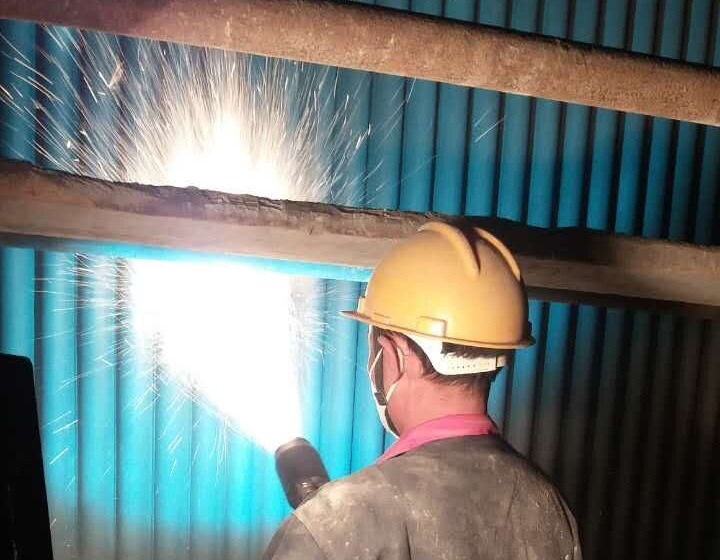
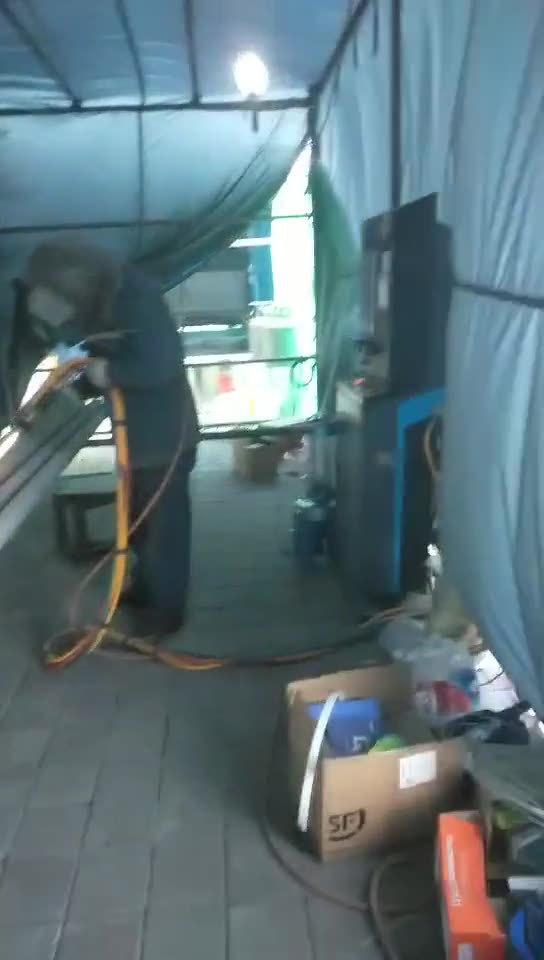
| Electric arc spray | Conductive wire only, 1.6-3.0 mm | Portable Zn/Al anti-corrosion, on-site build-up, large areas at low cost |
| Flame spray + fuse | Self-fluxing NiCrBSi powder, 45-106 µm | Fused dense layers on plungers, valves, screws |
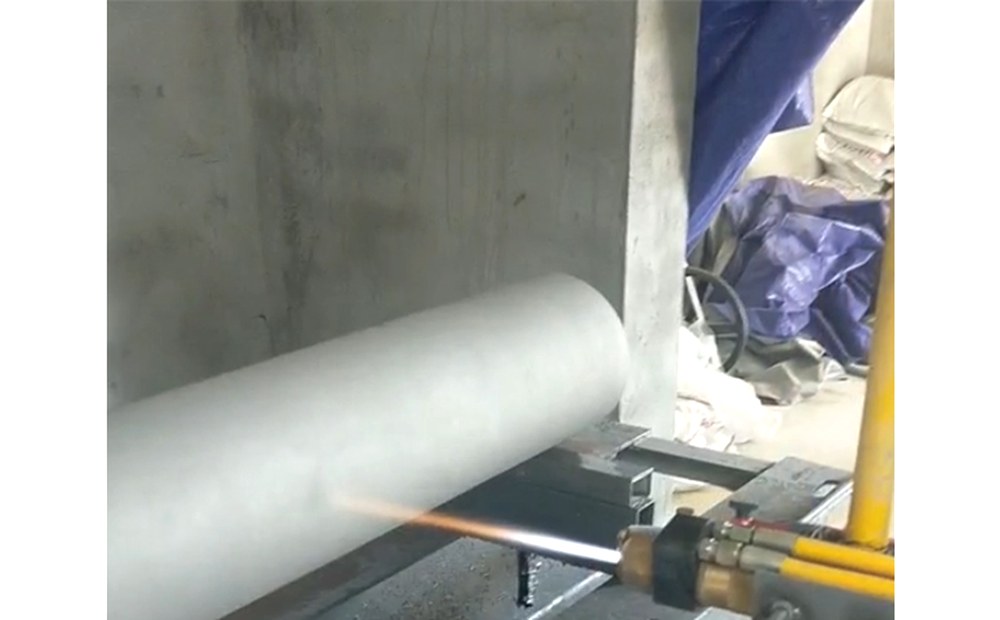
| HVOF / HVAF | WC-Co, WC-CoCr, Cr3C2-NiCr, 15-45 µm | Dense carbide coatings, low decarburisation, tight thickness control |
| Atmospheric plasma spray | Oxide ceramics, YSZ, HA/Ti, metal powders | High-melting materials, thermal barriers, insulating coatings |
| Cold spray | Ductile Cu, Al, Ni, Zn powders | Heat-sensitive parts, conductive layers, no oxidation |
If you own an arc spray power source, no powder can be used with it; if you own a plasma system, wire is not an option. We have seen more projects delayed by this mismatch than by any coating-property question. The HVOF vs plasma comparison covers the equipment side of the decision.
Powder specification is part of material selection
Ordering "WC-Co" without a particle cut and carbide grain size is how two suppliers deliver powders that behave completely differently. Powder particle size (typically 15-45 µm for HVOF, 45-106 µm for flame spray) governs feeding and melting; the carbide grain size inside each particle governs the coating microstructure. Finer is not automatically better - nano-scale WC can decarburise to W2C in an HVOF flame and produce soft, metal-rich bands. We summarise the trial data on our WC-Co powder page. For ceramics the same discipline applies: see Cr2O3, YSZ and Y2O3 for the cuts and purity levels we supply.
Do not forget preparation and sealing
A correctly chosen material still fails on a poorly prepared surface. Grit blast to Sa 2.5-3 with a 40-80 µm anchor profile, spray before the surface oxidises or picks up moisture, and control part temperature. Corrosion coatings are porous by nature and must be sealed - the sealer itself has to survive the medium, or it becomes the weak link. Ceramic topcoats generally need a metallic bond coat to handle thermal-expansion mismatch. A dense HVOF carbide coating usually does not need sealing for wear duty, but may for corrosive duty.
Cost is per part lifetime, not per kilogram of powder
A cobalt-based alloy is not automatically better than a nickel-based one; if Ni60 meets the service conditions, paying for cobalt is waste. On the other hand, WC-Co can cost several times more per kilogram than a nickel alloy and still be cheaper per production hour if it multiplies service life fivefold. On small parts, masking, fixturing and robot time dominate the cost, so deposition efficiency and spray rate matter more than powder price. Ask for a cost-per-part comparison including grinding and downtime, not just a powder quote.
A five-step specification workflow
1. Document the operating conditions and the observed failure mechanism, with photos of the worn part.
2. List the candidate materials that can survive that mechanism, temperature and medium.
3. Check compatibility with the substrate (thermal expansion, heat treatment, galvanic relationship) and with the spray process you actually have.
4. Run coupon trials - hardness, bond strength, porosity, and a wear or corrosion test relevant to the real mechanism.
5. Fix the material, thickness, surface preparation, sealing and inspection criteria in the purchase specification, then qualify the production route.
For corrosion work, step 3 deserves special attention: a coating more noble than the substrate will accelerate attack at any pore or edge. Zinc and aluminium work because they are sacrificial to steel. That is why arc spray wire remains the default for bridges and tank shells, and why a sealed ceramic system is specified for chemical immersion instead.
What to send us for a recommendation
Part drawing, substrate and heat treatment, failure mechanism and service medium, temperature and load, target life or hardness, allowed build-up and finish, annual quantity, and the spray equipment available (or state that you need a complete line). We will recommend the material and process, supply trial coupons, and quote powder, coating service or turnkey equipment as appropriate. If a cheaper material will do the job, we will say so.
Frequently asked questions
Is the hardest coating always the best choice?
No. Hardness correlates only loosely with wear life. Impact, corrosion, temperature and the type of abrasion all change the ranking; a brittle ceramic can fail quickly on a part that sees edge loading, while a softer fused nickel alloy survives.
Can one coating handle both severe wear and chemical corrosion?
Rarely as a single layer. Dense HVOF WC-CoCr is a good compromise for slurry erosion, and sealed carbide or ceramic systems are used in chemical duty, but acids and chlorides usually require a Ni-Cr-Mo alloy or a sealed ceramic topcoat with a compatible bond coat.
What particle size should I specify?
15-45 um for most HVOF and plasma feeders, 45-106 um for conventional flame spray and fuse. Always confirm against your gun and feeder, and ask for the sieve distribution, carbide grain size and Hall flow rate on the certificate of analysis.
Do all thermal spray coatings need sealing?
Corrosion coatings do, because sprayed deposits are interconnected-porous and the sealer must itself resist the medium. Dense HVOF carbide coatings usually do not need it for wear duty, but often do for corrosive duty.
Can you run a trial before we commit to a material?
Yes. We spray trial coupons on our HVOF, plasma and arc equipment, report hardness, bond strength and porosity, and can run abrasion or corrosion testing relevant to your service conditions before a production order.