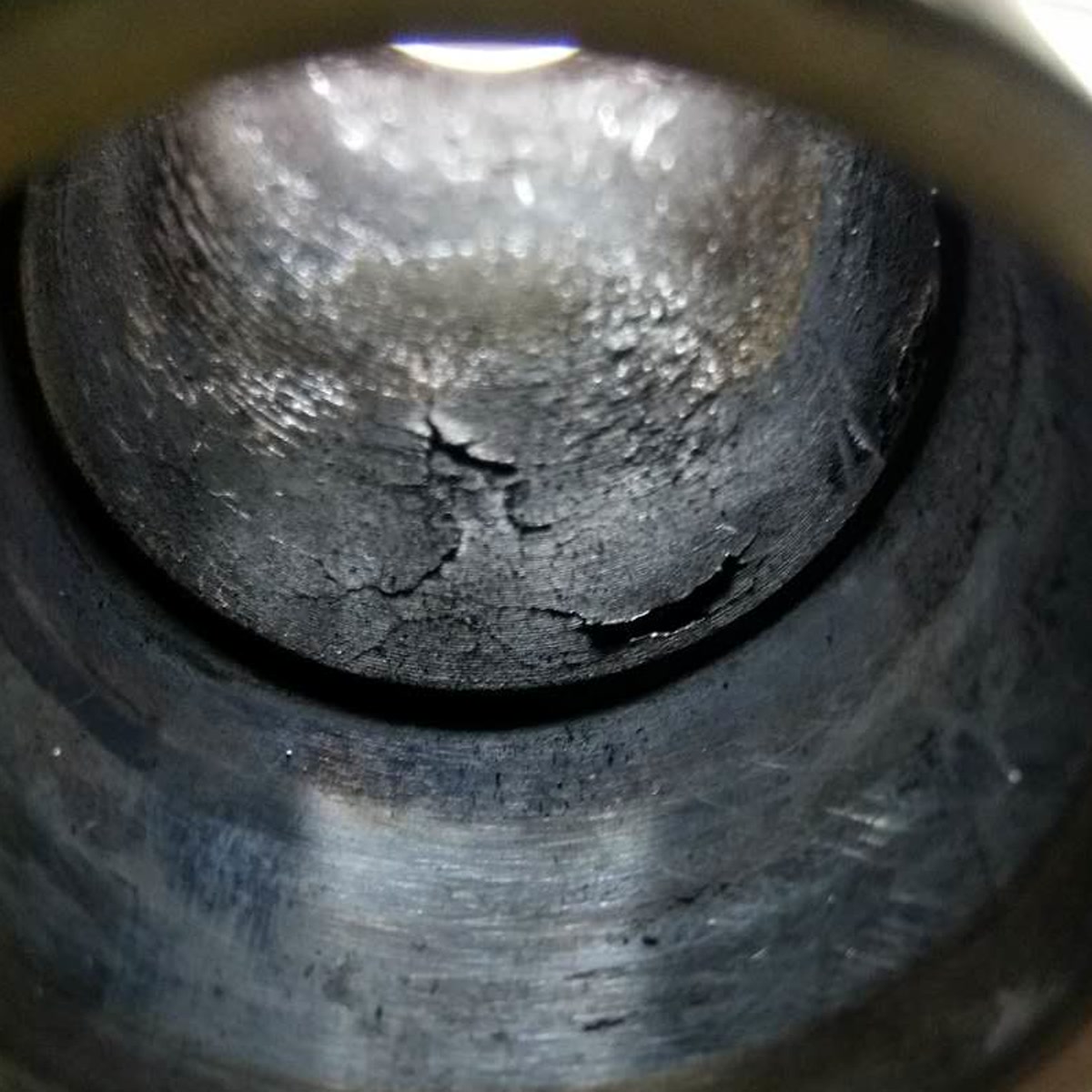
What the chamber does
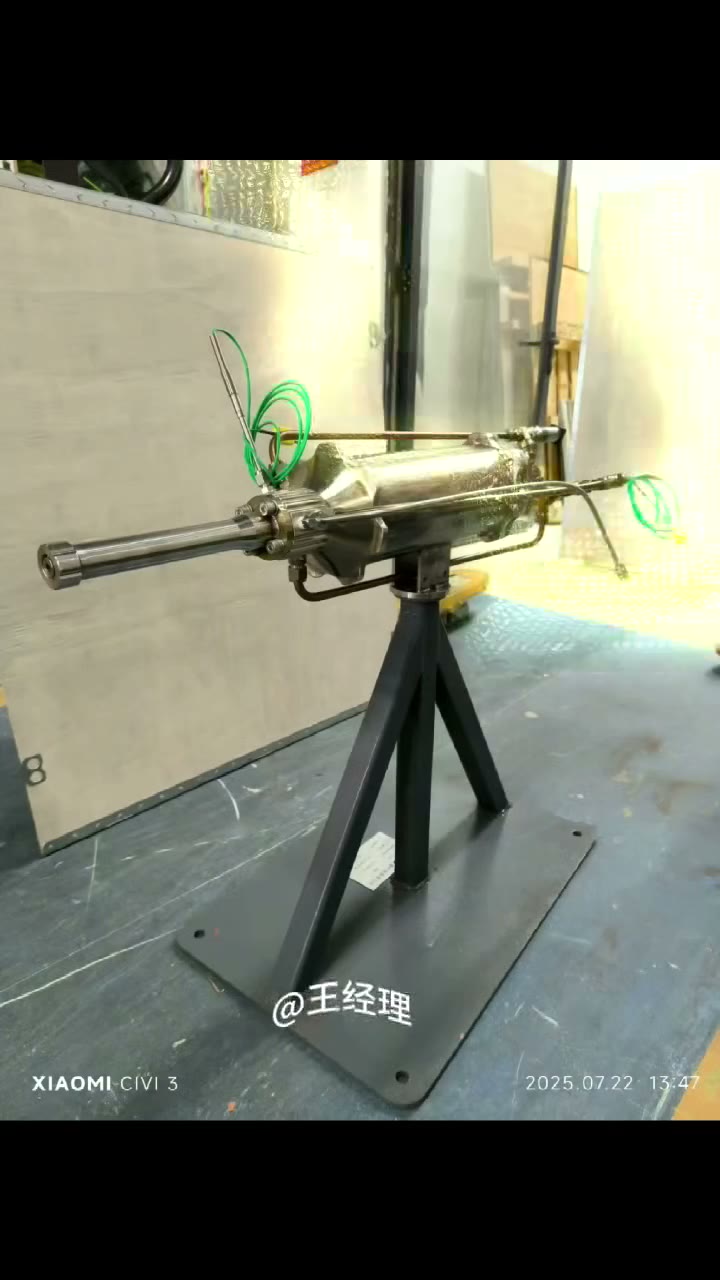
The combustion chamber is where fuel and oxygen burn and where the powder is injected into the resulting gas stream. Everything downstream - the nozzle, the jet velocity, the coating density - is decided by the geometry and condition of this one part. It converts chemical energy into a high-temperature, high-pressure flow that leaves at supersonic speed, and it holds the powder long enough for the particle to reach a semi-molten state before it is accelerated.
The body is a high-temperature alloy with a ceramic lining; the assembly carries the fuel nozzle, the oxygen inlet and the powder feed channel. Each of those features affects the flame: a partially blocked fuel nozzle richens the mixture, a worn powder port widens the injection cone, and a cracked liner disturbs the flow enough to change where the particles travel.
Why it fails
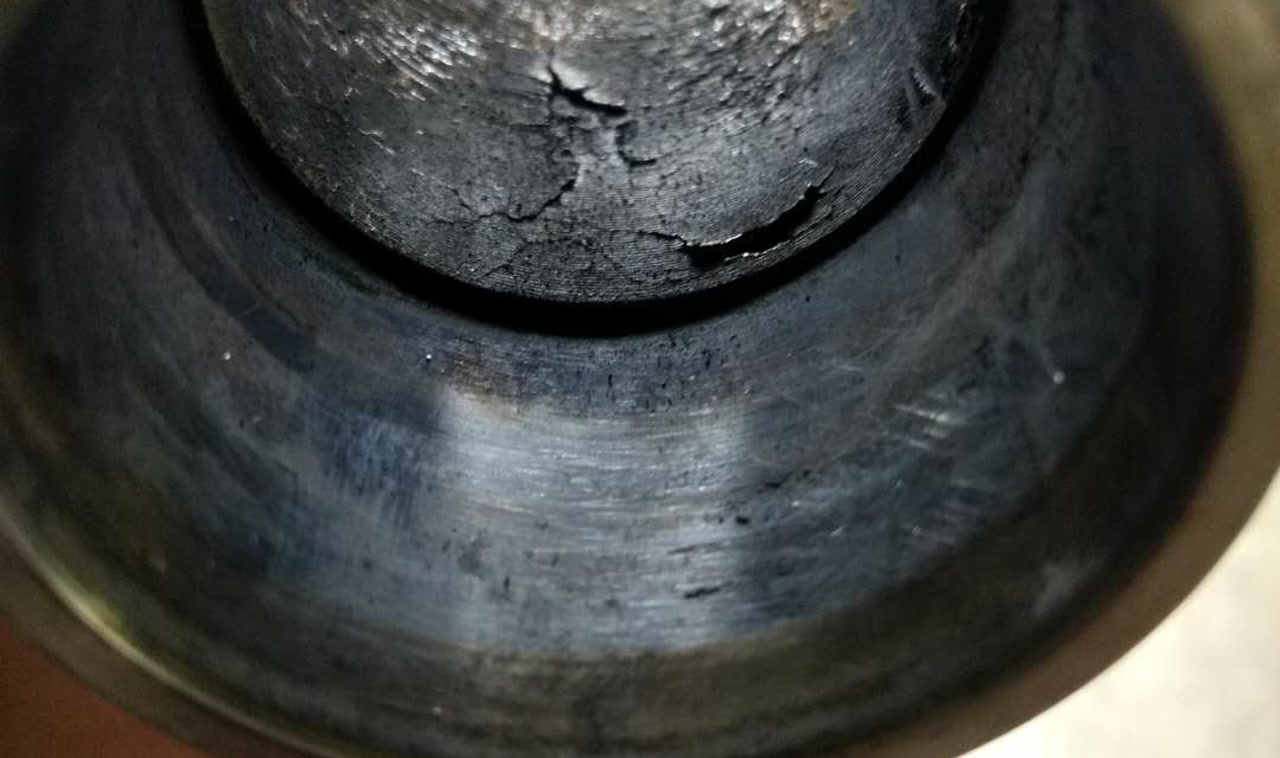
Thermal fatigue. The inner wall runs more than 800 degrees hotter than the outer wall. The two surfaces want to expand by different amounts, the material cannot follow, and radial cracks start at the throat. Once a crack reaches the liner it spalls, and the spall goes downstream into the nozzle.
Chemical attack. Sulphur in the fuel reacts with chromium and nickel in the alloy to form low-melting compounds - nickel sulphide melts at around 797 C, well below the flame temperature. The result is a liquid phase at the grain boundaries and a chamber that thins rather than cracks.
Erosion. Particles travelling above 600 m/s scour the inner wall. This is normal wear, but it accelerates sharply when the powder is injected off-axis or when the carrier flow is unstable.
Inspection and replacement
| Indicator | Meaning | Action |
|---|---|---|
| Coating softens at unchanged settings | Flame energy dropping | Check chamber and nozzle before touching parameters |
| Deposit efficiency down over 10% | Jet disturbed or particles off-centre | Bore measurement, powder port inspection |
| Radial cracks at the throat | Thermal fatigue | Replace; do not continue |
| Spalled liner, discoloured bore | Overheating or chemical attack | Replace and check fuel quality |
| Bore diameter past limit | Erosion | Replace; parameters no longer reproducible |
Fitting a new chamber
A replacement chamber is not a bolt-on-and-go part. After fitting, the gun has to be re-commissioned: check the fuel and oxygen flows at the setpoints, verify the flame shape, then spray a coupon and compare porosity and hardness with the reference. Skipping that step is how a shop ends up with two "identical" guns that produce different coatings.
Before you order
Send the gun model and serial, a photo of the current chamber (the bore and the throat), and the running hours since the last replacement. Chamber geometry differs between gun generations even when the model name is the same, and a part that fits but does not match the flame design is worse than no spare at all.
Storage and first-run checks
A spare chamber should be stored dry and capped. The ceramic lining absorbs moisture, and a damp liner can spall on the first ignition as the water flashes to steam inside the pore structure. If a chamber has been in an unheated store, dry it slowly before fitting rather than taking it straight to full flame.
On the first run after fitting, bring the gun up at reduced fuel flow for a few minutes, watch the flame shape through the sight glass, and check that the water return temperature is where it was with the old chamber. A chamber that runs hotter than the previous one is usually a sign that the internal geometry or the powder port is not matched to the gun.
Frequently asked questions
How do I know the chamber needs replacing?
Three signs, in order of appearance: the coating softens at unchanged parameters, the deposit efficiency falls by more than about 10%, and the bore shows radial cracks or a spalled ceramic liner. Bore diameter growth past the manufacturer's limit is the objective trigger; the coating drift is the symptom you notice first.
Can the chamber be repaired instead of replaced?
No. The chamber is a pressure vessel that also forms the flame shape. Welding or sleeving changes the internal geometry, which changes the jet, which changes the coating. A repaired chamber may run, but it no longer reproduces the parameters the process was qualified on.
What causes early failure?
Thermal fatigue from start-stop cycles, sulphur in the fuel reacting with chromium in the alloy to form low-melting compounds, and particle erosion of the inner wall. Running long idle periods at full flame temperature and using cheap fuel are the two habits that shorten life most.