In food and pharmaceutical production, wear protection has an extra constraint: the coating must not introduce anything into the product. That rules out cobalt-bearing carbide in product-contact zones and pushes the specification towards ceramics - with the surface finish and documentation treated as part of the coating, not as an afterthought.
Where the wear is
| Equipos | Wear or failure | Typical coating |
|---|---|---|
| Mixer and blender shafts, paddles | Abrasion from powders and granules, product build-up | Al2O3 or Al2O3-TiO2, 0.15-0.30 mm, sealed |
| Pump casings, impellers, wear plates | Slurry and CIP-cycle erosion plus corrosion | Cr2O3 or Al2O3, 0.20-0.35 mm |
| Rolls and rollers (confectionery, milling, coating) | Surface wear changing product thickness, sticking | Cr2O3, ground and polished |
| Cutting blades and dies | Edge wear, metal transfer to product | Al2O3 or thin carbide outside the product zone |
| Hoppers, chutes, feed screws | Sticking, bridging, abrasive wear | Ceramic + nano non-stick duplex |
| Tablet press punches and dies | Adhesion and wear at the punch face | Thin ceramic where the design allows |
Why ceramic rather than carbide
Tungsten carbide with a cobalt binder is the best wear answer for most industrial parts, but cobalt is not something you want in a product-contact surface. Alumina and chromia give hardness in the 900-1,400 HV range with no metallic binder, and they are chemically inert against most food and pharmaceutical media. Where abrasion is extreme and the surface does not touch product, carbide remains appropriate - the specification follows the product zone.
Surface finish and cleanability
An as-sprayed ceramic is rough. In food service that roughness holds product and defeats cleaning, so the coating is ground to a defined Ra - typically 0.4-0.8 um on product-contact surfaces, finer on sealing faces - and then sealed. The sealer closes the open porosity; without it, CIP chemicals enter the layer and the coating degrades from the inside. Where a non-stick property is also needed, a nano top coat goes over the finished ceramic.
What we can and cannot certify
This is where suppliers overstate. We supply the material certificate for the coating powder and a process record for the part, and we can state that the product-contact zone is cobalt-free and sealed. Formal food-contact compliance of the finished component depends on the standard the customer's market requires - FDA 21 CFR, EU 1935/2004, EHEDG design rules - and on the customer's own qualification of the component. We support that qualification with data; we do not issue a compliance certificate for the finished article.
Corrosion from cleaning, not from product
In many plants the aggressive medium is not the food but the cleaning cycle: caustic, acid and hypochlorite at temperature, repeated daily. A sealed ceramic layer handles that far better than a stainless surface that pits at weld heat-affected zones. Where cleaning chemistry is severe, chromia is preferred over alumina for its chemical stability.
What we need to quote
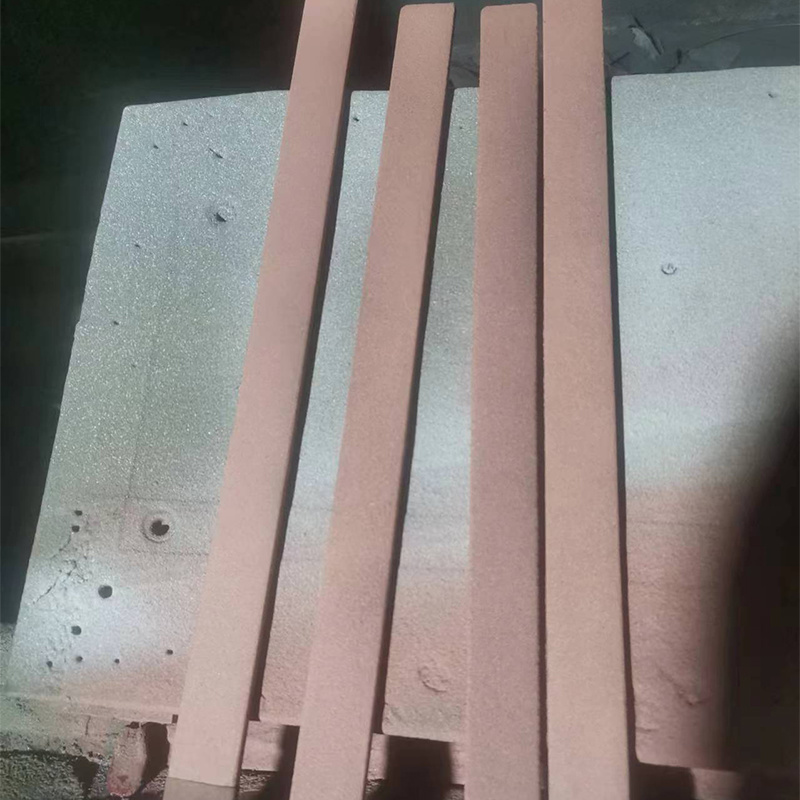
Component drawing, base material, the product being handled and its abrasiveness, the cleaning regime, the required surface finish, and which surfaces must be cobalt-free. For parts already in service, photos of the wear pattern are usually enough to choose between alumina and chromia.
Designed for cleaning, not just for wear
In food and pharmaceutical equipment the coating has to survive the cleaning cycle as well as the process. Caustic at 80 C, nitric or phosphoric acid, and hypochlorite attack different ceramics at different rates, and a coating that is excellent against product abrasion can still fail in CIP. Chromia is generally the better choice where hypochlorite or strong alkali is used; alumina where the cleaning chemistry is milder and abrasion dominates.
Geometry matters as much as chemistry: crevices, sharp internal corners and coating edges that stop mid-face all trap product and resist cleaning. Masking lines are placed at a weld or a machined step rather than in the middle of a product-contact face, so the boundary can be cleaned and inspected.
The documentation pack
For a qualified component the customer typically needs: coating material certificate with composition, process parameters, thickness and roughness measurements at defined points, sealer identification, and a statement that the product-contact zone is cobalt-free. That pack is what the customer's quality department files against the component - and it is what makes a second supplier's cheaper quote incomparable, because the documentation is part of the product.
When to recoat
Coated parts are inspected at each maintenance shutdown for wear-through, chipping at masked edges and surface damage from tools. Recoating is scheduled when the measured layer at the worst point approaches the minimum, rather than after a failure - in a pharmaceutical line a coating failure is a batch investigation, not just a maintenance job.
Frequently asked questions
Are your coatings suitable for food contact?
The product-contact zone is specified cobalt-free and sealed, and material certificates are supplied. Formal food-contact compliance depends on the standard your market requires (FDA 21 CFR, EU 1935/2004, EHEDG) and on your qualification of the finished component - we provide the coating data for that process rather than a compliance certificate for the article.
Alumina or chromia for food equipment?
Alumina for general abrasive wear at lower cost and higher hardness; chromia where the surface must resist aggressive cleaning chemicals or hold a very fine finish, as on metering and coating rolls.
Can the coating be cleaned in place?
Yes, if it is sealed and finished to the specified roughness. Unsealed ceramic holds product in its porosity and absorbs cleaning chemicals, which is why sealing is standard on product-contact surfaces.
Will the coating chip into the product?
A correctly bonded ceramic resists normal service loads; impact from tools or tramp metal can chip any coating. That is why coated parts are inspected at each maintenance and local damage is repaired before it grows.