Introduction to Plasma Spraying Technology
Plasma spraying is a thermal spraying process that uses a plasma arc as the heat source and primarily employs spray powder materials.
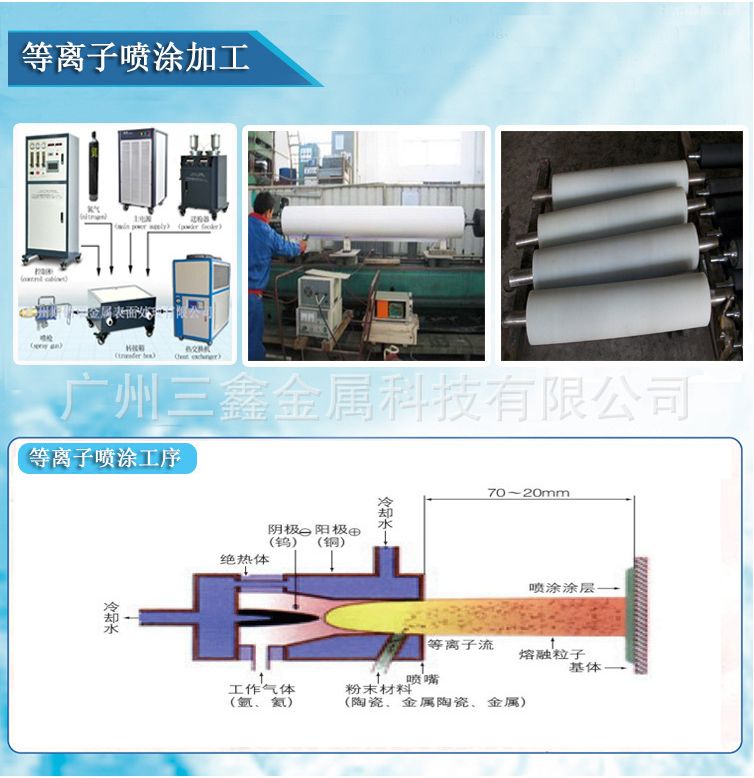
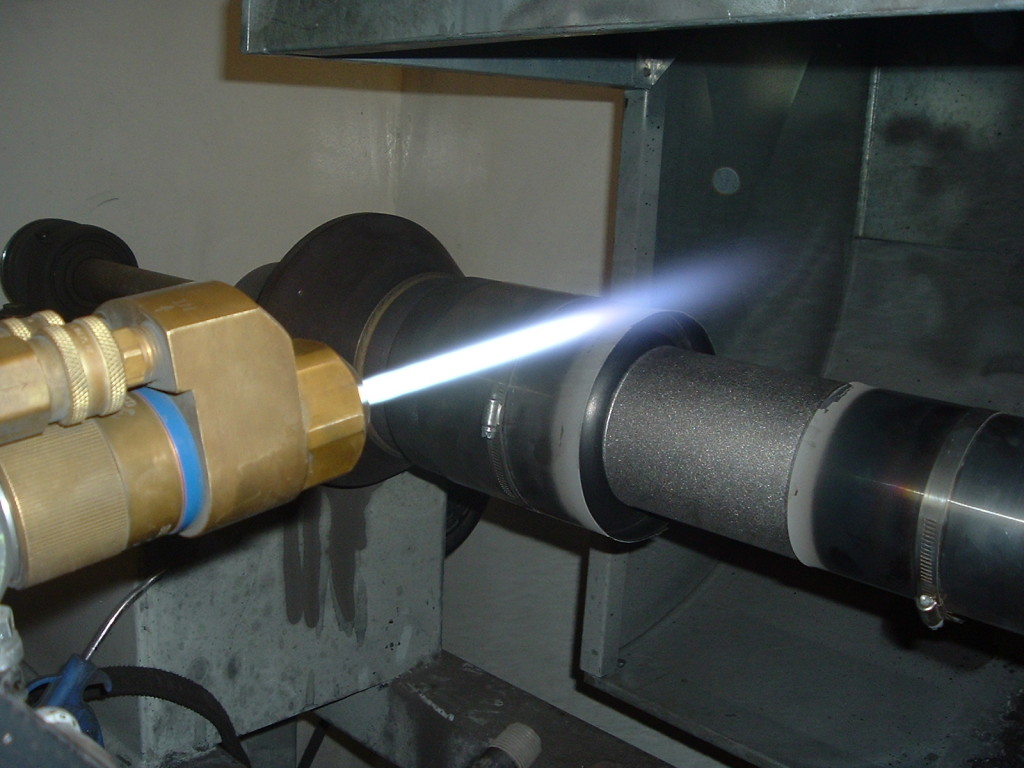
During plasma spraying, a direct-current arc is generated between the cathode and the anode (nozzle). This arc heats and ionises the introduced working gas, transforming it into a high-temperature plasma that is ejected from the nozzle to form a plasma jet. Powder particles are fed into the plasma jet by a powder-feeding gas, where they are melted, accelerated and sprayed onto the substrate material to form a coating. The working gas can be argon, nitrogen, or a mixture of these gases with hydrogen added; alternatively, a mixed gas of argon and helium can be used.
Characteristics of Plasma Spraying
- Capable of spraying a wide variety of coating materials, especially high-melting-point and refractory materials such as refractory metals, ceramics and metal-ceramics, plus other special functional materials.
- Inert gases can be selected as the working medium to reduce oxidative reactions of spray particles during flight.
- The coating exhibits high bonding strength and low porosity, and fine coatings can be prepared by controlling process parameters.
SX-80 Plasma Spraying Equipment Configuration
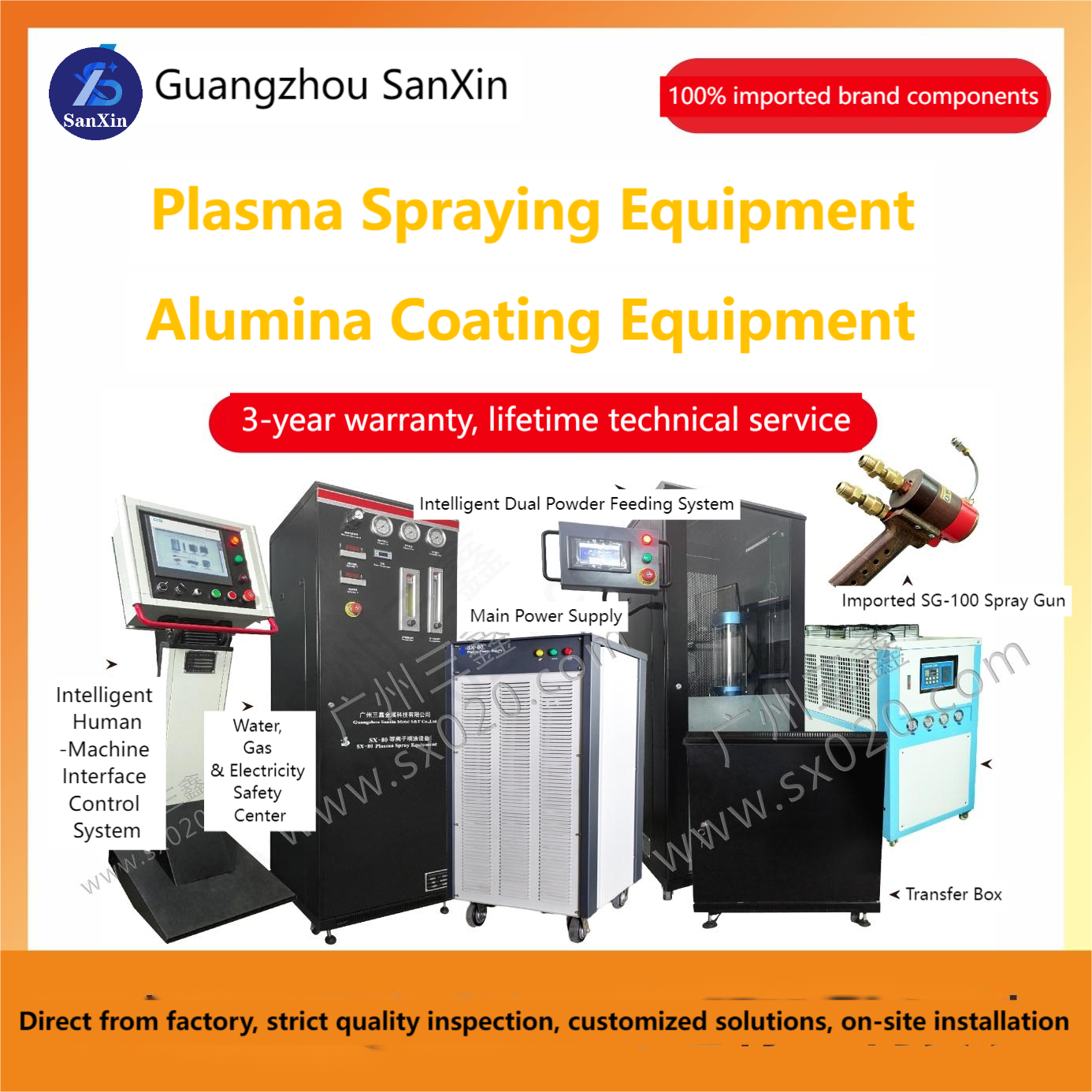
The SX-80 plasma coating equipment was developed based on the introduction and absorption of plasma spraying equipment such as the PT-A3000 and METCO-9M. Its overall performance level is comparable to that of the METCO-9M. The system includes:
- Main power supply
- Human-machine interface intelligent control system
- Transfer box and powder feeder
- Gas and electricity safety centre
- Spray gun, heat exchanger, piping connections and other components
Imported SG-100 Plasma Torch
The SG-100 plasma torch is a 100 kW-class, multi-mode torch widely used in thermal spraying. Thanks to its versatile performance, the SG-100 can coat virtually any type of material — from highly dense, wear-resistant carbide coatings to thermally insulating coatings with controllable porosity.
Features: the unique design of the SG-100 allows it to employ either internal or external powder feeding. Material specialists can develop a reasonable powder-feeding mode based on the coating performance requirements. The two internal powder-feed ports can be used independently; when used simultaneously they achieve a higher spraying speed and enable the simultaneous mixing of different materials within the plasma jet. The external feed port can also replace the internal one, and internal and external ports can be used in combination.
By adding optional accessories, the SG-100 can easily be assembled into an extended-nozzle spray gun suitable for 2086 and 2700 models. It can also be modified into a 90° SG-100 spray gun, enabling spraying of internal bores of different diameters to meet various application requirements.
The components of the SG-100 plasma torch can operate continuously up to three times longer than those of other torches. Thanks to the SG-100's fewer components and self-calibrating design, assembly time is reduced and accuracy is enhanced, enabling the torch to meet even the most stringent and demanding acceptance criteria.
Other features include automatic calibration, wear-resistant nozzle components with a longer service life, reduced operational and assembly costs, and the ability to operate even at a power output of 100 kW.
Applicable Nozzles
The SG-100 can be used in three spray modes — subsonic, Mach 1 and Mach 2. Depending on the specific requirements, different anode and cathode configurations as well as gas distribution ring setups can be selected.