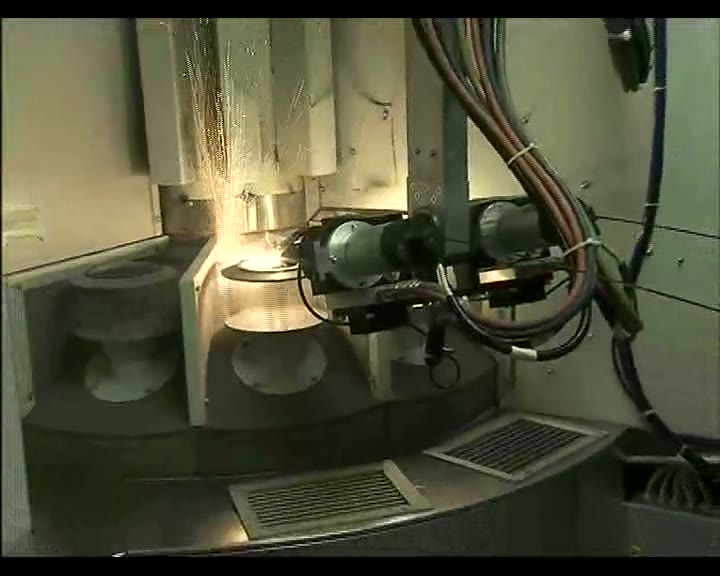
What this video shows
Our SX-5000 supersonic flame spraying system running NiCr-CrC and NiCr alloy powders. The HVOF jet is visible as a narrow, bright plume; particles leave the gun at supersonic speed and arrive at the substrate almost fully molten, which is what produces the dense, well-bonded layer characteristic of HVOF.
The two powders shown serve different purposes: NiCr-CrC is the workhorse for combined wear and corrosion at elevated temperature, while NiCr is used as a bond coat or as a corrosion-resistant overlay in its own right.
Process details
- System: SX-5000 gas HVOF, supersonic jet, water-cooled gun
- Materials: NiCr-CrC (wear plus corrosion, up to roughly 800 C), NiCr (bond coat or corrosion protection)
- Typical thickness: 150-400 um, ground after spraying where tolerance matters
- Typical results: porosity below 1%, high bond strength, hardness in the 800-1000 HV range for CrC systems
- Finishing: cylindrical or surface grinding, polishing for sealing surfaces
Where this setup fits
NiCr-CrC is chosen where tungsten carbide would oxidise or where the part sees hot corrosion as well as abrasion: boiler tubes, valve stems, turbine components, exhaust hardware, hot rolling guides. NiCr as a bond coat sits underneath ceramics on steel to improve adhesion and add corrosion protection at the interface.
We supply both the HVOF systems and the contract coating service, so process development for a new part can be done in our workshop before any equipment decision is made.
Frequently asked questions
When should I use NiCr-CrC instead of WC-Co?
NiCr-CrC is the better choice at elevated temperature and in corrosive atmospheres, where WC-Co tends to oxidise. WC-Co still wins on pure abrasion resistance at moderate temperature.
How thick can an HVOF NiCr-CrC coating be applied?
Typically 150-400 um in a single setup, with thicker build-ups possible in multiple passes. Above that, residual stress and cost usually make a different process or a weld overlay more sensible.
Does NiCr work as a bond coat under ceramics?
Yes. NiCr or NiCrAl is commonly sprayed as a thin bond layer before a ceramic top coat on steel, improving adhesion and providing corrosion protection at the interface.