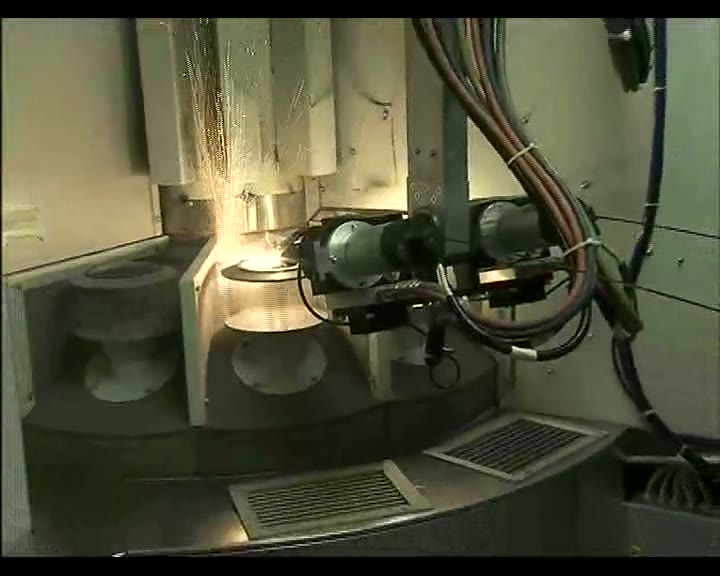
What this video shows
Coating the inside diameter of a bore with the SG-100 internal spray gun. Internal surfaces are the hardest geometry in thermal spraying: the gun has to reach inside a narrow bore, keep a workable standoff and still build an even layer around the full circumference.
The clip shows the gun working inside the bore while the part rotates; the extended nozzle delivers the plume at an angle that reaches the wall rather than spraying past it.
Process details
- Gun: SG-100 internal spray gun with extended, angled nozzle
- Geometry: bore diameters from roughly 60 mm upward, depth limited by nozzle length
- Typical coatings: WC-Co for wear, alumina or chromia for corrosion and insulation
- Typical thickness: 100-300 um, applied in multiple passes with part rotation
- Finishing: internal grinding or honing to final tolerance and roughness
Where this setup fits
Cylinder bores, pump housings, sleeves, valve bodies and bearing seats all need internal protection that a standard external gun cannot deliver. Coating the bore instead of replacing the housing is usually a fraction of the cost of a new part, and it can be repeated when the coating eventually wears.
Send us the bore diameter, depth, material and required coating and we will confirm whether the geometry is reachable and quote the coating and finishing.
Frequently asked questions
What is the minimum bore diameter you can spray internally?
Roughly 60 mm with the SG-100 gun; smaller bores need a specially reduced nozzle and are assessed case by case. The limiting factors are nozzle diameter, reach and the angle needed to hit the wall evenly.
How is an internally sprayed bore finished?
By internal grinding or honing after spraying. The coating is applied oversize and machined back to the drawing tolerance, which also sets the final surface roughness for seals or sliding contact.
Can you coat a bore in a part that is already assembled?
Usually not - the part needs to be disassembled, cleaned and grit blasted before spraying. Masking protects adjacent surfaces, but access for blasting and spraying is the deciding factor.