What this video shows
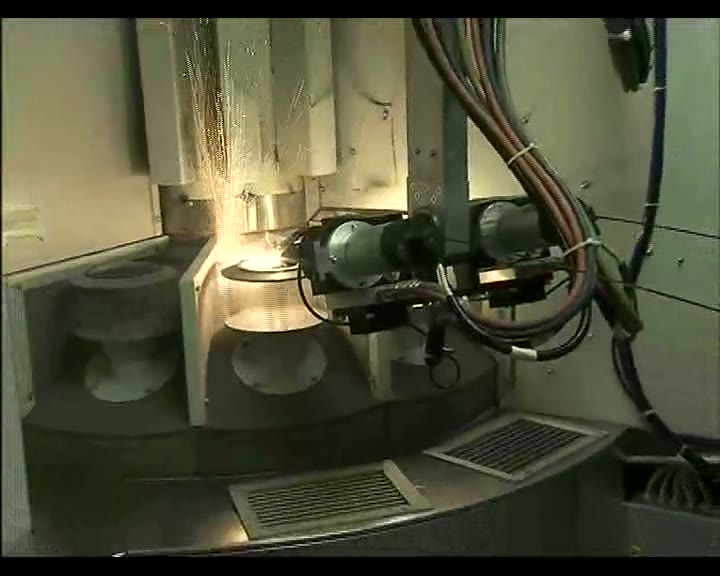
A six-axis robot plasma spraying yttria-stabilised zirconia onto graphite boats used in sintering and heat treatment furnaces. The robot holds the plasma gun and follows a programmed path across the boat, keeping the standoff constant so the ceramic layer is even over the base and the side walls.
Bare graphite reacts with the parts it carries and can contaminate a sintered product; a zirconia layer provides a stable, non-wetting barrier that lets the boat be reused instead of replaced.
Process details
- Process: atmospheric plasma spraying (APS) of YSZ, robot manipulated
- Substrate: graphite boats, trays and fixtures for sintering furnaces
- Typical thickness: 150-400 um, depending on thermal cycling severity
- Why zirconia: high-temperature stability, low thermal conductivity, non-wetting against molten or sintered products
- Coverage: base plus side walls; edges and corners get extra passes because they wear first
Where this setup fits
Graphite boats are used across powder metallurgy, battery materials, magnetic materials and technical ceramics. Coating them pays back quickly when boats are replaced often or when contamination causes rejects - both common in high-temperature sintering.
Robotic motion matters here because boat geometries repeat and the coating has to be identical on every unit; hand spraying produces thin corners that fail first.
Frequently asked questions
Why coat graphite boats with zirconia?
Bare graphite reacts with the sintered product and can contaminate it, and it degrades with repeated thermal cycling. A zirconia layer is stable at high temperature and non-wetting, so boats last longer and product contamination drops.
How thick should the zirconia coating be on a graphite boat?
Typically 150-400 um. Thicker layers last longer under thermal shock but are more prone to spalling if the surface preparation is poor, so the thickness is matched to the furnace cycle.
Can you coat used graphite boats?
Yes, provided the graphite still has enough strength and the surface can be prepared. Heavily eroded or cracked boats are usually not worth coating; we assess photos or samples before quoting.