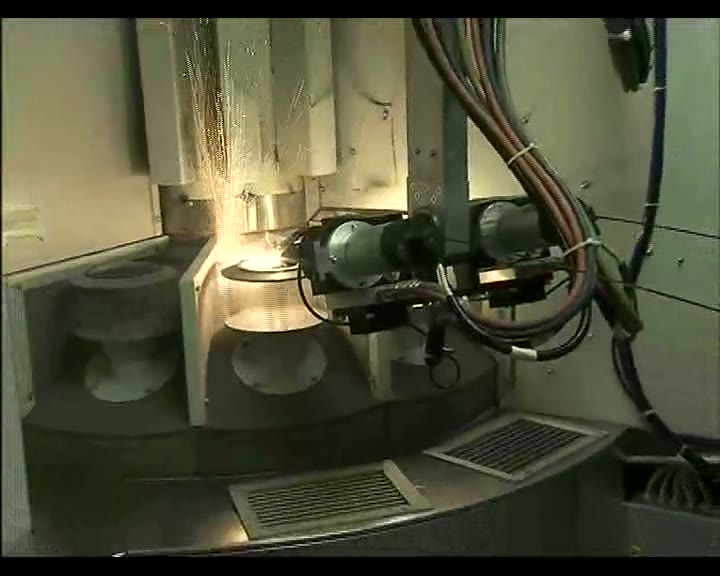
What this video shows
Plasma sprayed silicon carbide (SiC) coating on stainless steel plates for a furnace application where the parts see heat and chemical attack at the same time. SiC is one of the hardest technical ceramics and keeps its strength at temperatures where metals soften.
The clip is short - a single spray pass over a plate - because the point is the coating itself rather than a machine demonstration.
Process details
- Coating: silicon carbide (SiC), plasma sprayed
- Substrate: stainless steel plates for high-temperature furnace service
- Preparation: thorough grit blasting for an anchor profile; a bond layer is often sprayed first
- Typical thickness: 100-300 um
- Service: oxidation and chemical resistance at elevated temperature
Where this setup fits
SiC coatings are used where metal parts need ceramic-level hardness and oxidation resistance without changing the base material - furnace furniture, guides, wear plates and components exposed to hot gases or aggressive atmospheres.
Success depends more on preparation than on the spray parameters: insufficient blast profile or a missing bond coat is the usual cause of premature spalling on steel substrates.
What we need from you
Tell us the plate dimensions and thickness, the steel grade, the service temperature and the atmosphere - oxidising, reducing, or carrying sulphur or alkali species. Those three inputs decide the bond layer and the SiC thickness. Thin plates are sprayed with controlled pre-heat so they do not distort, and the non-coated faces are masked. For furnace furniture that sees repeated thermal cycling we usually recommend a slightly thinner coating with a compliant bond layer rather than a thick, stiff one.
Frequently asked questions
Why is a bond coat needed for SiC on steel?
The thermal expansion mismatch between SiC and steel is large, so a bond layer improves adhesion and absorbs part of the stress. Without it, the coating is more likely to spall during thermal cycling.
What temperature can an SiC coating withstand?
SiC itself is stable well above the service limit of the steel substrate. In practice the substrate and the oxidation of the bond layer set the ceiling, which is why the coating system is specified for the actual furnace cycle.
Can SiC be applied to other substrates?
Yes - graphite, refractory and some alloy substrates can be coated, with preparation and bond layer adapted to the material. Send the substrate and service conditions for an assessment.