What this video shows
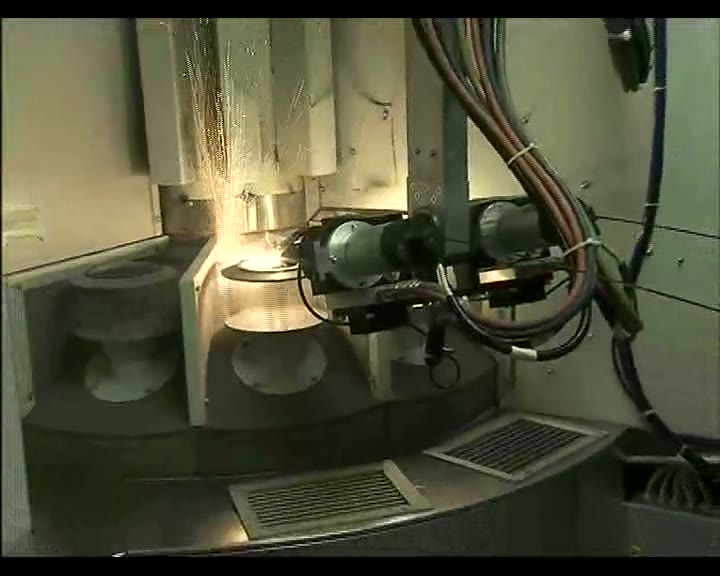
Tungsten carbide coating applied to forage harvester blades. The blades cut through crop that carries sand and soil, so the cutting edge rounds over quickly; once it does, cutting quality drops, fuel consumption rises and blades have to be changed mid-harvest.
The clip shows the coating being applied along the cutting edge, where the wear concentrates.
Process details
- Coating: tungsten carbide based (WC-Co), applied by plasma or HVOF
- Location: cutting edge and the wear land behind it
- Typical thickness: 150-300 um on the edge region
- Why it works: the coating is far harder than hardened steel, so the edge keeps its geometry instead of rounding
- Finishing: usually as-sprayed on the wear face, ground only where geometry requires
Where this setup fits
Agricultural cutting tools - forage harvester blades, flail knives, mower blades, tillage points - all wear by abrasion from soil-borne silica. Coating the edge is a cheap way to extend the working interval and avoid mid-season changes.
For OEMs we coat blades in batches; for farmers and dealers we coat used blades that still have enough base metal to support a rebuild.
What we need from you
Send a sample blade or a drawing with the cutting geometry, the base material and hardness, and the crop and soil conditions if known - sandy ground wears far faster than clean loam. We coat the edge region only, so the balance and mounting of the blade are unchanged, and blades are returned ready to fit. For OEM volumes we coat new blades in batches; for dealers and farms we recoat used blades that still have enough base metal to support the rebuild.
Frequently asked questions
How much longer do coated forage blades last?
Typically several times the life of an uncoated blade in abrasive crop, depending on soil conditions and crop type. The biggest practical gain is fewer mid-harvest blade changes.
Can used blades be recoated?
Yes, as long as the blade still has enough base material and is not cracked or bent. The worn edge is prepared and rebuilt with coating rather than replaced.
Does the coating chip off on impact?
A properly bonded WC-Co coating withstands normal cutting impact; stone strikes can damage any coating. HVOF gives the densest, best-bonded layer where impact is severe.