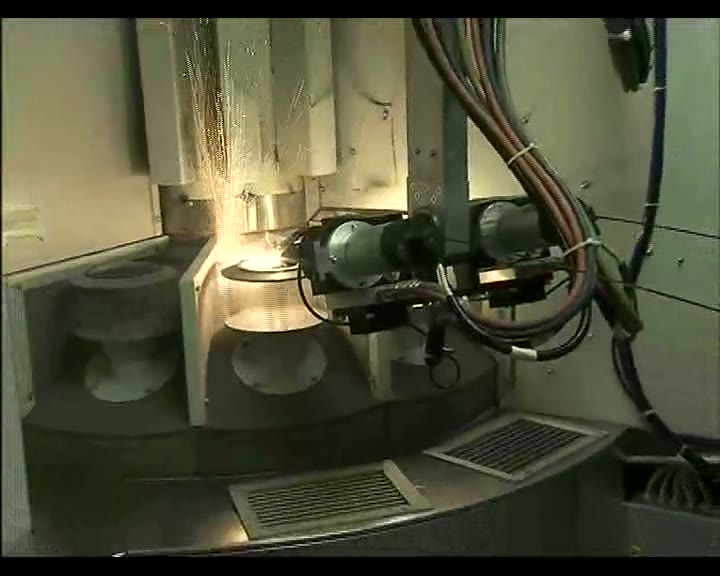
What this video shows
A short clip of plasma sprayed yttria (Y2O3) coating on graphite crucibles. When graphite crucibles melt reactive metals and rare earth alloys, carbon contamination and sticking are the two problems that ruin a melt; a yttria layer forms a stable, non-wetting barrier between the graphite and the molten charge.
The clip is brief because the coating itself is fast - preparation and finishing take far longer than the spray pass.
Process details
- Coating: yttria (Y2O3), plasma sprayed
- Typical thickness: 100-300 um on the melt contact surfaces
- Why yttria: excellent thermal stability and very low reactivity with molten reactive metals and rare earths
- Preparation: clean handling, grit blast, mask the rim and outer faces as required
- Service: vacuum or inert atmosphere melting, sintering and casting of reactive alloys
Where this setup fits
Yttria is chosen for the most aggressive melts - titanium, rare earth and superalloy work - where zirconia or alumina would react. It is more expensive as a material, so it is used where the melt chemistry demands it rather than as a general-purpose coating.
We coat crucibles, boats, nozzles and other graphite furniture; send the drawing and the alloy being melted for a coating recommendation.
Frequently asked questions
Why use yttria instead of zirconia on a crucible?
Yttria is more stable and less reactive against the most aggressive melts, particularly rare earth and titanium alloys, where zirconia can be reduced or dissolve into the melt. It costs more, so it is reserved for those duties.
How long does a yttria coating last in service?
It depends on melt temperature, cycle count and slag chemistry; typical service is many heats rather than a single campaign. The coating can be stripped and re-applied when it wears through.
Can you coat crucibles of other materials?
Yes - alumina, zirconia and yttria coatings are applied to graphite, alumina and some metal crucibles. The substrate and the melt chemistry together decide which coating is suitable.