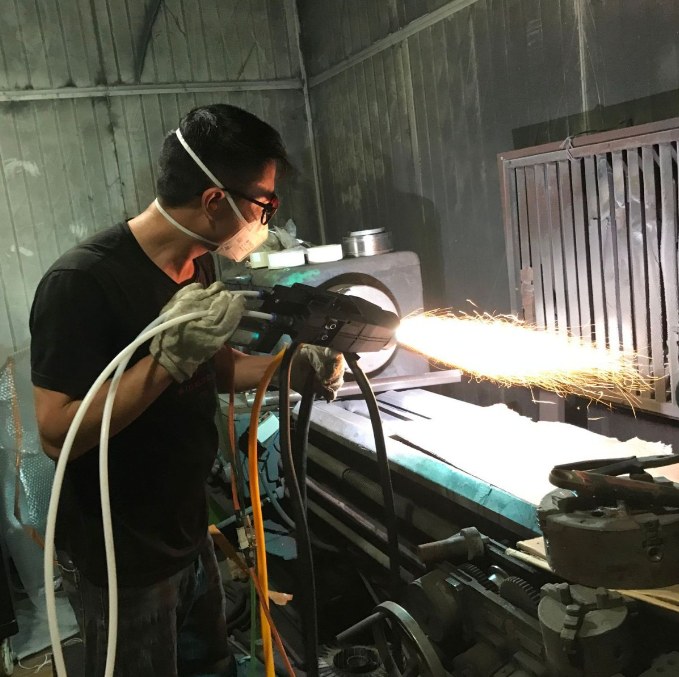
Plasma spraying feeds powder into a plasma jet hotter than 10 000 °C. Particles melt or soften, are accelerated to several hundred metres per second, strike the substrate, flatten into lamellae and freeze instantly. A thermal barrier coating therefore grows as thousands of stacked, overlapping splats — a layered structure with a controlled level of porosity (typically 4–20% for APS) and a small amount of oxide inclusion. Vacuum or shrouded-plasma spraying reduces those defects where required.
TBC Structure
| Layer | Material | Function |
|---|---|---|
| Top coat | 7–8YSZ (ZrO₂-Y₂O₃), 0.1–0.4 mm | Low thermal conductivity, phase stability to 1200 °C |
| Bond coat | NiCoCrAlY / MCrAlY, 0.1–0.15 mm | Oxidation barrier, stress relief |
| Substrate | Nickel-base superalloy | Load-carrying blade or vane |
With film cooling, such a coating can reduce superalloy surface temperature by roughly 100–170 °C, extending blade creep life by an order of magnitude and enabling higher turbine inlet temperatures.
What Controls Coating Quality
- Powder quality – flowability, size distribution and phase content of the YSZ powder set the ceiling for density and stability.
- Plasma parameters – arc power, gas mixture and stand-off determine particle melting and velocity; improper settings leave unmelted particles and weak splat boundaries.
- Bonding – attachment is mostly mechanical interlocking with the roughened substrate, aided by diffusion; grit-blasting cleanliness is critical.
- Directional properties – because the structure is lamellar, conductivity and modulus differ through-thickness and in-plane; spray angle consistency keeps this predictable.
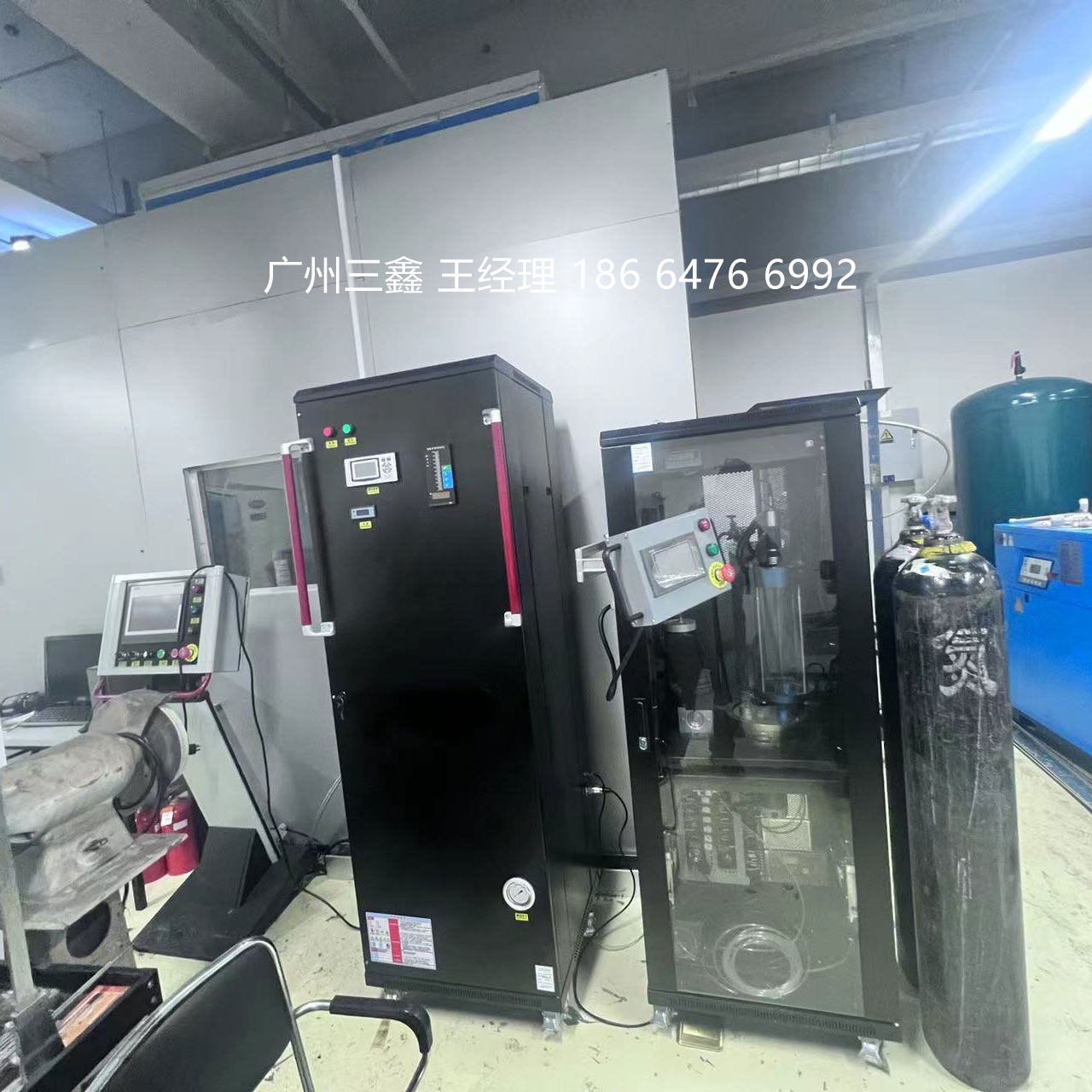
The equipment side is covered in plasma spraying ceramic coating process and our SX-80 plasma spraying system.
Frequently Asked Questions
What is a thermal barrier coating made of?
A typical air-plasma-sprayed TBC is a 100-400 um top coat of 7-8 wt% yttria-stabilised zirconia (YSZ) over an MCrAlY or NiCoCrAlY bond coat. YSZ has very low thermal conductivity and a thermal expansion close to that of superalloys, which keeps thermal stresses low.
Why does a TBC deliberately contain porosity?
Layered, slightly porous microstructure lowers thermal conductivity by 20-40% versus dense material and relieves thermal expansion mismatch stress. Too much porosity, however, weakens erosion resistance, so porosity is specified, not left to chance.