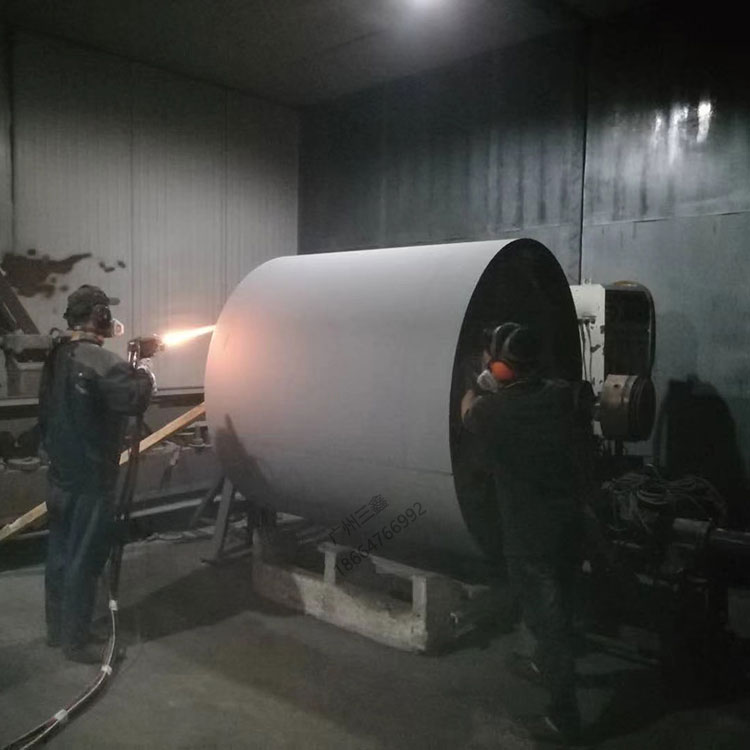
Thermal spraying heats metal, ceramic or carbide powder to a molten or semi-molten state and propels it onto a prepared substrate, building a layer with surface properties the base metal does not have: wear resistance, corrosion resistance, heat and oxidation resistance, insulation or controlled porosity. In metallurgy — where parts run hot, dusty and corrosive — the technology has become standard practice from continuous casting to sinter plants.
Process Selection Guide
| Process | Heat source | Typical metallurgical use |
|---|---|---|
| Flame spraying | Oxy-fuel flame | Rebuilding, low-cost builds on large static parts |
| Wire arc spraying | Electric arc | Boiler tubes, furnace shells, thick anti-wear layers |
| Plasma spraying | Plasma jet (up to 10 000 °C) | Ceramic rollers, thermocouple protection tubes |
| HVOF | Supersonic combustion | Sink rolls, hearth rolls, continuous-casting guides |
Coating-to-substrate bonding is mainly mechanical interlocking, supported by diffusion and, with exothermic materials or high-heat processes, micro-metallurgical bonding. That is why substrate preparation — degreasing and grit blasting to a sharp anchor pattern — is as important as the spray parameters themselves.
Where Coatings Pay Off in a Steel Plant
- Furnace rolls and radiant tubes – Co-based or NiCrBSi alloys resist scale build-up and thermal fatigue.
- Continuous casting guide rolls and foot rolls – nickel-base coatings fight pick-up and cracking.
- Sinter machine pallets, fans and dust-extraction impellers – WC or chromium carbide layers handle abrasive dust at 500–800 °C.
- Hoppers, chutes and screw conveyors – thick arc-sprayed builds can be applied on site during shutdown.
See our roll and shaft coating service, fan and impeller wear protection and zinc-aluminium arc spray anti-corrosion coating for related applications.
Frequently Asked Questions
Which thermal spray process is most used in metallurgical plants?
For large, low-cost wear builds such as furnace rolls and guide plates, wire arc spraying dominates. For high-speed or high-temperature parts such as sink rolls and hearth rolls, HVOF carbide and plasma ceramics are preferred.
Can spraying be done on site inside the plant?
Yes. Our arc and plasma systems are portable, and we regularly carry out on-site spraying of furnace parts, roll pedestals and structural components without disassembly and transport.