Ceramic Coating for Plungers
Plungers and pistons in high-pressure pumps, metering pumps and hydraulic equipment run against seals and packing under continuous sliding, often in media that attack steel. A plasma sprayed ceramic layer gives the working surface the combination that hardened steel alone cannot offer: high hardness, chemical inertness, electrical insulation and a low-friction polished finish.
Coating System
- Ceramic top layer of alumina or alumina-titania, selected according to the required balance of insulation, hardness and friction.
- NiCr or NiAl bond layer for a strong, permanent attachment to the steel body.
- Dense as-sprayed structure, sealed where the media require it.
Properties
- Microhardness up to HV 900 and above, resisting abrasive scoring by trapped particles.
- Excellent electrical insulation for plungers used in charged or sensitive equipment.
- Resistant to acids, alkalis and salt spray encountered in chemical and petroleum service.
- Finish ground and polished to the specified diameter, with surface roughness down to Ra 0.1-0.2.
Special Ceramic Parts
Besides plungers, the same process family covers shaft sleeves, seal rings, guide bushes and other special ceramic-faced parts, either as new manufacture or as repair of worn components.
Specification for plungers and ceramic parts
| Parameter | Standard range | Notes |
|---|---|---|
| Coating | Al2O3, Al2O3-TiO2, Cr2O3 | Alumina for insulation, chromia for low-friction sliding |
| Bond coat | NiAl, 0.08-0.12 mm | Required for thickness above 0.3 mm |
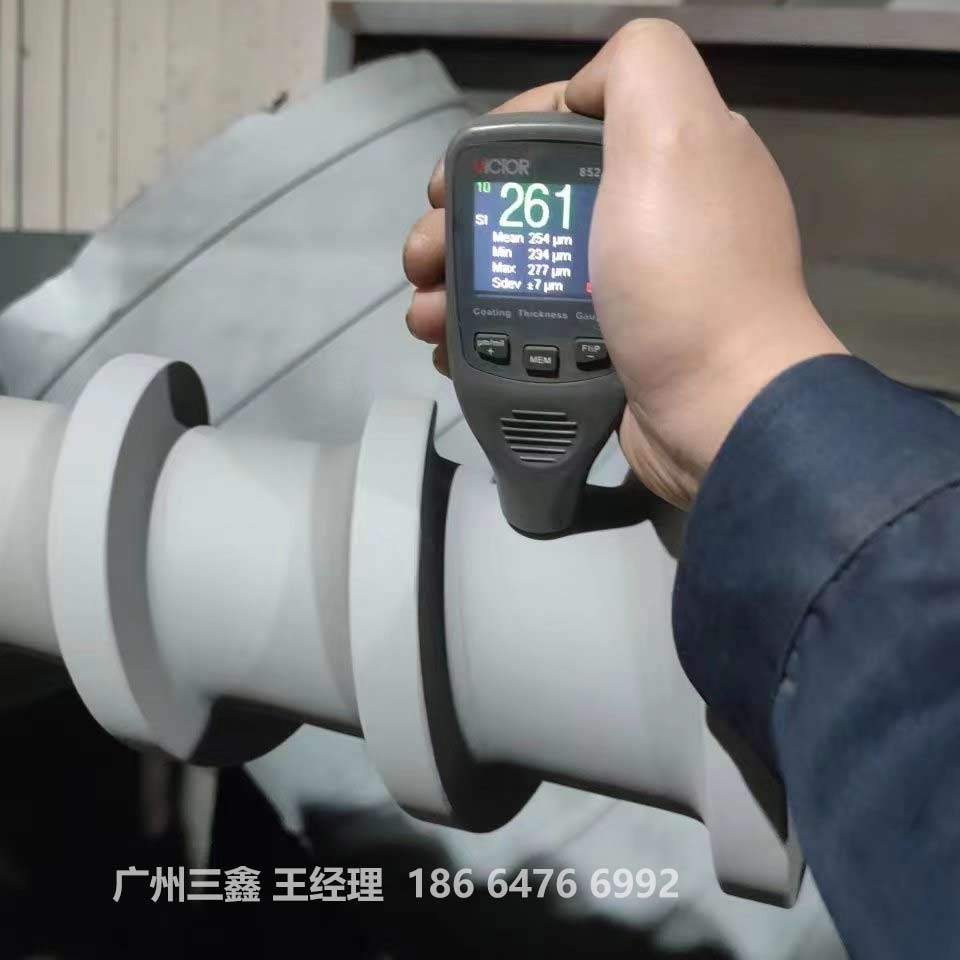
| Coating thickness | 0.15-0.80 mm | Ground to final diameter after spraying |
| Surface finish | Ra 0.2-0.4 | Ra 0.1 available for sealing contact |
| Hardness | 900-1,100 HV0.3 | Alumina, typical |
| Bond strength | Above 60 MPa | ASTM C633 witness coupon |
| Diameter tolerance | ±0.01 mm | Cylindricity within 0.005 mm |
Why ceramic on a plunger
A plunger in a metering pump or high-pressure homogeniser sees three things at once: sliding contact against a packed seal, corrosive or abrasive process fluid, and in food or pharmaceutical duty a surface that must not react with the product. A plasma ceramic addresses all three - it is harder than hardened steel, chemically inert in most media, and electrically insulating where static build-up matters.
Points that decide service life
- Edge radius. A sharp shoulder on the plunger concentrates stress and chips the coating. Radius or chamfer every transition before spraying.
- Seal contact zone. The packing runs over the same band continuously. Finishing that band to Ra 0.1-0.2 and keeping porosity low matters more than overall thickness.
- Concentricity. Coating 0.4 mm on one side and 0.6 mm on the other produces a bending bias that shows up as uneven seal wear.
- Open pores. Any unsealed porosity in contact with process fluid becomes a trap. Sealing is standard on our plunger work.
Frequently asked questions
Can you coat a plunger that is already worn below nominal size?
Yes, that is a common repair route. The worn surface is ground true and the coating restores the diameter, provided the remaining wall thickness and straightness are acceptable.
Will the ceramic crack when the pump runs dry?
Dry running raises seal temperature sharply, and thermal shock can crack a thick ceramic. For dry-run risk we recommend a thinner layer with a graded bond coat, or an HVOF carbide alternative.
Is the coating food-safe?
Alumina is chemically inert and approved for food contact in many applications. We supply material certificates on request, but final regulatory acceptance rests with the equipment builder.