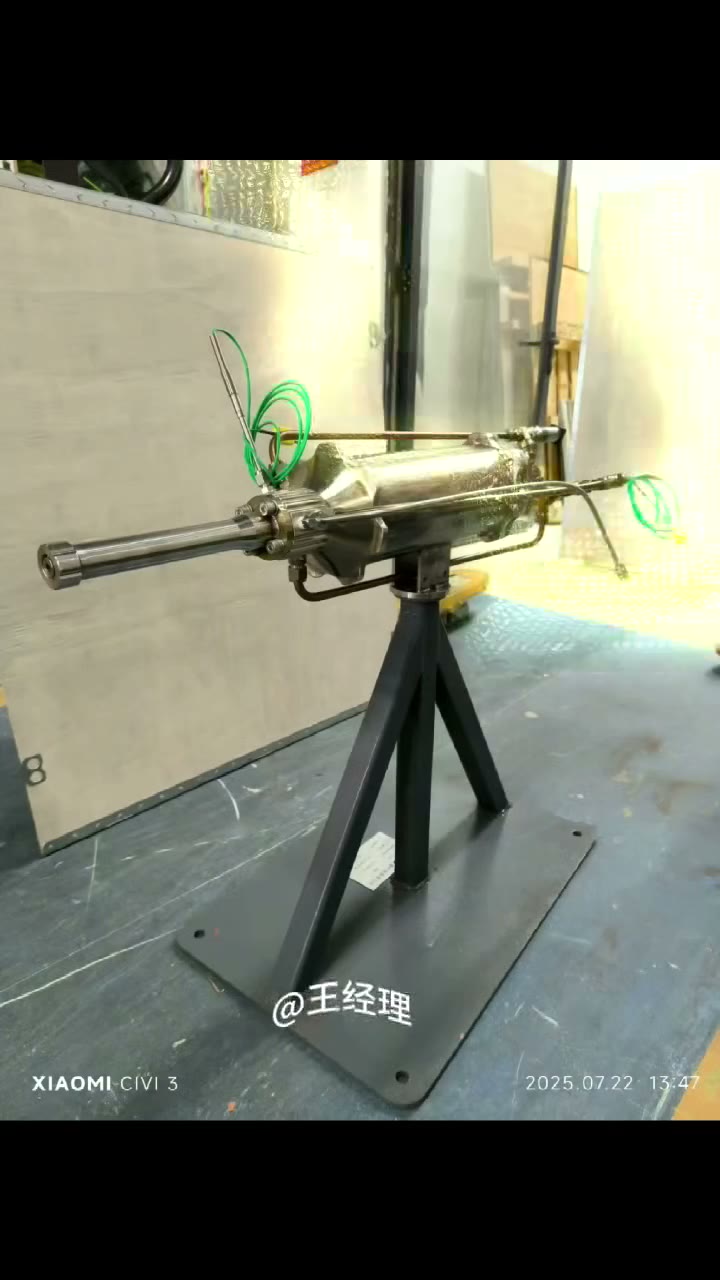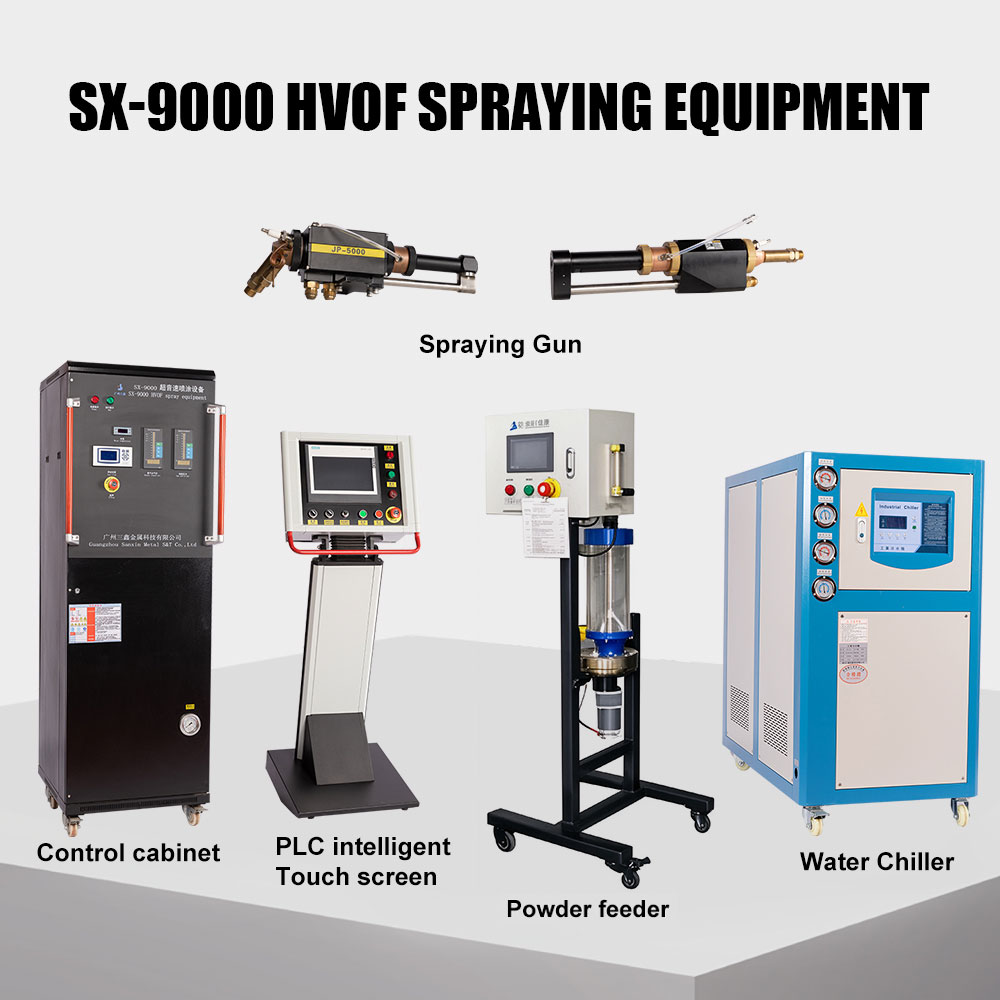
The SX-9000 is a kerosene-fueled high-velocity oxygen-fuel (HVOF) spray system. Kerosene is atomized with oxygen, ignited in a combustion chamber, and accelerated through a Laval nozzle to produce a supersonic flame stream. Powder is injected radially into the flame, heated and accelerated to high velocity before impacting the workpiece, forming extremely dense, high-bond-strength coatings.
Key Specifications
- Flame speed: ~2100 m/s
- Flame temperature: ~5000 °C
- Equivalent gun power: 150 kW
- Particle velocity: 1100 m/s
- Coating porosity: <1%
- Coating bond strength: >90 MPa
- Suitable powder size: 10 – 45 μm
- Gun weight: ~4.5 kg
- Control: Siemens PLC + touch screen; SMC and Omron components
Applications
- Tungsten carbide, chromium carbide and metal-ceramic coatings
- Pump shafts, piston rods, plungers, valves and gates
- Industrial rolls, paper-machine rolls and calender rolls
- Aerospace, power generation, petroleum, mining and paper industries
Control and gas specifications
The SX-9000 is a kerosene-oxygen HVOF system. Kerosene was chosen over gas fuel because it is widely available, cheap to store and does not need a high-pressure gas supply on site; the trade is that the fuel circuit has to be metered precisely, which is why the control package is more elaborate than on a gas-fuelled gun.
| Parameter | Value |
|---|---|
| Control type | Touch screen with mass flow controller and PLC |
| Input power | 550 W |
| Kerosene pressure and flow | 1.2 MPa, 0-60 L/h |
| Oxygen pressure and flow | 1.6 MPa, 0-60 m3/h |
| Carrier gas pressure and flow | 0.35-0.4 MPa, 3-15 L/min |
| Cabinet dimensions | 750 x 900 x 1650 mm |
| Cabinet weight | 259 kg |
The mass flow controllers are what make this repeatable. A kerosene HVOF gun runs at a stoichiometric ratio that has to be held within a narrow band: too rich and the plume is reducing with unburnt fuel, too lean and the flame temperature collapses. Orifice-and-pressure metering drifts with fuel temperature and nozzle wear; mass flow control does not.
Why kerosene instead of gas
- No high-pressure gas storage on site, so no gas cylinder compound and no hydrogen or propane safety case.
- Fuel cost per hour is lower than LPG or propylene for the same energy input.
- The flame is longer and the jet velocity high, which suits carbide and MCrAlY coatings on large parts.
- The trade is start-up complexity: the fuel line has to be purged and the ignition sequence interlocked, and the operator needs training that a gas gun does not require.
Site preparation
Oxygen at 1.6 MPa, kerosene stored in an approved container with a drip tray, compressed air at 0.6 to 0.8 MPa, and an extraction system sized for the plume rather than for a plasma gun. Kerosene HVOF produces a visible plume and a fine oxide fume that loads a filter faster than arc spraying does, so the dust collector is not the place to economise. Sound is the other consideration: the jet is loud, and a cell without an acoustic enclosure will exceed exposure limits within minutes.
What this platform is used for
Tungsten carbide and chromium carbide wear coatings on shafts, sleeves, seats and rolls; MCrAlY bond coats for thermal barrier systems; and dense corrosion-resistant alloys where a plasma-sprayed coating would be too porous. Because the particle velocity is high and the dwell time short, the coatings are dense and the substrate stays cool enough for most heat-treated steels - but thin sections and light alloys still need to be checked for distortion before the first production run.
Spare parts that decide uptime
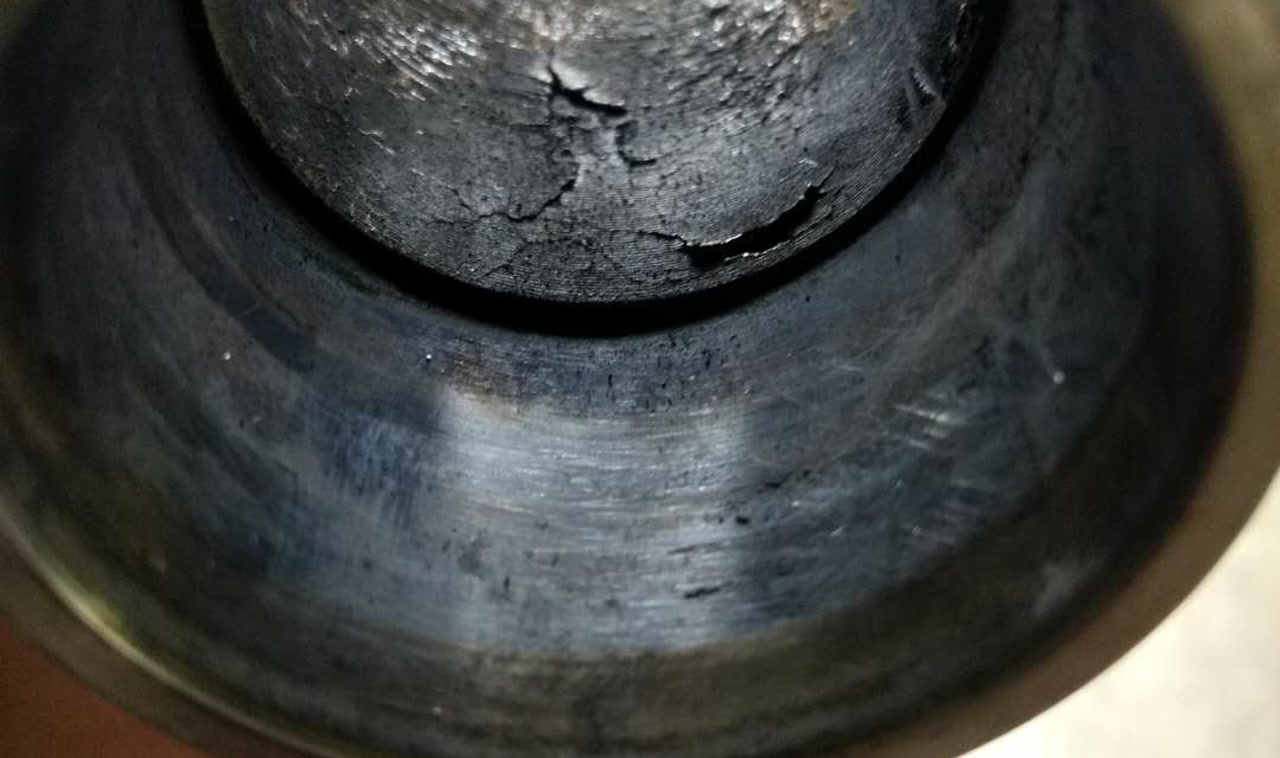
The parts that wear on a kerosene HVOF gun are the nozzle, the combustion chamber and the powder injector, and all three wear gradually rather than failing outright. A worn nozzle widens the jet and the coating softens before any alarm appears; a worn chamber changes the flame shape and the deposit efficiency falls. Keeping one set of each on the shelf, and replacing on measured hours rather than on visible damage, is what keeps a production line repeating week to week.
Frequently asked questions
What performance does the SX-9000 achieve?
A kerosene-fuelled supersonic flame of about 2,100 m/s and 5,000 C, equivalent gun power around 150 kW, and particle velocity up to 1,100 m/s, producing very dense carbide and cermet coatings.
What coatings is it used for?
Tungsten carbide (WC-Co, WC-CoCr), chromium carbide and metal-ceramic systems where maximum density and bond strength are required - rolls, shafts, valves, turbine and aerospace parts.
How does it differ from the SX-5000 and SX-8000?
The SX-9000 is the highest-velocity kerosene HVOF in the range, with higher particle speed and deposition energy. The SX-5000 and SX-8000 cover the same coating families at lower capital cost and are the usual choice for general wear work.