Why the powder is never pure WC
Tungsten carbide on its own is one of the hardest materials in industrial use - Mohs hardness around 9, Vickers hardness well above 1500 HV, melting point near 2870 C. It is also brittle enough that a pure WC coating cannot survive a thermal spray process: the particles do not deform on impact, the layer cracks, and it spalls under load.
So every tungsten carbide powder used for spraying is a composite. WC grains are cemented into spherical agglomerates with a metallic binder - cobalt in most cases, sometimes nickel, chromium or a cobalt-chromium alloy. During spraying the binder softens before the carbide does, and it is the binder that deforms, bonds to the substrate and holds the carbide particles in place. The coating you get is a carbide-reinforced metal matrix, not a ceramic.
That single design choice is why almost every property you care about is set by two numbers: how much binder there is, and how coarse the carbide is.
What cobalt content changes
Higher binder content means a tougher, more impact-resistant coating and a slightly softer one. Lower binder content means higher hardness and better abrasive wear resistance, but a coating that chips at edges and under point loading.
| Grade | Typical hardness | Behaviour | Where it fits |
|---|---|---|---|
| WC-12Co | 1050-1250 HV0.3 | Balanced hardness and toughness | General wear parts, rolls, shafts, pump components |
| WC-17Co | 950-1100 HV0.3 | Toughest of the Co grades, resists impact and edge chipping | Cutting blades, fan blades, parts with shock loading |
| WC-10Co-4Cr | 1000-1200 HV0.3 | Best combination of wear and corrosion resistance | Marine, chemical, slurry and wet-service parts |
| WC-12Ni | 1000-1150 HV0.3 | Corrosion resistance without cobalt, non-magnetic option | Food, nuclear and corrosive environments where Co is undesirable |
WC-10Co-4Cr is the grade we quote most often, because most industrial wear problems come with moisture or a corrosive medium attached. Pure WC-Co is the right answer when the part runs dry and the priority is maximum abrasive resistance.
Carbide size decides what kind of wear you resist
Fine carbide (typically sub-micron to 2 um) gives a smoother, harder coating with better polishability and higher resistance to fine abrasive wear. Coarse carbide (5-10 um) gives a rougher coating that stands up better to coarse grit and heavy impact, because a crack has to travel further to link one carbide particle to the next.
The practical consequence: a pump sleeve handling fine slurry wants fine carbide, while a part hit by gravel or scale wants coarse. Specifying only "WC-Co" without the size range often produces a coating that fails for reasons nobody can explain later.
Morphology and flow
Spray powders are produced either by sintering and crushing (angular, irregular particles) or by agglomeration and sintering, sometimes with plasma spheroidisation. Spheroidised powder flows more evenly, feeds more consistently at low feed rates, and gives a more uniform deposit - which matters most on automated cells where the feed rate is held constant for hours. Crushed powder is cheaper and perfectly serviceable on manual or less critical work.
Typical spray size cuts are -45/+15 um for HVOF and -45/+11 um for fine work; plasma generally tolerates a wider cut. We supply to the cut that matches your gun and your feeder, not a generic range.
Process notes
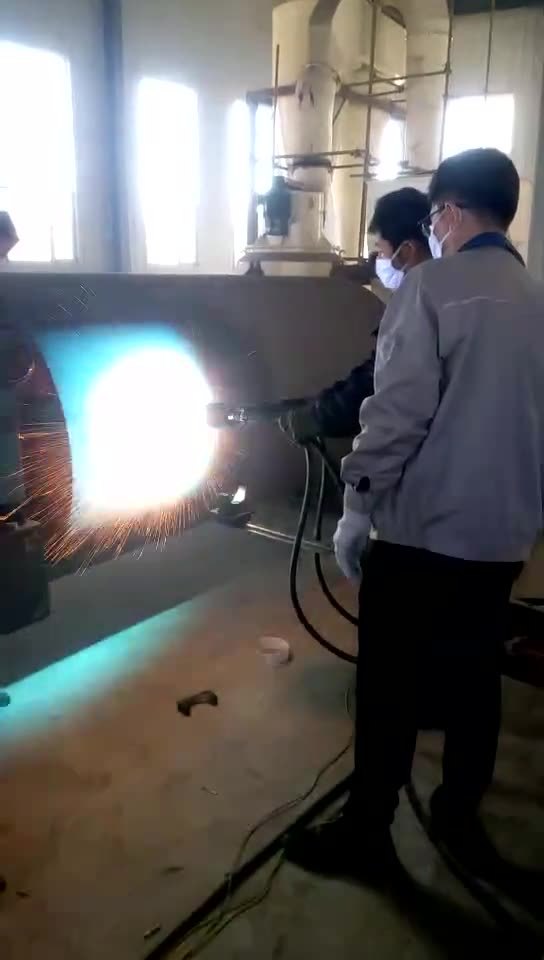
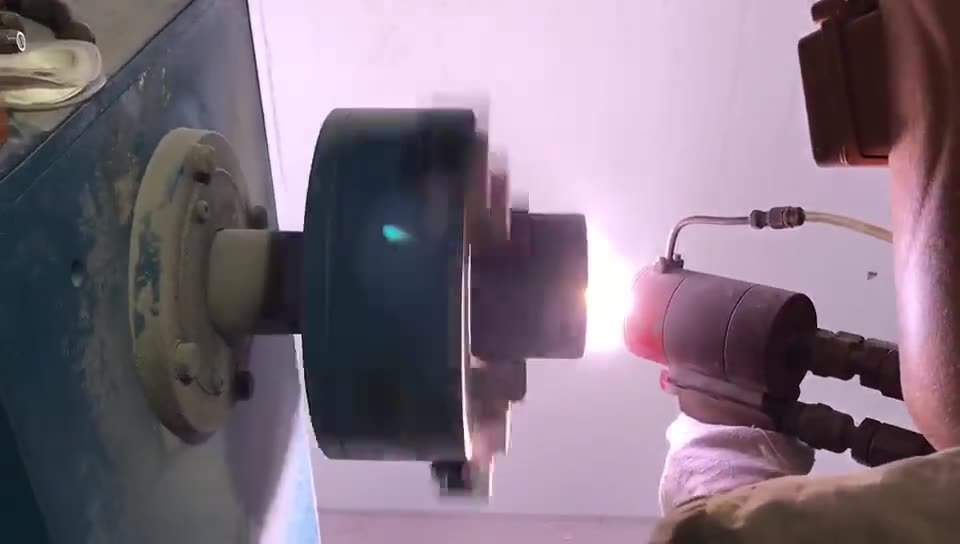
WC-Co is a HVOF material. Plasma will melt and decarburise it - you lose carbon, form brittle W2C and end up with a coating that reads hard on a test report and fails in service. If a customer asks for plasma-sprayed tungsten carbide, the honest answer is that HVOF or the newer HVAF process is the right route, and we will say so before taking the order.
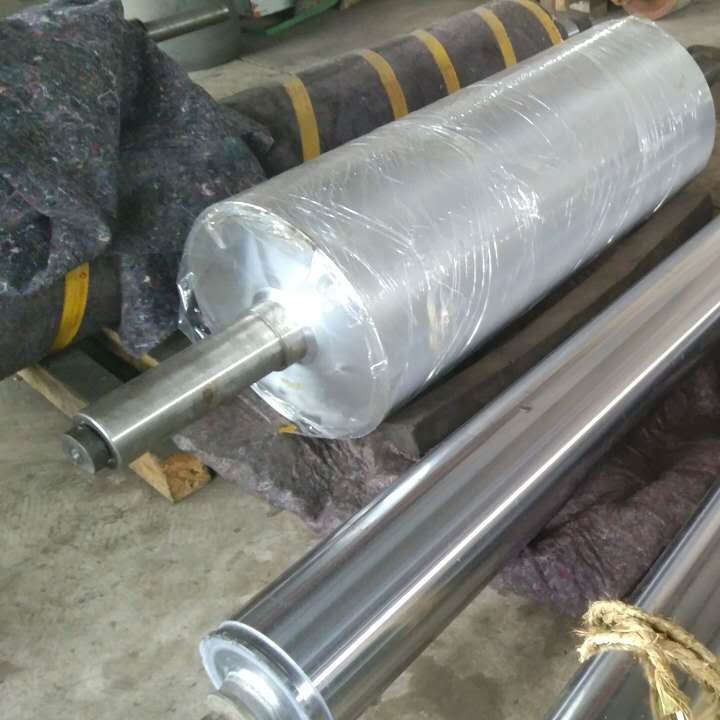
Deposit thickness is normally 0.05-0.50 mm, ground and sometimes diamond-lapped afterwards. Bond strength of 70 MPa and above is routine with HVOF; porosity below 1 percent.
What we need to quote
The application and the wear mechanism, the substrate, the spray process and gun model, the required coating thickness and finish, and the particle size cut if you already have a qualified procedure. If you are developing a process we can supply trial quantities from 2 kg.
Frequently asked questions
Can you plasma spray tungsten carbide powder?
Technically yes, practically it is the wrong choice. Plasma temperatures melt and decarburise the carbide, forming brittle W2C and releasing carbon, so the coating measures hard but wears poorly. HVOF or HVAF keeps the particle below the carbide decomposition range and retains the carbon. We will tell you this before quoting rather than sell you powder for a process that will disappoint.
What is the difference between WC-12Co and WC-17Co?
Binder content. WC-17Co has more cobalt, so it is tougher and more resistant to impact and edge chipping, at the cost of roughly 100-150 HV of hardness and some abrasive wear resistance. Use 12Co for general wear parts and 17Co where the part sees shock loading or has thin edges.
When should I choose WC-CoCr over WC-Co?
Whenever there is moisture, salt, acid or slurry involved. The chromium addition gives the binder phase corrosion resistance, so the carbide particles are not undermined by a corroding matrix. In dry abrasive service plain WC-Co is slightly harder and cheaper.
What particle size do I need?
It depends on the wear mechanism and the gun. Fine cuts (sub-micron to 2 um carbide) suit fine abrasive wear and polished surfaces; coarse cuts (5-10 um) suit heavy grit and impact. Send the gun model and the application and we will specify the cut rather than ship a generic range.