Application fields:
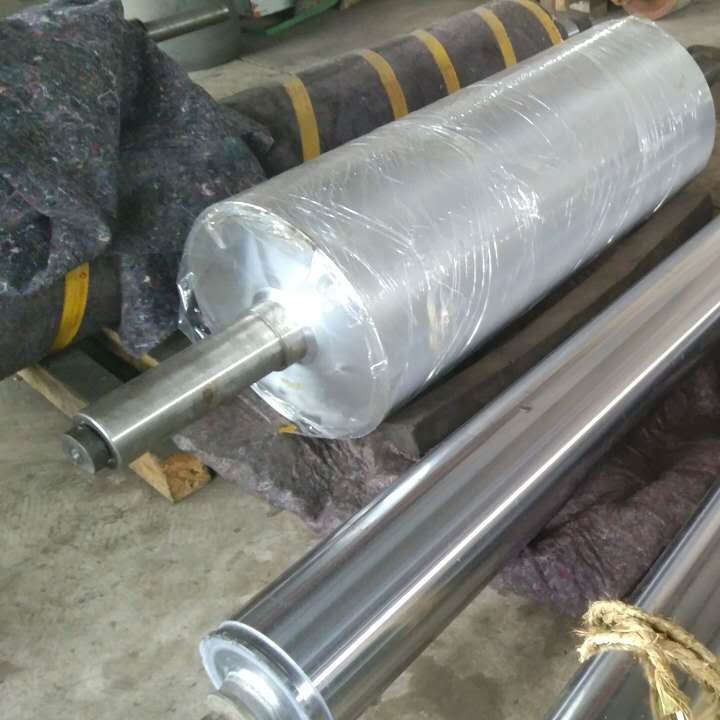
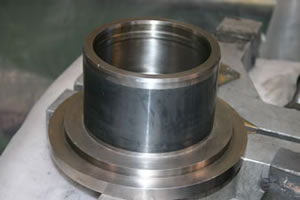
Pump sleeves and wear rings, shaft sleeves and protection sleeves, mechanical seal faces and seats, guide bushings, plunger sleeves, and valves and seats handling abrasive media.
Technical principles and processes:
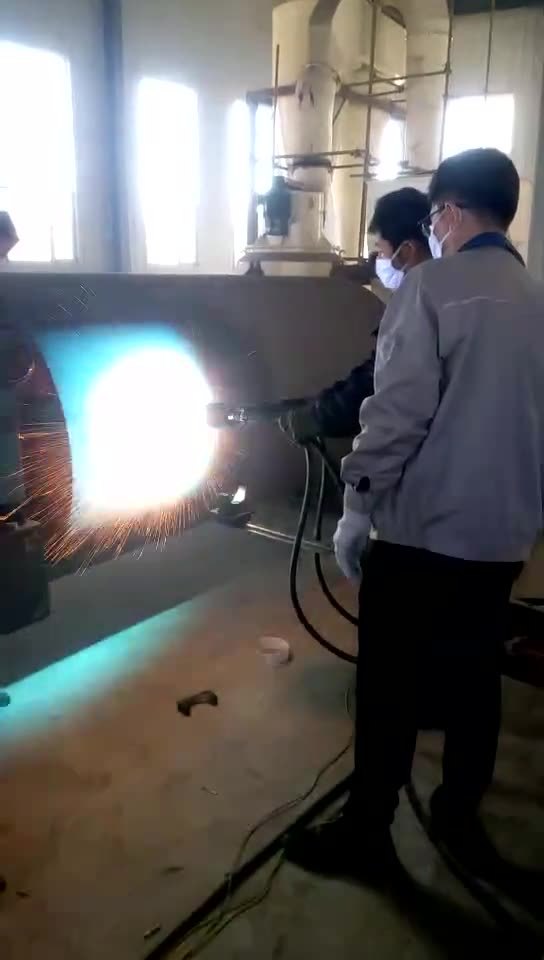
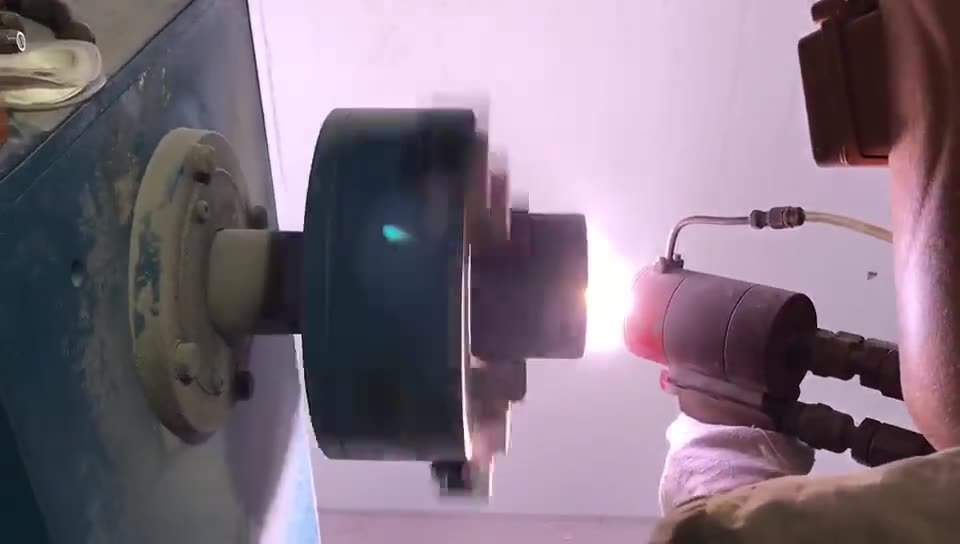
Chrome oxide (Cr2O3) powder is sprayed by atmospheric plasma spray onto a grit blasted, pre-machined substrate. Because the coating is a hard ceramic, it is finish ground with diamond tooling and lapped to the final size and surface finish. Thickness is checked at several points and porosity is controlled.
Coating performance:
- Micro-hardness 1000-1300 HV, harder than hardened chrome plating
- Coating thickness 0.10-0.35 mm, ground to tolerance
- Low friction and good sealing against shafts and seals
- Stable against mild acids, alkalis and many process chemicals
- Surface finish down to Ra 0.2 where sealing requires it
轴套与衬套氧化铬陶瓷涂层:用于泵套、轴保护套、密封环等,硬度高、摩擦系数低,兼具耐磨与耐蚀,磨削后可达 Ra0.2 密封面要求。
Coating specification
| Parameter | Typical value |
|---|---|
| Coating | Cr2O3, 99% purity |
| Thickness | 0.15-0.40 mm, ground after spraying |
| Microhardness | 1,100-1,400 HV0.3 |
| Porosity | Below 2% |
| Bond strength | 50-70 MPa with NiAl bond coat |
| Surface finish | Ra 0.1-0.2 (lapped) |
| Friction coefficient | 0.12-0.20 against steel, dry |
Why chromia for sleeves and seal faces
Alumina is harder in bulk but chromia holds a finer, more stable polish. On a mechanical seal face or a pump sleeve running against packing, that difference decides life: chromia resists polishing wear by fine particles and keeps its low friction instead of becoming rough and abrasive. It is also more resistant to strong acids than alumina, which matters in chemical pump service.
Grinding is where most of the quality is decided
A chromia coating sprayed at 0.35 mm and ground to 0.25 mm with the wrong wheel will have subsurface cracks that only appear after a few hundred hours. We grind with diamond tooling at low infeed, dress frequently, and finish by lapping to Ra 0.1-0.2. Seal faces are checked for flatness by optical flat before dispatch.
Why chromia for sleeves and bushings
Chromium oxide sits between carbide and alumina in behaviour: harder and more wear resistant than alumina, more chemically inert than carbide in many media, and electrically insulating. That combination is why it is the default for sleeves and bushings that run against packed glands, in corrosive liquids, or where the part must not conduct.
Clearance is the design parameter
A coated bushing loses bore clearance by twice the coating thickness. On a small bushing that is significant, so the bore is either machined oversize before coating or the coating is finished back to the drawing dimension after spraying. We ask for the running clearance, not just the bore diameter, because a coated bushing that seizes is a worse outcome than a worn one.
Where chromia stops being the right choice
Under heavy impact or where the counterface is hard and dry-running, chromia's brittleness shows up as chipping at the bore edges. In that duty a tungsten carbide layer or a change of materials is the better answer. Similarly, in hot alkaline service, alumina or a stabilised zirconia may outlast chromia.
Sealing for chemical service
Chromia has open porosity as sprayed, and in chemical service that porosity is where corrosion starts. A sealer compatible with the process medium closes it; without sealing, the coating can pass a thickness check and still fail in months. For immersed parts we specify the sealer system alongside the coating, not as an option.
Frequently asked questions
Chromia or alumina for a pump sleeve?
Chromia where fine particles and low friction matter, alumina where the medium is more abrasive and the load heavier. If the sleeve also sees strong acid, chromia is the safer choice.
Can the coating be applied to a thin-walled sleeve?
Yes, with controlled preheat and cooling. Below 3 mm wall thickness we spray on a mandrel to avoid distortion.
Does the sleeve need a bond coat?
For thickness above 0.15 mm, yes - a thin NiAl layer improves adhesion and absorbs thermal mismatch.
Further reading: WC-Co vs Cr3C2-NiCr.
Further reading: replacing hard chrome with HVOF carbide.