What "self-fluxing" actually means
Ni60 is a nickel-chromium-boron-silicon alloy powder. Boron and silicon are not incidental alloying elements: they lower the melting range to roughly 1000-1100 °C and form a borosilicate glass that dissolves the oxide film on the workpiece and on the powder particles themselves. That is why the powder is called self-fluxing - it cleans and wets the surface during fusing without a separate flux, and the deposited layer collapses into a dense, pore-free, metallurgically bonded coating.
Ni60 is the workhorse grade of the NiCrBSi family and the most widely specified nickel-based self-fluxing powder in China. One detail is worth checking on the certificate of analysis: domestic Ni60 normally allows up to about 15% iron, while comparable international grades hold iron to 5% or less. The higher-iron version costs less, but gives up some corrosion resistance. If the part works in a chemical or chloride environment, ask for the low-iron chemistry explicitly.
After fusing, the layer reaches roughly HRC 58-62, in the same hardness band as carburising, nitriding, boriding or hard chrome, with much less process complexity than a plating line. Gas-atomised powder is close to spherical and flows without bridging in the hopper, which is what makes automated spray-and-fuse and repeatable feed rates possible.
Spray first, then fuse - the step people skip
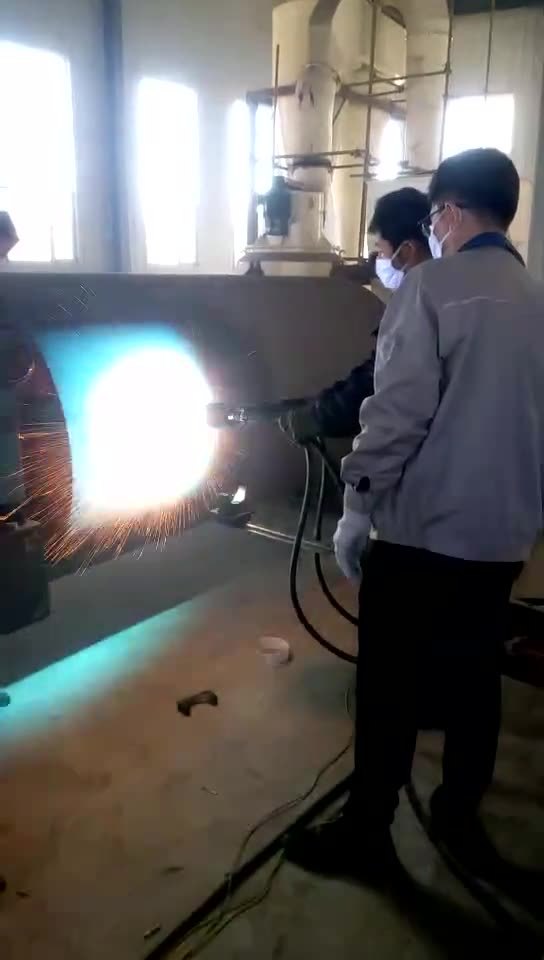
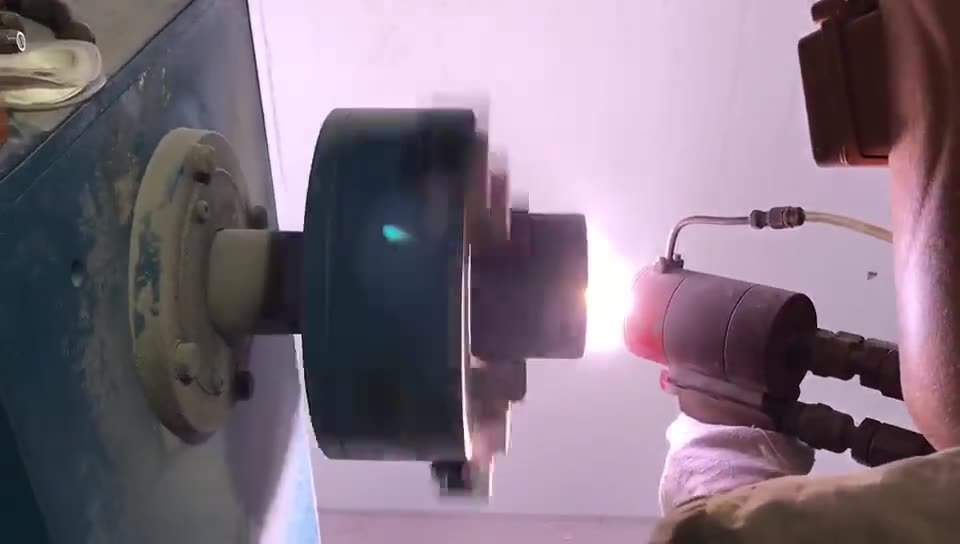
The coating is built in two distinct operations. First the powder is deposited 0.5-1.5 mm oversize by oxy-acetylene flame spray, plasma spray or HVOF. At this stage it is a mechanically bonded, slightly porous layer - it is not yet the finished coating. Second, the part is heated to about 1000-1100 °C with a fusing torch, by induction, or in a controlled-atmosphere furnace until the surface "sweats" to a glossy film. The glassy phase wets the substrate, porosity drops below roughly 1%, and a diffusion bond forms. The part is then cooled slowly and ground to size.
Fusing shrinks the deposit by roughly 15-20%, so the spray thickness must allow for both shrinkage and final machining stock. It also puts the whole component at fusing temperature. Thin walls, hardened-and-tempered parts, brazed or welded assemblies and anything with tight distortion tolerances are poor candidates. Where the part cannot take that heat, use an as-sprayed HVOF WC-Co or WC-CoCr coating instead of an unfused Ni60 layer - an unfused self-fluxing deposit is neither dense nor reliably bonded.
Typical specification
| Item | Typical value | What to check before ordering |
|---|---|---|
| Chemistry (wt%) | Ni balance, Cr 15-18, B 3-4.5, Si 4-5.5, C 0.7-1.1, Fe ≤15 | Batch certificate; low-iron variant if corrosion matters |
| Hardness after fusing | HRC 58-62 | Measured on the fused layer, not on the as-sprayed deposit |
| Fusing range | 1000-1100 °C | Substrate heat treatment and distortion limit |
| Powder particle size | 15-45 µm HVOF/plasma; 45-106 µm flame spray and fuse | Match the cut to the gun and feeder, not the other way round |
| Morphology | Spherical, gas atomised | Hall flow rate and apparent density on the CoA |
| Finished thickness | 0.5-2.0 mm after grinding | Build-up allowed by the drawing |
| Continuous service | Up to about 550 °C | Above this, use Cr3C2-NiCr |
Where Ni60 earns its keep
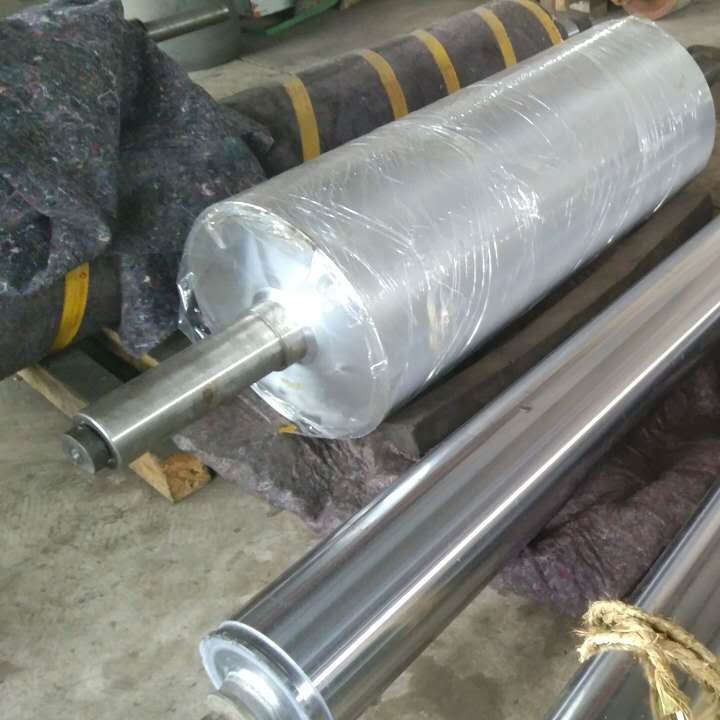
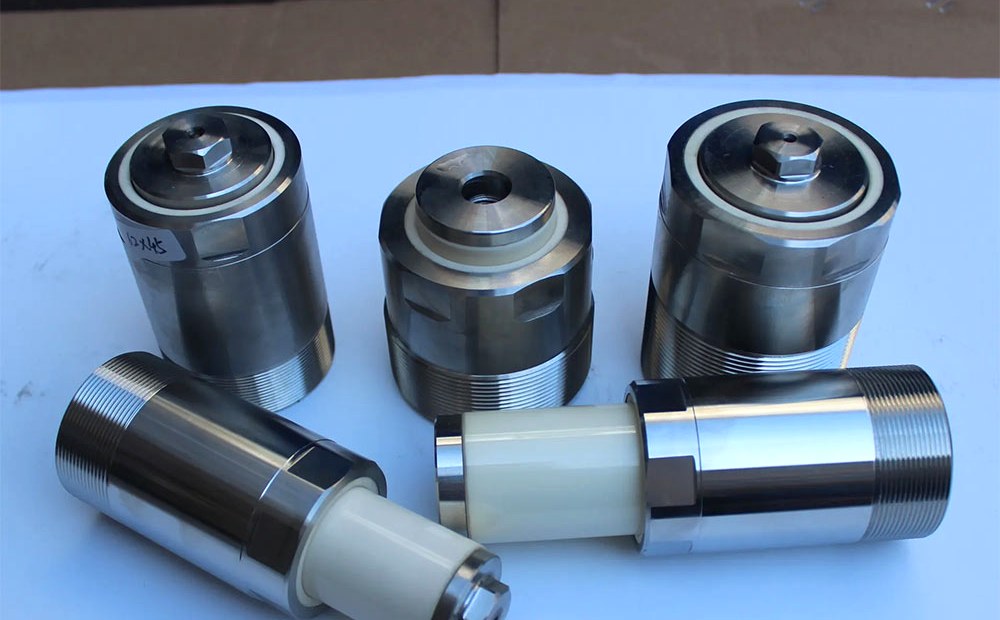
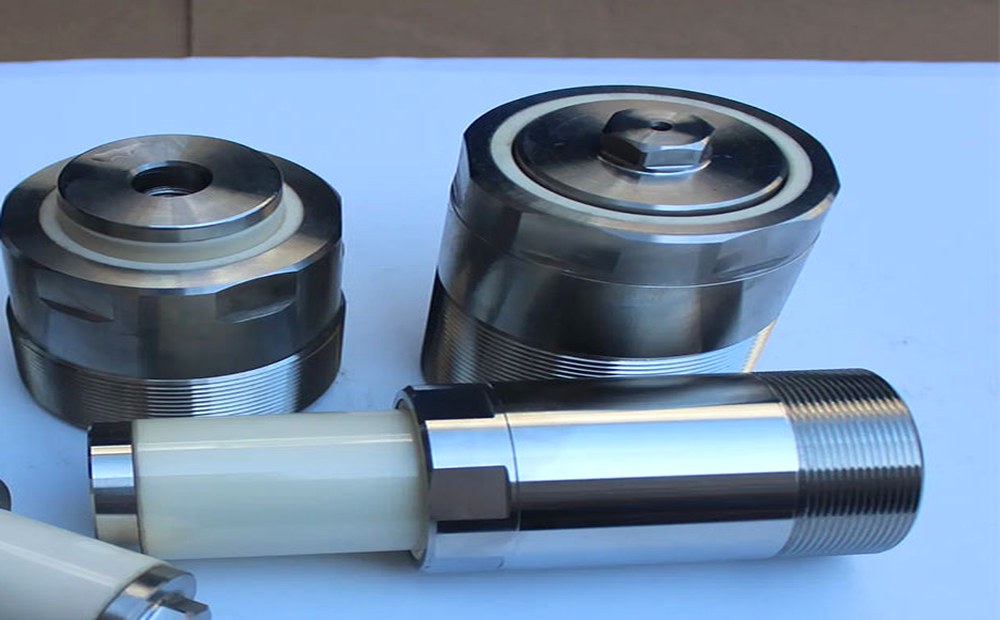
It is the economical answer for parts that wear by moderate abrasion plus mild corrosion and that can be ground after coating: pump plungers and sleeves, valve seats and gates, shafts and journals, extruder and injection screws, glass mould components, calender and guide rolls, wire guides, agricultural and forage blades, and general dimensional restoration. The photograph shows the kind of plunger and sleeve work the grade is normally used for. For a wider view of how the material families compare, see our thermal spray material selection guide.
Ni60 can also be deposited by HVOF or by laser and PTA cladding, where the melt pool replaces the separate fusing step. We supply it both as powder and as a finished coating service, and we run the process on our SX-9000 HVOF system and SX-80 plasma system.
When not to specify it
Severe abrasion. HVOF WC-Co or WC-CoCr at 1000-1400 HV will outlast a fused Ni60 layer by a wide margin on slurry, grit and sliding wear.
Acid or chloride corrosion. Ni60 offers moderate protection; a Ni-Cr-Mo alloy or a properly sealed ceramic coating is the right call for chemical duty.
Temperatures above ~550 °C. Cr3C2-NiCr keeps its hardness up to about 800 °C.
Heat-sensitive or thin parts. Fusing will distort them; use an as-sprayed HVOF coating or arc spray wire for build-up instead.
What we need to quote
Send the part drawing and substrate material with its heat-treatment state, the failure mechanism you are fighting, worn and target dimensions, service temperature and media, target hardness, whether fusing heat is acceptable, annual quantity, and whether you want powder only, a trial coupon or finished coated parts. We will confirm the chemistry and particle cut with a certificate of analysis before shipping.
Frequently asked questions
Can Ni60 be used as-sprayed without fusing?
It can be deposited by HVOF or plasma and used in the as-sprayed condition, but a flame-sprayed Ni60 layer that is never fused stays porous and only mechanically bonded. For most wear applications that is not an acceptable substitute for a fused layer.
What temperature is needed to fuse the coating?
Typically 1000-1100 C, applied with an oxy-acetylene fusing torch, induction coil or controlled-atmosphere furnace until the surface shows a glossy sweat. The whole part reaches that temperature, so check distortion and heat-treatment limits first.
Is Ni60 corrosion resistant?
Moderately. It handles atmospheric exposure, mild alkalis and general industrial wear well, but it is not a chemical-corrosion coating. In acids, chlorides or wet FGD duty, specify a Ni-Cr-Mo alloy, a carbide coating or a sealed ceramic system instead.
Which particle size should I order?
15-45 um for HVOF and most plasma feeders, 45-106 um for conventional flame spray and fuse. Confirm against your gun nozzle and feeder, and ask for the sieve distribution and Hall flow rate on the certificate of analysis.
Do you supply powder only or coated parts?
Both. We supply Ni60 powder from 2 kg trial quantities with a batch certificate, and we also spray, fuse and grind parts in our own shop on HVOF and plasma equipment.